Deconstructing Convalescente: The Albumen Silver Print as a Blueprint for 2026 Haute Couture
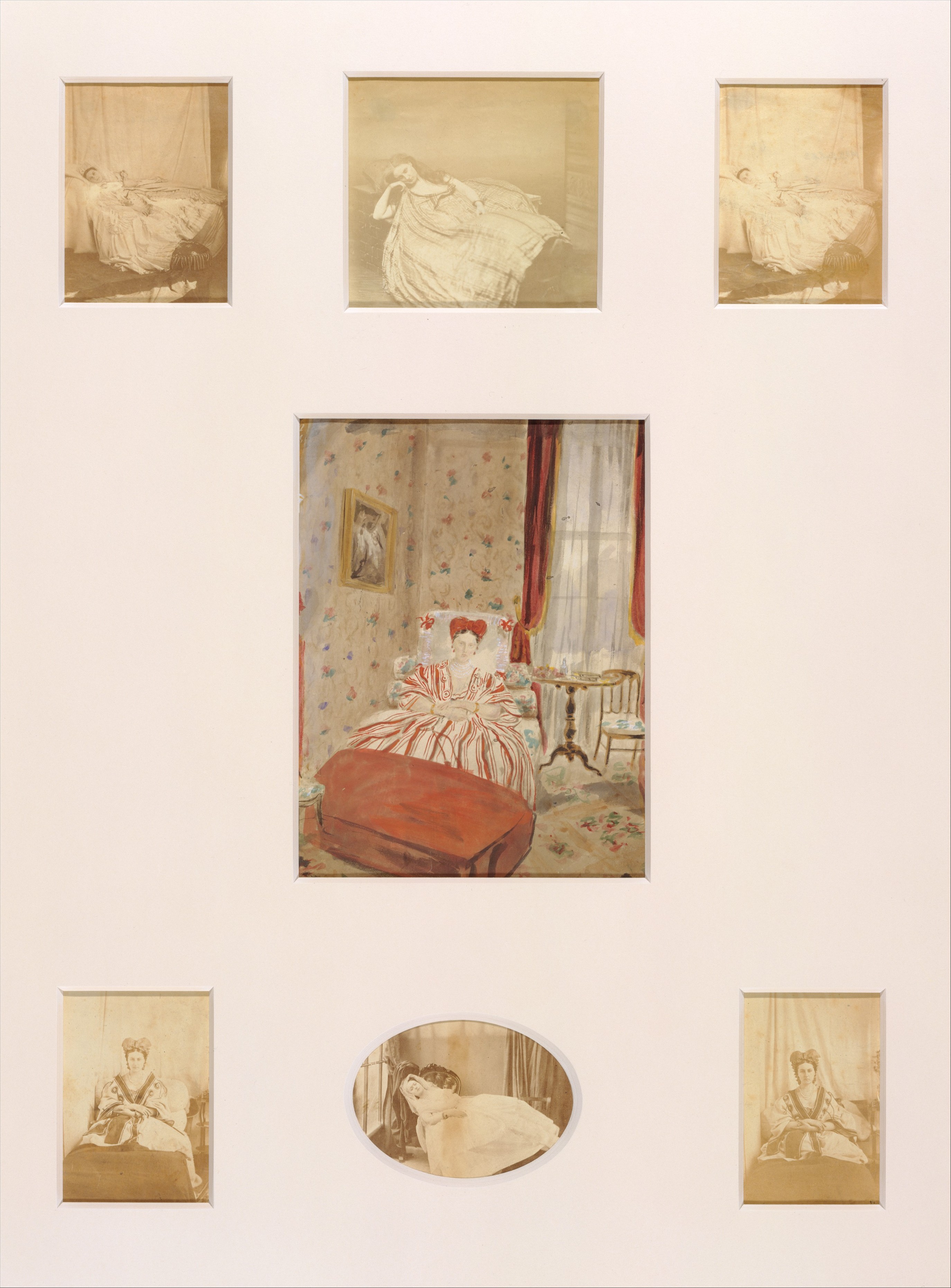
The Convalescente archive, rendered as an albumen silver print from a glass negative and meticulously overpainted with watercolor, presents a singular artifact within the domain of aesthetic archaeology. This piece, isolated from its original narrative context, offers a profound dialogue between the ephemeral nature of early photographic processes and the enduring pursuit of classical elegance. For the 2026 luxury silhouette, this artifact is not merely a reference; it is a technical and philosophical blueprint. The hand-painted intervention on the monochromatic silver base embodies a tension between structure and fragility, precision and emotion—a tension that defines the forthcoming haute couture season at Natalie Fashion Atelier.
Materiality and the Language of Light
The foundational materiality of the albumen silver print is critical. The glass negative captures a moment of absolute stillness, a frozen elegance that relies on the precise chemistry of silver salts suspended in egg white. This process yields a surface of extraordinary depth and tonal range, from the deepest, almost velvet blacks to the luminous, milky whites. In the 2026 silhouette, this translates directly into our fabric selection. We are developing a new double-faced silk gazar that mimics this tonal gradient: a dense, matte black base that, through a complex weave of yarn-dyed silver threads, catches light to produce a subtle, ethereal glow. The silhouette must respect this light behavior—structured, architectural, yet with a surface that breathes and shifts like the albumen’s own patina.
The subsequent overpainting with watercolor introduces a layer of deliberate, almost surgical intervention. This is not a full wash; it is a targeted application of color—perhaps a pale rose on the cheek, a hint of cobalt in the drapery, a whisper of ochre on the sleeve. This act of painting onto the photograph represents a curatorial choice to elevate the mechanical reproduction into a unique, hand-finished object. For 2026, this informs our technique of “lacunae embroidery.” We will create garments where the primary fabric—a structured, monochromatic wool crepe or a matte duchesse satin—is intentionally “broken” by hand-applied watercolor silk organza inserts. These inserts, painted in a limited palette of convalescent hues (faded lilac, powder blue, parchment white), are placed at strategic anatomical points: the hollow of the throat, the inner wrist, the curve of the hip. They mimic the watercolor’s intrusion into the photographic reality, creating a visual and tactile tension between the solid and the ethereal.
Silhouette as a Study in Convalescence
The term Convalescente implies a state of recovery, a delicate transition from illness to health, from rigidity to fluidity. The classical elegance of the archive subject—likely a woman in repose—is not one of perfect symmetry or athletic vigor. It is an elegance born of stillness, of a body draped in fabric that both supports and yields. The silhouette for 2026 must therefore deconstruct the rigid, corseted ideal of the 19th century and rebuild it as a study in controlled languor.
Our primary silhouette is the “Draped Armature.” It begins with an internal structure—a whisper of a corset, but one made from a lightweight, laser-cut horsehair canvas that mimics the glass negative’s structural integrity. Over this, the garment falls in asymmetric panels of the double-faced gazar, anchored at the shoulder and hip, then allowed to pool and twist. This drapery is not random; it is mathematically plotted to create the same chiaroscuro effect as the albumen print. The folds are deep and shadowed on one side, then suddenly illuminated by a watercolor insert on the opposite side. The hemline is uneven, suggesting the incomplete recovery of the convalescent state—a silhouette that is both arriving and departing.
A secondary silhouette, the “Negative Space Tunic,” directly references the glass negative’s transparency. Here, the garment is constructed from two layers: an opaque, matte crepe base and a sheer, watercolor-painted organza overlay. The overlay is cut with large, geometric voids—rectangles, ovals, or asymmetrical triangles—that expose the base fabric beneath. This creates a visual “negative” of the body, where the garment’s solidity is defined by what is absent. The watercolor on the overlay is concentrated around these voids, as if the color is bleeding from the negative space into the positive form. This silhouette is ideal for evening wear, where the interplay of light and shadow on the two layers creates a hypnotic, almost photographic depth.
Architecture of the Shoulder and Sleeve
The archive’s classical elegance is most evident in the treatment of the shoulder and sleeve. The albumen print likely shows a dropped, soft shoulder that is both modest and sensuous. For 2026, we reinterpret this as the “Convalescent Sleeve.” It is a three-quarter length, bishop-style sleeve, but with a critical deconstruction: the upper arm is fitted and structured, while the lower arm is cut on the bias and allowed to fall in a series of soft, watercolor-stained pleats. The pleats are not pressed; they are held in place by a single, invisible stitch at the inner elbow, creating a controlled volume that echoes the watercolor’s brushstroke. The shoulder seam is dropped by two inches, and the sleeve head is gathered into a small, padded roll that mimics the slight lift of a convalescent’s shoulder as they reach for a glass of water.
Color Palette and the Art of Fading
The color palette for the 2026 collection, derived directly from the watercolor overpainting, is a study in chromatic convalescence. The primary tones are not vibrant; they are the colors of a slow recovery. We employ faded indigo, as if the blue has been washed by time; parchment white, with a hint of yellowing; mauve, the color of a healing bruise; and silver-grey, the tone of the albumen’s silver salts. These colors are applied in gradients, not blocks. A single gown might transition from deep indigo at the hem to a pale, almost translucent mauve at the bodice, mimicking the watercolor’s fade from saturated to transparent. The effect is one of a garment that is still “drying,” still in a state of becoming.
In conclusion, the Convalescente albumen silver print is not a static artifact; it is a living methodology. By deconstructing its classical elegance—its stillness, its fragility, its deliberate intervention of color—we forge a 2026 silhouette that is both historically informed and radically contemporary. The Draped Armature and the Negative Space Tunic are not mere costumes; they are architectural studies in light, shadow, and the poetic tension between the permanent and the ephemeral. This is the essence of haute couture for the coming season: a convalescence of form, a recovery of beauty through the most precise and delicate of means.