Deconstructing the Classical Bonbonnière: Enamel, Glass, and the 2026 Silhouette
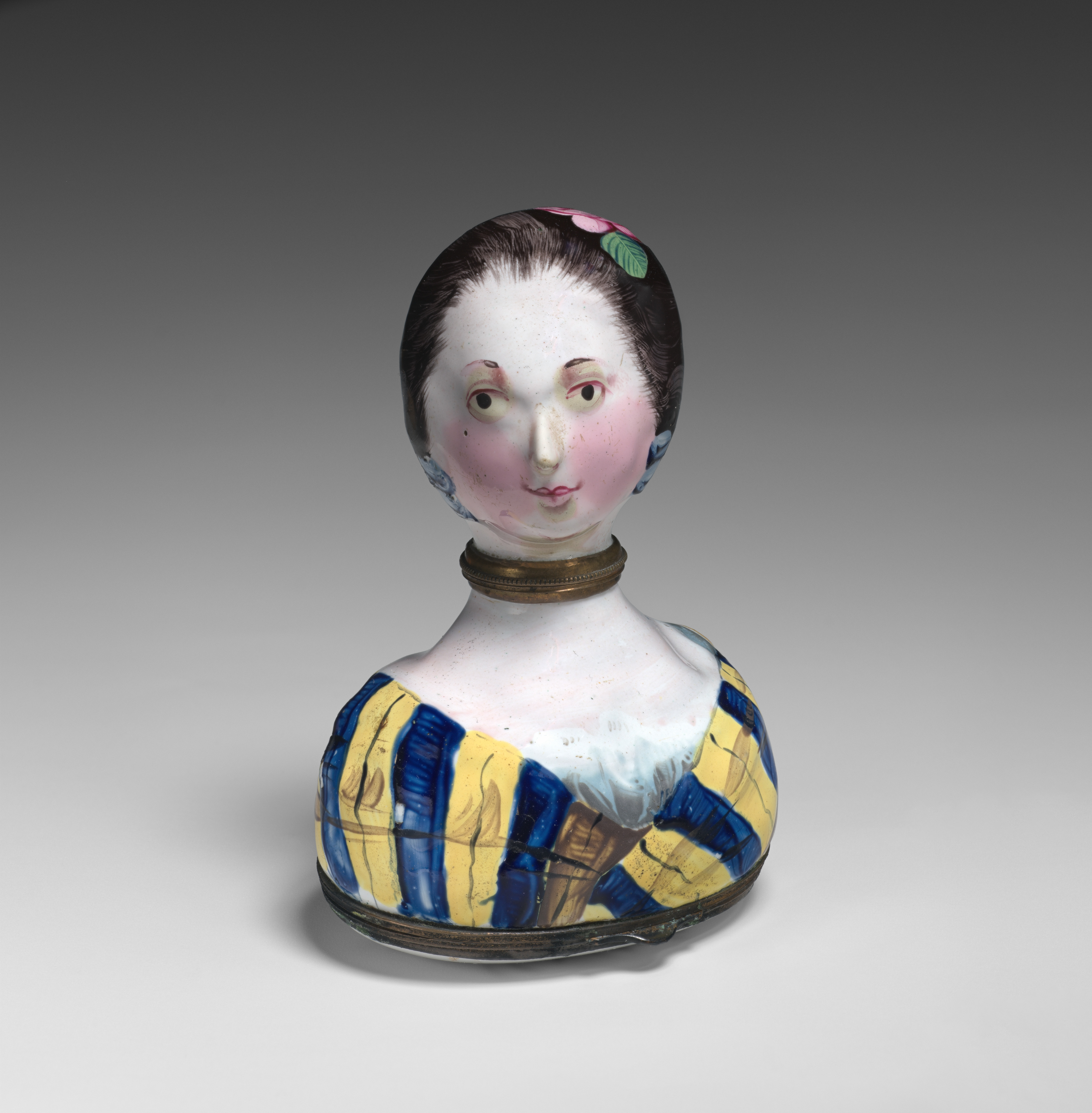
The Bust of a woman bonbonnière and scent bottle, rendered in enamel on copper and glass, represents a pinnacle of aesthetic archaeology within the Global Heritage archive. This artifact, a vessel for both confection and fragrance, is not merely a decorative object; it is a sophisticated study in containment, revelation, and the tension between hard structure and soft illusion. For the 2026 Haute Couture season, Natalie Fashion Atelier decodes this object’s classical elegance to inform a new lexicon of luxury silhouettes. The material dialogue between the opaque, vitreous enamel and the transparent, fragile glass provides a blueprint for architectural garments that both conceal and expose, offering a profound commentary on the modern feminine form.
The Materiality of Containment: Enamel as Armature
The enamel on copper base of the bonbonnière establishes a rigid, protective shell. This technique, perfected in the workshops of Limoges and later adapted across European and Asian ateliers, creates a surface of unparalleled depth and luminosity. The copper substrate provides structural integrity, while the multiple layers of enamel—fired at extreme temperatures—produce a finish that is simultaneously hard as stone and soft as polished skin.
For 2026, this translates directly into structural corsetry and sculptural bodices. The silhouette is no longer about soft draping; it is about controlled, architectural armatures. We see the emergence of the “Enamel Cuirass”—a bodice constructed from lacquered, resin-infused textiles or molded leather that mimics the glossy, impermeable surface of the enamel. The seams are not hidden but celebrated, echoing the metalwork joins of the historical piece. The color palette is dictated by the enamel’s depth: deep cobalt, emerald vert-de-gris, and oxblood, applied in layers to create a sense of internal light. The copper underlay is referenced through burnished gold and bronze threadwork that traces the garment’s architecture, a metallic skeleton visible only in movement.
This hard shell serves a dual purpose: it is both a shield and a stage. The bust of the woman, a classical motif of idealized femininity, is reinterpreted as a powerful, protective carapace. The 2026 woman does not reveal herself freely; she controls the narrative of exposure. The silhouette becomes a “fortress of elegance,” with high, structured collars that frame the face like a porcelain cameo, and sharply defined shoulders that recall the bonbonnière’s geometric base. The waist is cinched, not to constrict, but to emphasize the architectural transition from the rigid upper torso to the fluidity below.
The Transparency of Revelation: Glass as the Second Skin
In stark contrast to the enamel’s opacity, the glass scent bottle element of the artifact introduces a principle of controlled transparency. The glass is not merely clear; it is a vessel for light, often tinted, faceted, or etched to diffuse and refract the contents within. This represents the “second skin” of the 2026 silhouette—a layer that exists beneath or alongside the enamel armature, offering a glimpse of the interior without full exposure.
The technical application is found in sheer organza, micro-mesh, and laser-cut leather overlaid on opaque foundations. The 2026 silhouette features “glass panels”—strategic cutouts filled with translucent tulle or molded silicone that mimic the tactile quality of hand-blown glass. These inserts are not random; they are placed at the décolletage, the small of the back, or the inner forearm, echoing the scent bottle’s role as a point of intimate contact. The transparency is never vulgar; it is a studied revelation, a peek at the “perfume” of the self—the inner strength and vulnerability that the modern woman chooses to share.
The glass itself informs surface texture. Techniques of crackling, frosting, and faceting are translated into pleating and embroidery. A gown might feature a skirt of crystal-encrusted organza that shatters light like a millefiori paperweight, or a sleeve of pleated silk gazar that echoes the ribbed texture of a Venetian glass bottle. The silhouette becomes a prism, where the wearer is both the object and the source of light.
The Synthesis: The 2026 Silhouette as a Living Artifact
The true genius of the bonbonnière and scent bottle lies in their dialectical relationship. The hard enamel holds the soft, often ephemeral contents (bonbons, perfume), while the transparent glass reveals the precious liquid within. The 2026 silhouette is a synthesis of these two principles. The “Bonbonnière Silhouette” is defined by a rigid, sculptural top (the enamel armature) paired with a fluid, transparent skirt or train (the glass vessel). This is not a simple A-line; it is a structural juxtaposition.
Consider a gown for the evening: a lacquered, corseted bodice in deep blue enamel finish, with a high, architectural collar that rises behind the head like a fan. The sleeves are detached, made of clear, resin-molded “glass” panels that articulate at the shoulder. The skirt is a cascade of layered, sheer silk tulle, each layer hand-painted with a gradient of color that mimics the internal reflection of a glass bottle. The hem is weighted with hand-blown glass beads, creating a sound—a whisper of the scent bottle’s stopper—as the wearer moves.
For daywear, the principle is adapted into a tailored “bonbonnière jacket.” The structure is sharp, with a peplum that snaps into place like a lid, and the interior lining is a shocking contrast of translucent, mirror-finish fabric. The silhouette is powerful, yet the glimpse of the lining offers the intimacy of the scent bottle. The trousers are wide and fluid, cut from a wool crepe that has been treated to a subtle, enamel-like sheen.
Conclusion: The Archaeology of Future Luxury
The Bust of a woman bonbonnière and scent bottle is not a relic of the past; it is a prophecy of the 2026 silhouette. Through the lens of aesthetic archaeology, we deconstruct its classical elegance to find the DNA of future luxury. The enamel teaches us the power of controlled opacity and architectural strength. The glass teaches us the art of studied transparency and the beauty of the interior life. The resulting silhouette is a living artifact—a garment that protects, reveals, and ultimately, defines the modern woman as a masterpiece of her own making. This is the Natalie Fashion Atelier vision: a couture that is not merely worn, but inhabited, a vessel for the precious, complex essence of the self.