Officiel de la Couture et de la Mode de Paris: A Technical Deconstruction for 2026 Silhouettes
Since its inception in 1921, Officiel de la couture et de la mode de Paris has served not merely as a magazine but as the canonical ledger of French haute couture. It is the primary textual and visual archive of a rarified craft, documenting the evolution of techniques that define luxury. This report undertakes a technical archaeology of the couture principles chronicled within its pages, focusing on the period from the 1920s through the mid-20th century. Our objective is a precise deconstruction of materiality and methodology to inform and translate these patrimonial elements into a coherent, high-end luxury silhouette for 2026.
I. Technical Deconstruction: The Foundational Couture Techniques
The moulage (draping on the stand) technique, perfected by the likes of Madeleine Vionnet and documented meticulously in L’Officiel, represents the zenith of structural artistry. Unlike flat patterning, moulage is a three-dimensional dialogue between fabric and form. The 1920s bias-cut, a Vionnet signature, was not a simple cut but a engineered manipulation of grain. The technique required understanding the inherent elasticity and fall of silk crêpe or satin cut at a 45-degree angle, allowing the garment to cling and cascade in response to the body’s topography. This was architecture in micro-scale, with seams placed for strategic tension and release.
Complementing this was the intricate internal architecture of the tailleur (suit) and formal evening wear. As captured in detailed illustrations and later photographs in L’Officiel, this involved:
Structured internal corsetry: Not the restrictive boning of the previous century, but lightweight, flexible supports of whalebone (later synthetic alternatives) engineered into the dress itself, often in a separate corset de couture or built into the bodice lining. This created the iconic silhouettes of the New Look (1947), with its pronounced bust and cinched waist, without external undergarments.
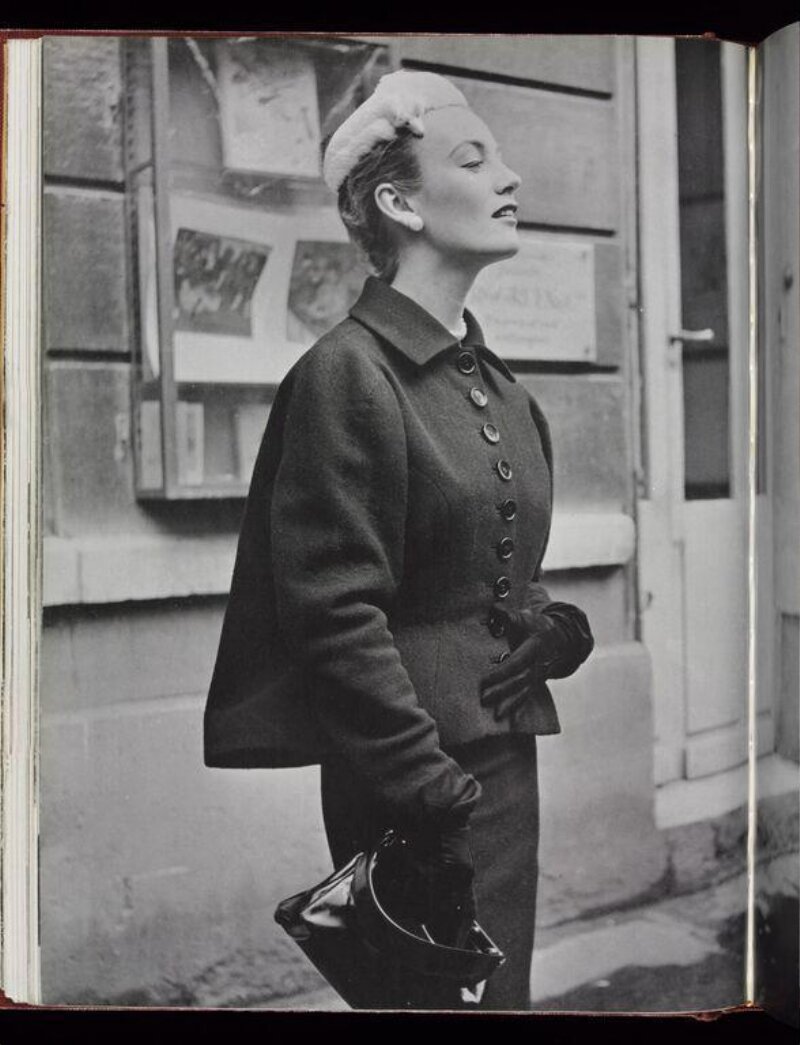
Precision padding and canvassing: Haircloth, wadding, and layered coutil were sculpted to perfect shoulder lines, lapel rolls, and bust shapes, creating a flawless external shell. Every internal stitch—the prick-stitching, the felling, the hidden catch-stitches—was executed to ensure the structure moved as one with the body.
II. Material Materiality: The Substance of Luxury
The techniques were inseparable from their material counterparts. L’Officiel served as a catalogue of the material hierarchy of couture. The materiality was tactile and specific:
Weighted Silks: Chiffons, georgettes, and satins were often custom-weighted with metallic salts or delicate beading to achieve a specific, languid drape. This added mass was calculated to enhance the bias-cut's swing.
Complex Embroidery & Passementerie: Documented in stunning detail, the work of les petites mains at houses like Lesage constituted a second skin of material. Beadwork was not merely applied but engineered to follow the garment’s seam lines and darts, becoming integral to the structure. Paillettes were attached with a specific stitch to allow movement and catch light dynamically. Corded piping, hand-made frogs, and gimp edging (passementerie) provided textural contrast and reinforced edges.
Luxury Wools and Specialty Weaves: For the tailleur, the focus was on the fabric’s intrinsic properties: the density of a bouclé, the crispness of a wool-silk blend, the malleability of a cashmere coating. These fabrics accepted structure and held a sharp, clean line, the hallmark of daytime couture.
III. Translation for the 2026 High-End Luxury Silhouette
The 2026 translation is not one of historical replication, but of principled evolution. The contemporary body and lifestyle demand a different relationship with clothing, yet the core tenets of exclusivity, craftsmanship, and transformative design remain. Our proposed silhouette is defined by Architectural Fluidity.
Technical Synthesis: We propose a fusion of moulage and advanced technical materials. The bias-cut principle will be applied to next-generation fabrics: biodegradable polymer jerseys with memory-hold, lab-grown silk hybrids with variable opacity, and felted technical wools with thermo-reactive properties. Draping will be performed on digitally-augmented stands that map client-specific movement patterns, ensuring the fluidity is personally optimized.
Reinterpreted Internal Architecture: The rigid internal corsetry is transposed into modular, flexible support systems. Using 3D-knitted zones of variable tension, lightweight carbon-fiber filaments, and molded, breathable bio-resins, we will create garments that offer shape and support through material intelligence rather than rigid imposition. A cocktail dress can have a sculpted torso engineered through seamless knit structure, eliminating traditional boning while enhancing comfort.
Materiality Reimagined: The luxury of 2026 is conscious and innovative. Embroidery transitions into laser-etched patinas, bio-luminescent threadwork, and zero-waste 3D embellishments printed directly onto the fabric substrate. The material hierarchy shifts to prioritize origin and innovation: regenerative alpaca wools, pineapple leaf leathers, and circular polyester satins reclaimed from ocean plastics, finished to the hand-feel of their vintage counterparts. The weight and drape are achieved through sustainable means and smart textile design.
Conclusion: The Patrimony of Precision
The legacy of L’Officiel de la couture is a patrimony of precision—a record of how the highest levels of craft interact with material to create desire and define an era. For Natalie Fashion Atelier’s 2026 vision, this archaeology reveals that the true luxury is not in the pastiche of old forms, but in the elevation of principle. By deconstructing the foundational techniques of moulage and internal architecture, and reinterpreting the materiality through a lens of sustainable innovation and technological possibility, we arrive at a new silhouette: one that honors the analytical, elegant spirit of Parisian couture while boldly articulating its form for the contemporary world. The result is a collection where every seam, drape, and material choice speaks of a deep, technical dialogue with history, translated into the silent, powerful language of future luxury.