Archaeology of the Quilted Silhouette: Silk, Cotton, and the 2026 Canon
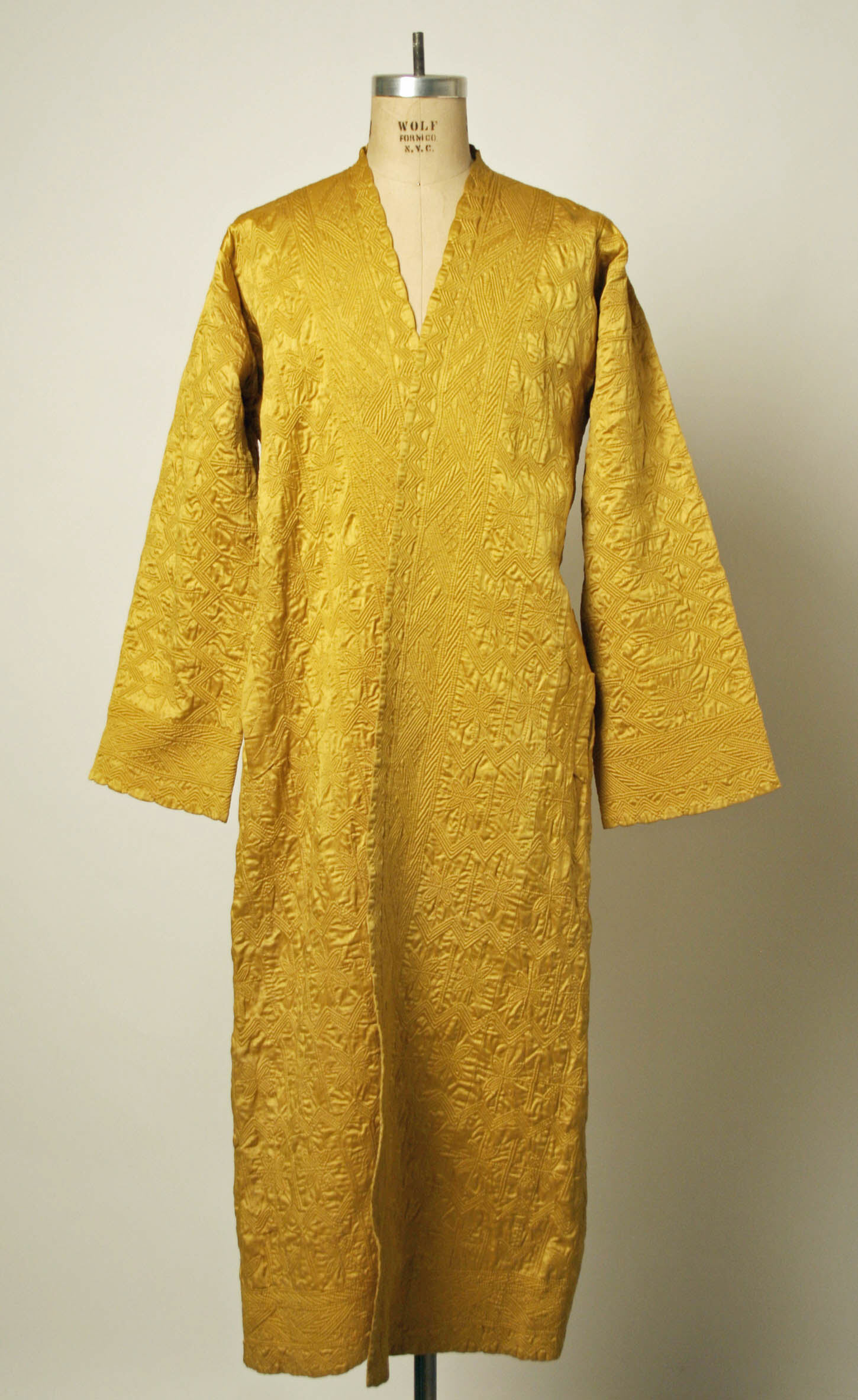
The quilted coat, a garment often relegated to the domestic or the utilitarian, undergoes a profound recontextualization within the framework of Natalie Fashion Atelier. This research artifact isolates the architectural potential of the quilted form, specifically examining a heritage piece constructed from a hybrid materiality of silk and cotton, employing both satin and plain weaves. The objective is not merely to revive a historical shape, but to decode its structural logic—the interplay of tension, volume, and drape—and to project its evolution onto the 2026 luxury silhouette. This is an exercise in aesthetic archaeology, where the stitch is a line of inquiry, and the fabric is a primary text.
Material Dialectics: The Satin-Plain Weave Binary
The foundational paradox of this garment lies in its material composition. The use of silk satin weave for the exterior panels introduces a high-lustre, fluid surface that catches light with a liquid quality. Conversely, the cotton plain weave employed for the backing and internal structure provides a matte, rigid, and breathable counterpoint. This is not a harmonious blend but a deliberate dialectic. The satin offers visual opulence and a slipperiness that resists static form; the cotton offers tensile strength and a ground for the quilting pattern to anchor. For the 2026 silhouette, this binary is critical. We are moving away from monolithic luxury fabrics. The future demands a sensory stratification—a coat that feels cool and slick on the exterior (satin) yet soft and grounded against the skin (cotton). This tactile dichotomy creates a garment that is both a statement and a sanctuary.
The Quilted Matrix: Structural Engineering as Ornament
The quilting itself is not decorative; it is a structural system. In the heritage piece, the parallel or diamond stitching functions as a tension grid, compressing the lofty batting between the satin and cotton layers. This creates a series of convex and concave planes. For 2026, we extrapolate this into a topographic silhouette. The quilted coat ceases to be a simple, padded volume. Instead, the stitch lines become architectural seams that dictate the coat’s fall. We propose a silhouette where the quilting is denser at the shoulders, creating a rigid, sculpted cap, and looser at the hem, allowing for a fluid, bell-like expansion. This is the inverse corset—a structure that builds volume outward rather than constricting inward. The long sleeve, traditionally a simple tube, becomes a segmented column of quilted panels, each stitch line acting as a hinge that allows for a controlled, articulated movement. The 2026 client does not wear a coat; she inhabits a constructed space.
Deconstructing Classical Elegance: The Weight of the Line
Classical elegance in the quilted coat has historically been defined by its weight and drape. A heavy, dense quilt suggests warmth and permanence. Our archaeological analysis reveals a different priority: tension and line. The heritage piece, despite its layering, possesses a surprising lightness due to the silk-cotton marriage. The elegance is not in the mass but in the precision of the quilting grid. For 2026, we deconstruct this by fragmenting the grid. We propose a silhouette where the quilting is not uniform. A single coat might feature a satin-weave front panel with a wide, geometric quilt pattern that creates a strong, vertical line, elongating the torso. The back panel, in contrast, uses a plain-weave cotton with a micro-quilt, creating a subtle, textural field that recedes visually. This asymmetry in quilting density creates a dynamic silhouette that is classical in its restraint but radical in its optical effect. The long sleeve is no longer a simple cylinder; it is a sculptural element, perhaps quilted only on the outer arm, leaving the inner arm in a single layer of silk satin, allowing for a flash of unadorned luxury when the arm is raised.
From Archive to Atelier: The 2026 Silhouette Protocol
The translation of this heritage piece into a 2026 high-end silhouette requires a protocol of subtraction and amplification. We subtract the bulk. The traditional quilted coat is often a volume of insulation. The 2026 version, informed by our material dialectic, is a thin, architectural shell. The batting is minimized, replaced by the structural integrity of the quilting itself. The satin weave provides the slip; the cotton weave provides the grip. The silhouette is defined by three key modifications:
1. The Asymmetric Closure: The heritage piece likely features a central button or tie closure. We propose a diagonal, off-center closure that follows the bias of the satin weave. This creates a dramatic, asymmetrical neckline that exposes the collarbone and the inner cotton lining, creating a deliberate “reveal” of the garment’s internal structure. This is elegance as intellectual transparency.
2. The Sleeve as Cantilever: The long sleeve is re-engineered as a cantilevered structure. The quilting pattern at the shoulder is intensified, creating a rigid, architectural cap that projects outward. The sleeve then tapers, not to the wrist, but to a point just below the elbow, where it flares into a wide, unquilted cuff of pure silk satin. This creates a silhouette of immense power—a strong, structured shoulder giving way to a fluid, liquid termination. The 2026 woman commands space with her shoulder line and gestures with liquid grace.
3. The Hem as a Horizon Line: The hem of the coat is no longer a straight edge. It becomes a scalloped or stepped horizon, dictated by the termination of the quilting grid. The front hem, quilted in a dense, vertical pattern, ends at the hip. The back hem, quilted in a looser, horizontal pattern, extends to the mid-calf. This creates a dynamic, trailing silhouette that suggests movement even at rest. The coat becomes a personal architecture, a portable space that the wearer defines.
Conclusion: The Quilt as a Language of Power
The classical quilted coat, when subjected to the rigorous lens of aesthetic archaeology, reveals itself not as a relic of domestic comfort, but as a sophisticated system of structural engineering and material dialogue. For the 2026 luxury silhouette, the lessons are clear. We abandon the monolithic in favor of the stratified. We replace bulk with tension. We transform the stitch from a functional necessity into a line of architectural intent. The silk and cotton, the satin and plain weaves, are not merely materials; they are the vocabulary for a new canon of elegance. The Natalie Fashion Atelier quilted coat for 2026 is not a garment to be worn. It is a statement of structural intelligence, a portable piece of haute couture engineering that redefines the silhouette as a space of controlled, deliberate, and profoundly elegant power. The classical line is not broken; it is deconstructed, analyzed, and rebuilt with the precision of a master architect and the soul of a poet.