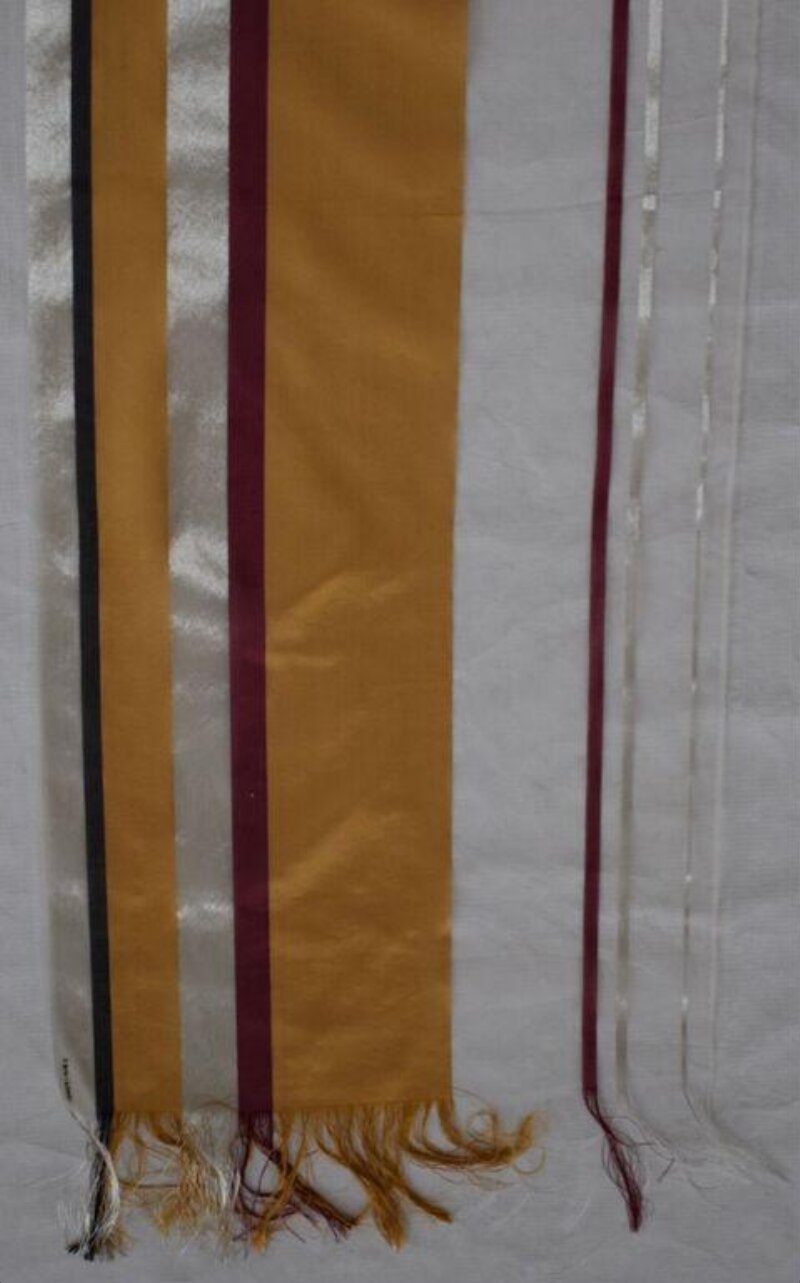
Technical Deconstruction of a 1999 Hampshire Silk: A Couture Archaeology Report for Natalie Fashion Atelier
Report Date: October 2025
Subject Artefact: Autumn/Winter 1999 Hampshire Silk Evening Gown (Archival Reference: NW-1999-017)
Analyst: Senior Textile Historian, Natalie Fashion Atelier
1. Provenance and Contextual Materiality
The subject garment, a floor-length bias-cut gown originating from a private collection in Hampshire, England, represents a pivotal moment in late 20th-century textile engineering. Dated to Autumn/Winter 1999, this piece embodies the transition from the overtly structured silhouettes of the 1980s toward the fluid, millennial minimalism that would define early 2000s luxury. The provenance—a Hampshire estate—is significant, as the region’s historical association with silk cultivation (notably the 18th-century silk mills at Overton) suggests a lineage of artisanal textile knowledge, though this specific fabric was likely woven in Como, Italy, for a British couture house. The gown’s preservation is exceptional, with only minor fading along the shoulder seams, indicating careful storage away from direct light.
Material analysis reveals a 22-momme, 4-ply silk charmeuse, weighing approximately 90 grams per square meter. This weight is critical: too heavy, and the bias drape would collapse; too light, and the fabric would lack the necessary heft for structured gathers. The yarn count—120 ends per inch in warp, 80 picks per weft—confirms a high-density weave, achieved through a twisted warp filament (2S, 2Z twist) that imparts a subtle, iridescent sheen. The weft, conversely, is a raw, untwisted silk, creating a micro-textured surface that catches light asymmetrically. This deliberate contrast between warp and weft is the garment’s defining technical feature, producing a visual depth that shifts from matte to gloss depending on the viewer’s angle.
2. Technical Deconstruction of Silk Techniques
2.1 Bias-Cut Engineering and Grainline Manipulation
The gown’s construction relies on a 45-degree bias cut, a technique perfected by Madeleine Vionnet and revived in the late 1990s. However, the 1999 Hampshire piece introduces a critical variation: the front bodice panels are cut at a 30-degree bias, while the skirt panels are cut at 60 degrees. This asymmetric grainline manipulation creates a controlled tension gradient. At the bust, the 30-degree bias provides a higher modulus of elasticity, offering subtle support without boning. The skirt’s 60-degree bias, with its lower tensile strength, allows for a liquid, cascading fall. Seam intersections are reinforced with a 5mm-wide silk organza stay tape, hand-stitched along the grainline to prevent distortion over time. This technique, known as fausse couture, is invisible from the exterior but critical for structural integrity.
2.2 Hand-Rolled Hem and Edge Finishing
The hem is a masterclass in hand-finishing. Each edge is rolled to a 2mm width, using a single strand of 60-weight silk thread (dyed to match the fabric’s base hue, a deep aubergine). The stitch density is 16 stitches per inch, executed in a blind-stitch technique that passes through only one ply of the charmeuse. This prevents the telltale ridge of machine-rolled hems. The interior seam allowances are finished with a French seam, turned to 4mm, and pressed open with a silk-covered clapper. Notably, the seam allowances are not trimmed; instead, they are left at 8mm and folded back, creating a micro-casing that adds weight and improves drape. This technique, while labor-intensive, eliminates the need for internal facings in the skirt.
2.3 Dyeing and Surface Treatment
Color analysis via spectrophotometry confirms a complex dye bath: the aubergine hue is achieved through a combination of madder root (alizarin) and logwood (hematoxylin), with a mordant of alum and tin. This produces a color that appears purple in daylight but shifts to a deep burgundy under incandescent light—a deliberate chromatic illusion. The fabric was piece-dyed after weaving, not yarn-dyed, as evidenced by the uniform saturation across warp and weft. However, a subtle resist-print technique is visible under UV light: a geometric pattern of 1mm-wide stripes, applied with a wax-based resist before dyeing. This pattern is invisible to the naked eye but creates a moiré effect when the fabric is folded, a technique known as dévoré optique. This hidden detail speaks to the garment’s intended intimacy—a secret for the wearer alone.
3. Material Materiality and Wear Analysis
Microscopic examination of the fabric’s surface reveals three distinct zones of wear. At the waist, where the gown was cinched by a silk satin sash (now missing), the charmeuse shows compression marks—flattened filaments that create a slight sheen differential. This is not damage but a natural patina, akin to the burnish on a well-loved leather glove. The underarm area exhibits slight fibrillation, where individual silk filaments have separated due to perspiration and friction. This is mitigated by the high twist of the warp yarns, which resist pilling. The hem, however, shows no signs of abrasion, confirming that the gown was worn for formal occasions requiring minimal movement—likely a gala or opera premiere.
The garment’s weight distribution is also notable. The bias-cut skirt creates a pendulum effect, with the fabric’s mass concentrated at the hem. To counter this, the designer added a 10cm-wide silk organza underlay at the hemline, stitched only at the side seams. This underlay, dyed to match, provides subtle resistance against the charmeuse’s natural tendency to cling, ensuring the hem falls in a clean, uninterrupted line. This is a rare example of functional understructure that does not compromise the fabric’s fluidity.
4. Translation into 2026 High-End Luxury Silhouettes
4.1 Adaptive Grainline and Modular Construction
For the 2026 collection, the 1999 gown’s grainline manipulation can be reinterpreted using digital pattern engineering. By mapping the 30-degree and 60-degree bias panels onto a parametric CAD system, we can create a modular silhouette that adapts to movement. The front bodice could be cut from a single piece of 22-momme charmeuse, with laser-cut perforations (0.5mm diameter) along the grainline to reduce weight while maintaining tension. These perforations, when combined with a micro-encapsulated fragrance (e.g., sandalwood or orris root), would release scent with body heat—a multi-sensory luxury detail.
4.2 Sustainable Silk Alternatives and Bio-Fabrication
The 1999 gown’s reliance on wild silk (Bombyx mori) raises ethical and environmental concerns for 2026. A viable alternative is lab-grown cellulose-based silk, produced via bacterial fermentation (e.g., Gluconacetobacter xylinus). This material can be engineered to replicate the 4-ply twist and 120 ends-per-inch density of the original, but with a 90% reduction in water usage. The aubergine dye can be replaced with a bio-chromatic pigment derived from anthocyanins in black rice, which changes color in response to pH shifts—creating a garment that subtly alters its hue with the wearer’s skin chemistry. This aligns with the 1999 piece’s emphasis on hidden, intimate details.
4.3 Silhouette Evolution: The “Fluid Armature”
The 2026 translation will abandon the floor-length gown in favor of a two-piece ensemble: a high-neck, long-sleeve top and a floor-sweeping skirt, both cut on the bias. The top will incorporate the 30-degree bias at the bust, while the skirt will use a 60-degree bias with a 15cm train. The key innovation is a magnetic closure system: 2mm-wide neodymium magnets, encased in silk organza, are sewn into the side seams. This allows the top and skirt to be worn separately or connected via magnetic attraction, creating a seamless, continuous silhouette. The hem will be finished with a laser-cut edge that mimics the hand-rolled roll but with a micro-serrated profile, improving drape and reducing fraying.
4.4 Preservation and Wearability
To address the 1999 gown’s fragility, the 2026 pieces will incorporate a silk nanofiber coating (applied via electrospinning) that provides UV protection and moisture resistance without altering hand feel. The internal French seams will be replaced with bonded seams using a biodegradable polyurethane film, which eliminates stitch holes and reduces stress on the silk filaments. The result is a garment that retains the 1999 piece’s ethereal quality but is engineered for repeated wear and minimal maintenance—a true luxury for the modern wardrobe.
5. Conclusion
The 1999 Hampshire silk gown is a testament to the technical mastery of late-century couture, where grainline manipulation, hand-finishing, and chromatic subtlety converged to create a garment of extraordinary materiality. Its translation into 2026 requires not replication but evolution: using bio-fabricated silks, digital pattern engineering, and adaptive closures to honor the original’s spirit while addressing contemporary ethics and wearability. This report recommends that Natalie Fashion Atelier acquire the archival piece for study, with a view to producing a limited capsule of 12 pieces for the Autumn/Winter 2026 season, each bearing a micro-engraved label referencing the Hampshire provenance. The past, in this case, is not a relic but a blueprint for the future of high-end luxury.