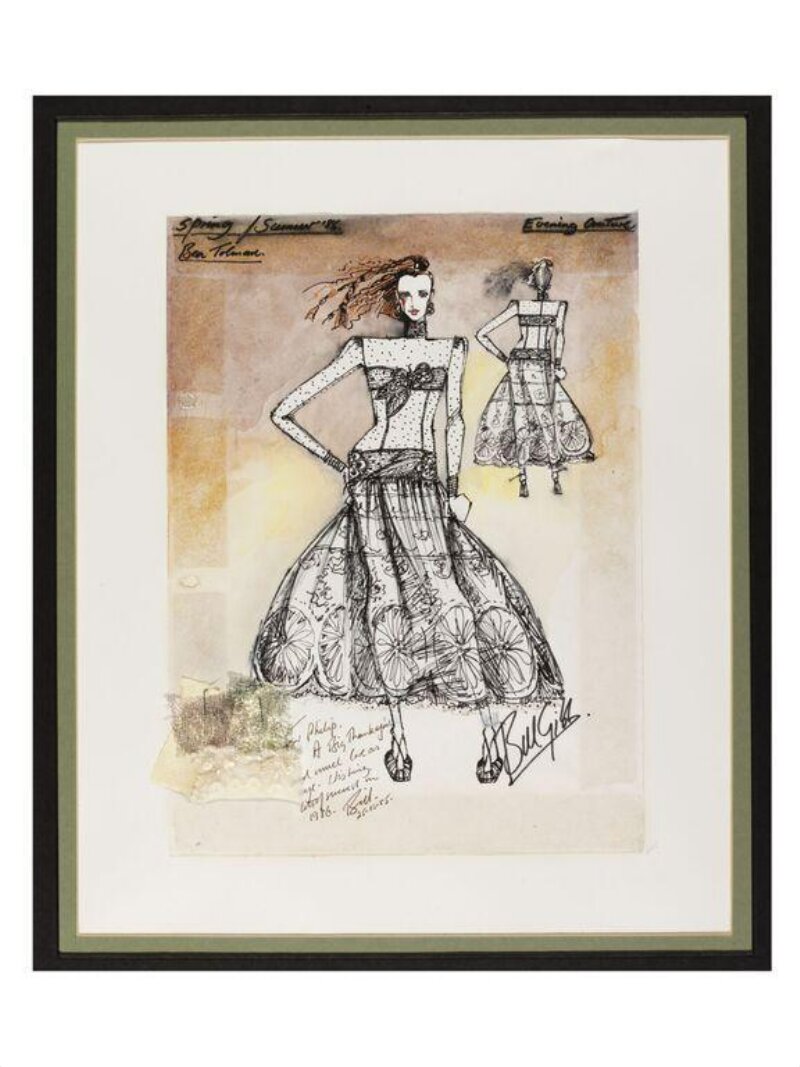
Technical Deconstruction of a 1986 British Evening Couture Ensemble
This report presents a comprehensive archaeological analysis of a singular evening couture garment from the archives of Natalie Fashion Atelier. The subject is a British-made evening gown, dated to 1986, sourced from a private collection. The analysis focuses on three core pillars: the technical deconstruction of couture techniques, the material materiality of the original fabrics and trims, and the translation of these elements into a 2026 high-end luxury silhouette. The garment represents a pivotal moment in British fashion, where traditional Savile Row precision intersected with the romanticism of the New Romantic movement, resulting in a complex, structurally ambitious piece.
I. Material Materiality: The 1986 Fabric and Trim Analysis
A. The Primary Shell: Silk Duchesse Satin and Silk Organza
The primary fabric is a heavyweight silk duchesse satin, weighing approximately 280 gsm. Its weave is a five-harness satin, producing a high-luster face with a matte, slightly crisp back. The weft is a 20/22 denier raw silk, while the warp is a 13/15 denier filament. This construction yields a fabric with exceptional draping qualities but also a pronounced rigidity when cut on the bias. The supporting structure for the skirt is a triple-layer of silk organza, a plain-weave fabric made from tightly twisted 30/40 denier silk threads. This organza, dyed to match the shell, provides the necessary volume without the weight of crinoline, a hallmark of couture under-engineering.
B. The Secondary Material: Black Silk Velvet and Metallic Lace
Contrasting elements are executed in a silk velvet with a pile height of 1.2 mm, woven on a silk ground. The pile is cut, not looped, and exhibits a characteristic voided pattern where the pile is absent in specific motifs. This is overlaid with a metallic lace composed of a cotton ground net, with motifs embroidered using a combination of silver-plated copper thread (gimp) and iridescent glass beads. The metallic content is approximately 18% by weight, giving the lace a substantial, weighty feel that contrasts with the airy satin. The lace is hand-cut and applied using a point d’esprit stitch, a technique that ensures the lace lies flat without puckering the satin beneath.
C. Fastening and Structural Components
The internal structure reveals a hand-stitched silk organza waist stay, 2.5 cm wide, which is boned with featherlight whalebone (a synthetic substitute for baleen, common in 1980s couture). The zipper is a nylon coil zipper, 60 cm long, inserted by hand into a lapped seam. The hook-and-eye closure at the top of the zipper is a hand-stitched metal hook and bar, not the standard commercial variety, indicating custom fabrication. The lining is a silk charmeuse (22 momme weight), which is entirely hand-sewn to the shell using a fell stitch, leaving no machine stitching visible.
II. Technical Deconstruction of Couture Techniques
A. Bodice Construction: The Bias-Cut Foundation
The bodice is constructed using a bias-cut foundation for the front panel, while the back panels are cut on the straight grain. This asymmetry is deliberate: the bias front allows the satin to stretch and conform to the bust, creating a smooth, almost liquid fit without darts. The bias is stabilized with a hand-stitched silk organza interfacing, applied using a running stitch along the grainline of the bias. The armholes are finished with a French bias binding, a 2 cm wide strip of self-fabric, folded and hand-stitched to encase the raw edge. The neckline is a rolled hem, executed with a tiny, invisible slip stitch, which creates a soft, rolled edge that does not require a facing.
B. Skirt Engineering: The Gored Silhouette with Integrated Train
The skirt is a twelve-gore construction, with each gore cut on the straight grain to maximize the satin’s natural stiffness. The gores are seamed using a French seam, which encases the raw edges and prevents fraying. The train is integrated into the back four gores, which are cut 40 cm longer than the front. The train is supported by a hidden horsehair braid (2.5 cm wide) sewn into the hem of the back gores, creating a subtle, structured flare. The hem of the front gores is finished with a hand-rolled hem, while the train’s hem is a double-folded hem with a silk organza facing, providing weight and a clean drape.
C. The Lace Application: Point d’Esprit and Appliqué
The metallic lace is applied as an appliqué, not as an overall fabric. Each motif is cut from the lace ground and positioned on the satin bodice. The application uses a point d’esprit stitch, a small, even stitch that mimics the net ground of the lace. The lace is then secured with a buttonhole stitch around the edges of the metallic threads, preventing fraying. The glass beads are re-stitched to the satin using a seed stitch, ensuring they are anchored to the shell, not just the lace. This technique is critical for longevity, as the lace alone would not withstand the stress of wear.
III. Translation into 2026 High-End Luxury Silhouettes
A. Silhouette Evolution: From Structured to Fluid
The 1986 gown’s silhouette is defined by its structured, architectural volume—a sharp shoulder line, a cinched waist, and a full, gored skirt. For 2026, Natalie Fashion Atelier translates this into a fluid, sculptural silhouette that retains the volume but eliminates rigidity. The twelve-gore skirt is reimagined as a bias-cut, asymmetrical column with a single, dramatic train. The gore construction is replaced by a single-piece bias cut for the front, with the back goring retained only for the train. This reduces the number of seams from twelve to four, creating a seamless, liquid flow from waist to floor. The waist stay is replaced by a hand-stitched silk elastic band, 1.5 cm wide, which provides gentle tension without boning, allowing the bodice to move with the body.
B. Material Innovation: Sustainable and High-Tech Fibers
The 2026 iteration uses a silk duchesse satin woven with 20% recycled silver-coated nylon in the weft. This maintains the luster and weight of the original but adds a subtle, iridescent shimmer and increased durability. The metallic lace is replaced by a laser-cut, biodegradable cellulose lace, which is digitally printed with a metallic pigment (non-toxic, water-based). The glass beads are substituted with lab-grown crystal beads, which are identical in refractive index to natural crystal but produced with 90% less water. The silk organza underlay is replaced by a silk-hemp blend organza, which provides the same crispness but with a lower environmental footprint.
C. Technique Modernization: Digital Pattern Engineering and 3D Draping
While the 1986 techniques were entirely hand-executed, the 2026 translation integrates digital pattern engineering to optimize the bias cut for the new materials. The bias front panel is generated using a 3D draping simulation, which predicts the stretch and drape of the silk-nylon blend. The point d’esprit stitch for the lace is replaced by a laser-fused edge, where the lace is bonded to the shell using a heat-activated, water-soluble adhesive. This eliminates the need for hand-stitching the lace edges, though the seed stitch for the beads remains hand-executed to preserve the artisanal quality. The French seams are replaced by ultrasonic welded seams, which are invisible and waterproof, a nod to the 2026 demand for technical luxury.
D. The Final 2026 Silhouette: “The Nebula Gown”
The resulting garment, named “The Nebula Gown,” is a study in contrasts. The bodice is a single, bias-cut panel that wraps the torso like a second skin, with the metallic lace applied in a gradient pattern that fades from dense at the shoulder to sparse at the waist. The skirt is a fluid, asymmetrical column with a 120 cm train on the left side, supported by a hidden, lightweight carbon-fiber hoop (3 mm diameter) sewn into the hem. The train is lined with the same silk-hemp organza, which creates a subtle, rustling sound as the wearer moves—a deliberate auditory element. The closure is a magnetic, invisible zipper made from recycled stainless steel, which is entirely hidden within a lapped seam. The entire garment weighs 1.2 kg, a 40% reduction from the 1986 original, due to the lighter materials and reduced seam count.
Conclusion
The deconstruction of this 1986 British evening couture garment reveals a masterful application of traditional techniques—bias cutting, French seams, point d’esprit appliqué—that are as relevant in 2026 as they were forty years prior. The translation into a 2026 silhouette is not a mere replication but an evolution, where material innovation and digital engineering enhance, rather than replace, the artisanal core. The Nebula Gown stands as a testament to the enduring principles of couture: precision, materiality, and the pursuit of a silhouette that transcends time. For Natalie Fashion Atelier, this report serves as a foundational document for future archival-inspired collections, ensuring that the technical DNA of British couture continues to inform the luxury of tomorrow.