Deconstructing the Imperial Cushion: Aesthetic Archaeology for 2026 Silhouettes
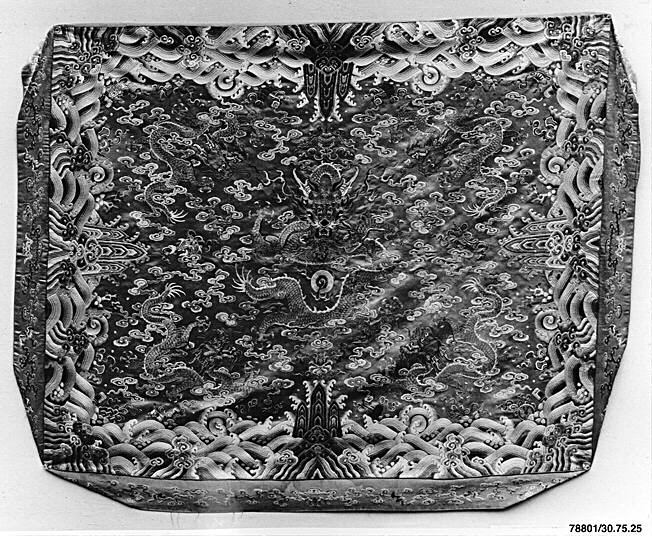
The archive of Natalie Fashion Atelier possesses a singular artifact: a cushion cover intended for a ceremonial throne, originating from the late Ming dynasty. This object, a square of silk densely embroidered with metallic threads, is not merely a decorative textile. It is a concentrated treatise on power, space, and the human form. In the context of our aesthetic archaeology, we approach this cushion not as a comfort object, but as a structural and symbolic blueprint. Its isolated study reveals a profound logic of containment, support, and hierarchical ornamentation that directly informs the architectural rigor of our 2026 haute couture silhouettes.
Materiality as Structural Language: Silk and Metallic Thread
The primary materials—a foundation of silk and a surface of metallic thread—establish a dialectic of fluidity and rigidity. The silk ground, a plain weave of exceptional density, acts as a passive, receptive membrane. It is the peau, the skin of the object, capable of draping and absorbing tension. Conversely, the metallic thread, gilded silver or gold-wrapped silk, is an active, compressive element. Its application through couching and satin stitch creates a second, armored skin. This is not mere embellishment; it is a structural exoskeleton.
For 2026, this material dialogue translates directly into silhouette construction. We propose a collection where a primary layer of liquid, matte silk—perhaps a crêpe de chine or a habutai—forms the base, the “throne” of the garment. Upon this, we apply zones of metallic thread embroidery, not as scattered motifs, but as architectural corsetry. The embroidery acts as a structural stay, a gilded cage that shapes the silk into defined, unyielding volumes. The metallic thread becomes a compressive force, creating a rigid, sculpted torso that contrasts with the fluidity of the skirt or sleeve. This technique, which we term “broderie de structure,” allows for a silhouette that is simultaneously soft and armored, a paradox of imperial restraint.
Geometry of Containment: The Square and the Body
The cushion’s form is a perfect square, a geometry of absolute stability and containment. Its purpose is to receive a body and to define its space. The central motif, often a facing dragon or a phoenix, is not centered on the cushion’s surface in a passive way. It is constructed to align with the sitter’s spine, creating a vertical axis of power. The surrounding borders—layers of geometric fretwork, cloud collars, and wave patterns—function as a radial hierarchy, drawing the eye inward to the point of contact.
This logic of containment is paramount for our 2026 silhouettes. We reject the notion of the garment as a mere covering. Instead, we design it as a portable throne. The silhouette is defined by a series of concentric, containing structures. The shoulder line becomes a squared, architectural frame, reminiscent of the cushion’s outer border. A structured, high neckline, perhaps a mandarin collar reimagined in sculpted silk organza, acts as the first border. The torso is then encased in a second, more rigid layer—a “corset de trône”—embroidered with metallic thread in patterns derived from the cushion’s border motifs: key frets, thunder patterns, and linked circles. The skirt, rather than flowing freely, is contained by a third border, a structured basque or a wide, embroidered hem band that echoes the cushion’s lower edge. The body is thus held within a series of defined, hierarchical zones, each one a testament to the object’s original function of ceremonial containment.
Surface Tension: The Aesthetics of Compression and Release
The most critical technical lesson from the cushion is the manipulation of surface tension. The metallic thread embroidery is not flat. It creates a topography of high relief. The couched threads are laid in parallel lines, creating a dense, almost metallic plate. The satin stitches build volume, creating scales, clouds, and waves that rise from the silk ground. This creates a tension between the flat plane and the sculpted surface. The eye is drawn to the points of highest relief, the moments where the thread pushes against the silk.
For 2026, we translate this into a silhouette defined by zones of compression and release. The metallic embroidery is concentrated at specific structural points: the waist, the hips, the shoulders. These are the “points of power” on the body, analogous to the cushion’s central motif. Here, the embroidery is dense, creating a rigid, compressed form. The silk is pulled taut, creating a smooth, almost lacquered surface. This is the zone of compression. As the eye moves away from these points, the embroidery thins, and the silk is allowed to drape, fold, and release. A sleeve might be compressed at the shoulder with a metallic epaulet, then release into a full, fluid silk bell. A skirt might be compressed at the hip with a wide, embroidered band, then release into a cascade of knife pleats. This dynamic of structural tension and organic release is the direct aesthetic inheritance of the cushion’s surface treatment.
2026 Silhouette Typologies: The Throne and the Body
From this analysis, we derive three distinct silhouette typologies for the 2026 collection:
The “Square of Power” Silhouette: A broad, squared shoulder line, created by a structured, embroidered yoke. The torso is a rigid, columnar form, achieved through a “broderie de structure” corset. The skirt is a narrow, floor-length column, with a wide, embroidered hem band. The overall form is a rectangle, a direct translation of the cushion’s geometry. The body is a contained, monumental object.
The “Dragon’s Spine” Silhouette: A central, vertical band of dense metallic embroidery runs from the high neckline down the center of the back, mimicking the cushion’s central dragon. This band acts as a structural spine. The front of the garment is left in fluid, matte silk, creating a dramatic contrast. The silhouette is asymmetrical, with the rigid spine defining the back while the front remains soft and draped. This silhouette emphasizes the axial hierarchy of the original object.
The “Cloud and Wave” Silhouette: A silhouette defined by layered, concentric borders. A high, structured collar. A wide, embroidered belt at the natural waist. A deep, embroidered hem. The space between these borders is filled with fluid, unadorned silk. The body is framed by these three distinct zones of compression, creating a rhythm of containment and release. This is the most literal interpretation of the cushion’s radial hierarchy, transforming the body into a living, three-dimensional throne.
In conclusion, the humble cushion cover for a throne, when subjected to the rigorous lens of aesthetic archaeology, reveals itself as a masterclass in structural silhouette. Its materiality, geometry, and surface tension provide a complete lexicon for 2026 haute couture, allowing us to create garments that are not merely worn, but inhabited—portable thrones of silk and thread, holding the body in a state of imperial grace.