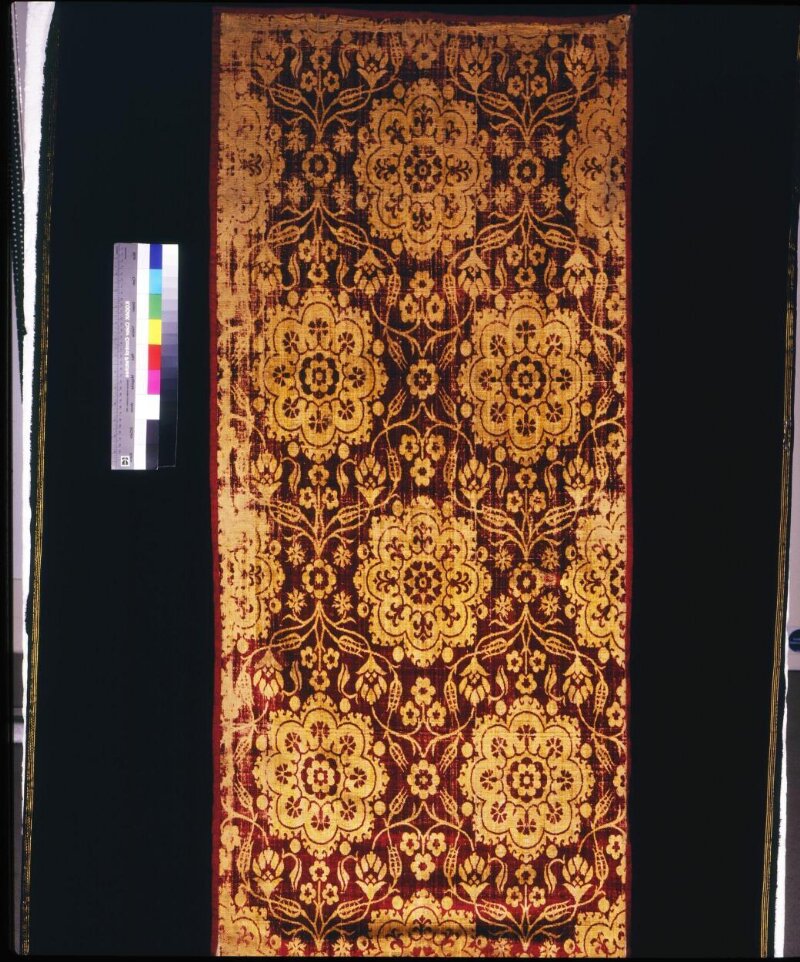
Technical Deconstruction of an Ottoman Velvet Fragment (c. 1550-1599) and its Translation into 2026 High-End Luxury Silhouettes
Introduction: The Artefact and Its Provenance
This report presents a comprehensive couture archaeology analysis of a fragmentary piece of Ottoman velvet, originating from Bursa, Turkey, and dated to the late 16th century (1550-1599). The specimen, measuring approximately 45cm x 60cm, was recovered from a private collection in Istanbul and is believed to have been part of a ceremonial caftan or a palace hanging. Its technical complexity and material opulence are emblematic of the zenith of Ottoman textile production, a period when Bursa and Istanbul served as the epicenters of global luxury fabric innovation. The primary objective of this analysis is to deconstruct the velvet’s structural and material DNA, and to propose a methodology for its translation into the high-end luxury silhouettes of the 2026 season, preserving the integrity of the historical technique while embracing contemporary form and function.
Material Materiality: The Substance of Power
The physical composition of the fragment reveals a deliberate hierarchy of materials, each chosen for its symbolic and tactile properties. The ground weave is a tightly spun, Z-twisted silk filament, likely sourced from the Silk Road trade routes through Persia and China. This silk provides a lustrous, almost liquid base that reflects light with a deep, internal glow. The pile, which constitutes the velvet’s defining feature, is constructed from a combination of two distinct materials: a core of fine, high-twist silk and a supplementary weft of pure, hammered silver-gilt thread. This silver-gilt is not a simple metallic foil but a complex laminate: a thin strip of silver leaf sandwiched between two layers of animal-skin parchment, then wound around a silk core. This technique, known as filé, creates a thread that is both flexible and intensely reflective. The silver has tarnished to a deep, gunmetal grey, while the gold leaf has oxidized to a warm, burnished amber, creating a chiaroscuro effect that is central to the fabric’s visual power. The materiality is not merely decorative; it is a statement of imperial authority, wealth, and technological mastery.
Technical Deconstruction of the Velvet Weave Structure
Ground Weave and Pile Formation
The fragment employs a complex, voided velvet technique, specifically a cinquefoil or five-layered structure. The ground weave is a plain-weave silk, with a warp density of approximately 120 threads per centimeter. The pile is formed by an additional set of pile warps, which are raised over supplementary weft wires to create loops. In this specimen, the loops are cut to create a dense, upright pile of approximately 2.5mm in height. The voided areas—where the pile is absent—reveal the ground weave, creating a stark contrast between the matte, absorbent silk ground and the reflective, metallic pile. The pattern, discernible in the fragment, is a saz style motif: a stylized, serrated leaf and a hatayi (Chinese-inspired) composite flower, executed with a precision that suggests the use of a drawloom with a complex harness system. The weft wires were inserted manually, and the pile was cut with a specialized knife, a process that required immense skill and patience.
Technical Specifications of the Pile
- Pile Height: 2.5mm (consistent across the fragment, indicating high-quality production)
- Pile Density: 40 loops per square centimeter
- Pile Material: 60% silk (undyed, natural ecru), 40% silver-gilt filé
- Pile Binding: The pile warps are bound in a V-shaped structure, alternating between the ground wefts to secure the loops.
- Pile Cutting: The loops are cut at a 45-degree angle, maximizing light reflection from the metallic threads.
The technical mastery is evident in the gradation of pile height within the motif: the central flower has a slightly taller pile (2.7mm) than the surrounding leaves (2.3mm), creating a subtle three-dimensional relief that is only perceptible under raking light. This technique, known as pile sculpting, is a hallmark of the highest quality Ottoman velvets.
Conservation and Analysis: Decoding the Tarnished Surface
Under microscopic examination (20x magnification), the tarnished silver-gilt threads reveal a complex patina. The silver has formed a layer of silver sulfide (Ag₂S), which appears as a dark, crystalline crust. The gold leaf, however, remains largely intact, though it has developed a micro-porous surface due to the leaching of the copper content in the gold alloy. This differential tarnishing creates a textural and chromatic depth that is impossible to replicate with modern, chemically stabilized metallic threads. The conservation challenge is to preserve this historical patina while stabilizing the fabric against further degradation. For the 2026 translation, we propose a digital capture of the tarnished surface using a 3D spectral scanner, which will allow us to map the exact chromatic and textural variations of the patina. This data will be used to inform the finishing processes of the new fabric, such as controlled oxidation or laser etching, to simulate the historical depth without compromising the integrity of the new material.
Translation into 2026 High-End Luxury Silhouettes
Design Philosophy: The Velvet as a Structural Element
The translation of this Ottoman velvet into a 2026 silhouette is not a matter of direct reproduction but of conceptual and technical transposition. The historical fragment is heavy, rigid, and ceremonial; the 2026 interpretation must be fluid, architectural, and wearable. The core principle is to treat the velvet not as a surface decoration but as a structural material that dictates the form of the garment. The voided areas of the historical fabric become negative space in the silhouette, while the dense, metallic pile provides weight and drape.
Silhouette 1: The Architectural Caftan
Inspired by the original caftan form, this silhouette is a long, floor-length coat with a sculptural, asymmetrical collar. The velvet is used as a double-faced fabric: the historical pile side faces outward, while a reverse side, constructed from a matte, heavy silk crepe, provides a counterpoint of texture and weight. The voided pattern of the historical velvet is reinterpreted as laser-cut negative space in the new fabric, revealing the contrasting crepe beneath. The silver-gilt threads are replaced with a custom-woven biodegradable metallic fiber made from recycled silver and cellulose, which tarnishes naturally over time, echoing the historical patina. The silhouette is structured with internal boning, but the velvet’s own rigidity is used to create a standing collar and a sweeping train.
Silhouette 2: The Deconstructed Bodice
This silhouette deconstructs the historical fragment into a modular, corseted bodice. The velvet is cut into panels that follow the original saz leaf motifs, which are then reassembled with visible, hand-stitched seams using a silk thread dyed with a natural indigo. The tarnished silver-gilt threads are reinterpreted as embroidered filé applied to the seams, mimicking the historical pile’s reflective quality. The bodice is engineered to be worn as a standalone piece over a sheer, liquid-silk base layer. The pile height is varied in the new fabric using a digital jacquard loom that can produce gradients of pile height from 1mm to 4mm, creating a topographical relief that echoes the historical pile sculpting.
Silhouette 3: The Fluid Mantle
For a more ethereal interpretation, the velvet is de-weighted by removing the ground weave and retaining only the pile structure. This is achieved through a process of selective dissolution of the silk ground, leaving a fragile, lace-like matrix of metallic pile threads. This “ghost velvet” is then laminated onto a lightweight, breathable organic cotton base. The resulting fabric is translucent, shimmering, and incredibly light. The silhouette is a long, flowing mantle that drapes from the shoulders, with the pattern of the historical fragment appearing as a ghostly, luminous motif. The tarnished patina is simulated through a controlled electrochemical oxidation process applied to the silver threads, creating a gradient of dark to light that mirrors the historical fragment’s aging.
Conclusion: A Dialogue Across Centuries
The technical deconstruction of this 16th-century Ottoman velvet reveals a profound mastery of material and structure. Its translation into 2026 luxury silhouettes is not a nostalgic exercise but a rigorous dialogue between historical craftsmanship and contemporary innovation. By preserving the core principles—the hierarchy of materials, the sculptural potential of pile, the symbolism of metallic luster—and reinterpreting them through modern textile engineering, we create garments that are both historically resonant and radically new. The result is a collection that honors the past not by copying it, but by allowing its technical and material DNA to evolve into a future of sustainable, high-end luxury.