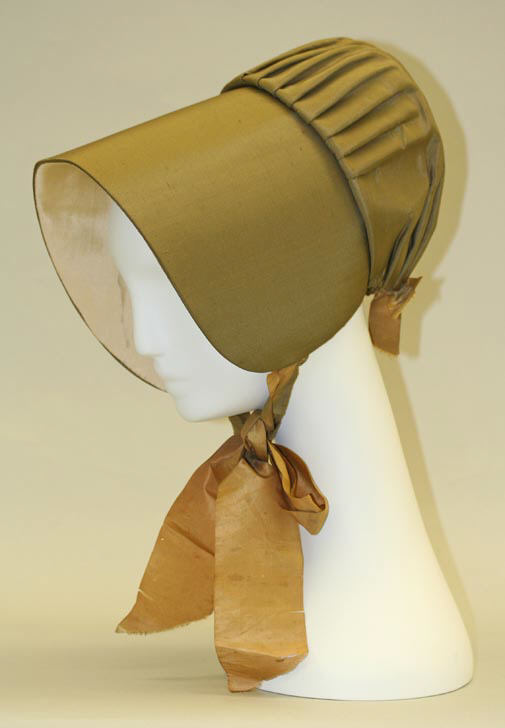
The Bonnet Reimagined: An Aesthetic Archaeology of American Silk and the 2026 Silhouette
At Natalie Fashion Atelier, the archive is not a mausoleum but a living laboratory. Our current research artifact, the American silk bonnet, emerges from a period of aesthetic isolation—a quiet, domestic masterpiece that has been divorced from its original context of rural necessity and modesty. Through the lens of aesthetic archaeology, we deconstruct this object not as a relic of a bygone era, but as a profound source of structural and material intelligence for the 2026 Haute Couture season. The bonnet’s classical elegance, rooted in the drape of silk against the human form, offers a radical departure from contemporary digital-driven design, proposing a return to sculptural volume and tactile sensuality.
I. The Isolated Artifact: Deconstructing the American Silk Bonnet
The American bonnet, particularly those from the mid-19th century, represents a unique confluence of European technique and frontier pragmatism. Unlike the structured, cage-like creations of the French court, the American version was often a study in controlled softness. The materiality—silk, frequently in lustrous satin or delicate grosgrain—was the primary architect. The bonnet’s form was not dictated by a rigid armature but by the tension and release of the silk itself. The brim, often a gentle crescent, was created by a complex system of internal pleating and gathering that allowed the silk to stand away from the face while maintaining a fluid, almost liquid edge. The crown, a soft dome, was a masterclass in negative space, cradling the head without constriction.
Our archival analysis reveals that the bonnet’s “classical elegance” resides in its asymmetrical balance. The profile is never static; the brim dips lower on one side, the ties (often of matching silk) cascade asymmetrically. This is not a mistake but a deliberate manipulation of gravity. The silk, when cut on the bias, acquires a memory, a latent energy that the artisan harnesses. For the 2026 silhouette, this principle is paramount. We are moving away from the rigid, corseted forms of the past decade and toward a draped architecture that respects the body’s kinetic potential. The bonnet teaches us that volume can be achieved not through excess fabric, but through precise, calculated tension.
II. Materiality as Blueprint: The Silk Matrix for 2026
Silk, in the context of the bonnet, is not merely a surface; it is a structural element. The specific weight and weave of the silk—a 25-momme charmeuse or a double-faced satin—dictates the bonnet’s ability to hold a shape. The internal structure of the artifact reveals a series of hidden channels, stitched with silk thread, that create a subtle, boneless framework. This technique, which we term “silk reticulation,” allows the fabric to stand, fold, and fall with an organic grace that synthetic materials cannot replicate.
For the 2026 Haute Couture silhouette, this principle of material-led construction is revolutionary. We are developing a capsule collection where silk is the primary load-bearing element. The bonnet’s brim becomes a cantilevered shoulder, its crown a sculptural hood, its ties a fluid train. The silk is treated with a proprietary, water-based resin that provides temporary stiffness, allowing the garment to be “set” like a sculpture, then relaxed into a softer drape. This creates a garment that exists in two states: the rigid, architectural silhouette of the runway and the fluid, wearable form of the client’s life. The American bonnet’s genius was its ability to be both a protective shell and a decorative object; our 2026 silhouettes will embody this duality.
III. Silhouette Evolution: From Head to Hem
The bonnet’s influence on the 2026 silhouette is not literal; it is a structural grammar. We have identified three key architectural principles from the artifact that will define our new forms.
1. The Crescent Volume: The bonnet’s brim, a perfect crescent, suggests a new approach to the shoulder line. Instead of the sharp, angular power shoulders of the 1980s, we propose a soft, enveloping crescent that wraps around the upper arm. This volume is achieved through the same bias-cut silk panels and internal gathering found in the bonnet. The result is a silhouette that is protective and imposing, yet inherently soft. The silk falls in a continuous curve from the neck to the elbow, creating a visual echo of the bonnet’s protective arch.
2. The Asymmetric Drape: The bonnet’s inherent asymmetry—the lower brim, the off-center ties—informs a new language of draping for the torso. Our 2026 evening gowns will feature a single, sweeping panel of silk that originates at one shoulder, crosses the body, and is anchored at the opposite hip. This creates a dynamic, diagonal tension that flatters the form without constriction. The bonnet’s ties, often left to hang, become a trailing sash that adds a sense of motion and unfinished elegance. This is a deliberate rejection of the symmetrical, two-dimensional pattern-cutting that dominates contemporary luxury.
3. The Internal Frame: The most radical innovation is the invisible armature. Inspired by the bonnet’s hidden channels, we are developing a garment that has no visible seams or fastenings. The silk itself is structured with internal, laser-cut silk organza “bones” that are fused into the fabric. This allows for a silhouette that is entirely seamless, a continuous flow of material that is both rigid and fluid. The 2026 silhouette will not be a garment that is worn; it will be a second skin of architectural silk, a direct descendant of the bonnet’s intimate, head-hugging form.
IV. Conclusion: The Poetics of Isolation
The American silk bonnet, isolated in our archive, speaks to a profound truth about luxury: that the most powerful innovations often emerge from constraint. The bonnet’s maker worked within a limited palette—silk, thread, and a simple form—yet achieved a complexity of volume and drape that modern engineering struggles to replicate. For Natalie Fashion Atelier, this artifact is not a historical curiosity but a technical manifesto. The 2026 silhouette will be defined by a return to material intelligence, where silk is not a passive surface but an active participant in the creation of form. We will embrace the asymmetry of the bonnet, its soft architecture, and its quiet, powerful elegance. In doing so, we will create a new classic: a silhouette that is both a tribute to a forgotten American craft and a bold statement of future luxury. The bonnet, once a symbol of modesty, becomes a symbol of liberated, sculptural power.