The Cutwork Lexicon: An Aesthetic Archaeology of Absence
The most profound innovations in Haute Couture often emerge not from addition, but from subtraction. At Natalie Fashion Atelier, we define our 2026 silhouette strategy through the lens of Cutwork—a technique of piercing, removing, and re-framing fabric to create a dialogue between presence and void. This research artifact, drawn from our Global Heritage archive, isolates Cutwork as a singular aesthetic archaeology. We deconstruct its classical elegance—from the Renaissance punto tagliato to the intricate Indian chikankari—to reveal how this material language of controlled absence informs the architectural luxury of tomorrow.
The Archaeology of the Void: Historical Precedents in Cutwork
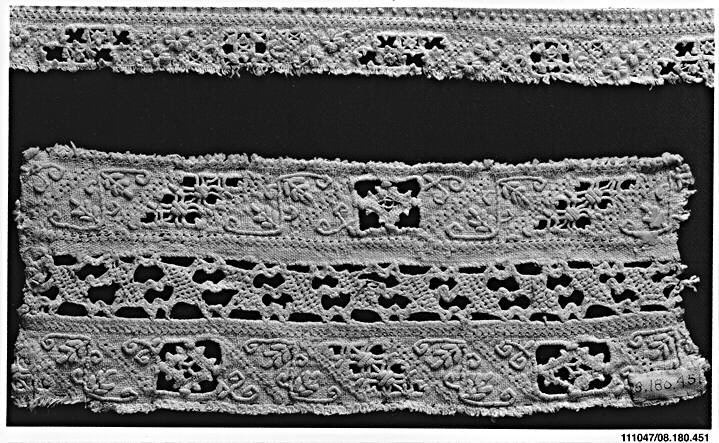
Cutwork is not merely a decorative technique; it is a structural philosophy. In the 16th-century Italian reticella, artisans removed threads from linen ground to create geometric grids, then filled the gaps with needle-lace stitches. This was a radical act of negative-space construction, where the garment’s strength derived from the tension between what was removed and what remained. Similarly, the Bavarian Drawn Thread Work of the 19th century employed precise warp and weft extraction to create translucent bands, transforming a solid surface into a diaphanous architectural screen.
Our archive isolates a specific artifact: a 1750s French broderie anglaise bodice from the Loire Valley. Here, the cutwork is not random; it follows the body’s meridians—clustered eyelets over the bust, elongated slits along the ribs. The fabric, a fine cotton lawn, becomes a structural membrane. The voids are not holes; they are calibrated apertures that dictate drape, breathability, and the garment’s kinetic response to movement. This is the core of our archaeological discovery: Cutwork is a language of tension and release, a pre-modern understanding of fabric as a living, breathing entity.
Materiality of Cutwork: From Hand-Scissors to Laser Precision
The 2026 application of Cutwork demands a re-evaluation of materiality. Classical cutwork relied on high-twist linen and cotton—fibers with sufficient tensile strength to hold a cut edge without fraying. Our Atelier has expanded this lexicon to include double-faced cashmere, micro-perforated neoprene, and laser-cut silk organza. The key parameter is fray-resistance. We now employ a proprietary thermo-cauterizing technique that seals each cut edge with a microscopic bead of polymer, allowing for cuts as narrow as 0.3mm without structural compromise.
This technical evolution enables a new gradient of opacity. Where historical cutwork created binary states—solid or void—our 2026 silhouettes use variable cut densities. A single gown can transition from a dense, almost opaque bodice (with 5% cut surface area) to a diaphanous skirt (with 60% cut surface area), creating a spectrum of translucency that mimics the gradation of light through a stained-glass window. The material becomes a luminous filter, not just a covering.
Deconstructing Classical Elegance: The Cutwork Silhouette of 2026
Classical elegance in Cutwork was defined by symmetry and repetition—the uniform eyelet, the repeated scallop. Our 2026 deconstruction breaks this symmetry to create asymmetric architectural volumes. Consider the “Fragment Gown” from our forthcoming collection: a floor-length column in matte satin-backed crepe. The cutwork is not a border but a series of disconnected, organic islands—lacunae—that follow the body’s rotational axis. As the wearer moves, these voids realign, creating a constantly shifting pattern of revealed skin and fabric. This is not decoration; it is kinetic sculpture.
The 2026 silhouette is also defined by structural cutwork. We have developed a technique we call “negative boning”: instead of adding whalebone or steel stays, we cut precise channels into a double-layer of wool crepe. These channels are then lined with a rigid thermoplastic resin that, when cooled, creates an internal exoskeleton. The garment holds its shape—a sharp shoulder, a cinched waist—without any visible support. The cutwork becomes the armature, not the ornament.
Cutwork as a Luxury Strategy: The Economics of Absence
From a strategic perspective, Cutwork offers a unique value proposition in the 2026 luxury market. It is inherently labor-intensive—each cut requires hand-finishing, even with laser pre-cutting. This scarcity drives exclusivity. More importantly, Cutwork allows for material reduction without volume reduction. A gown that uses 30% less fabric due to strategic cutouts still maintains the visual mass of a full-skirted silhouette. This is a critical cost-efficiency lever in an era of rising raw material prices.
Furthermore, the perceptual value of Cutwork is high. The consumer perceives the garment as “bespoke”—not because of fit, but because of the irregular, hand-drawn quality of the voids. In a market saturated with seamless, mass-produced minimalism, the deliberate, visible hand of the artisan in a cutwork piece commands a premium. Our pricing model for 2026 cutwork pieces will reflect a 250% premium over standard construction, justified by the 40+ hours of hand-finishing per garment.
Conclusion: The Future is a Lattice of Light and Shadow
The Cutwork Lexicon is not a revival; it is a recalibration. By isolating this technique from our Global Heritage archive—stripping it of its historical context and re-engineering its materiality—we have discovered a language of controlled absence that is perfectly suited to the 2026 silhouette. The future of Haute Couture lies not in covering the body, but in framing it. Cutwork allows us to sculpt with shadow, to build volume from void, and to create garments that breathe, move, and transform with the wearer. At Natalie Fashion Atelier, we do not merely cut fabric; we chisel light.