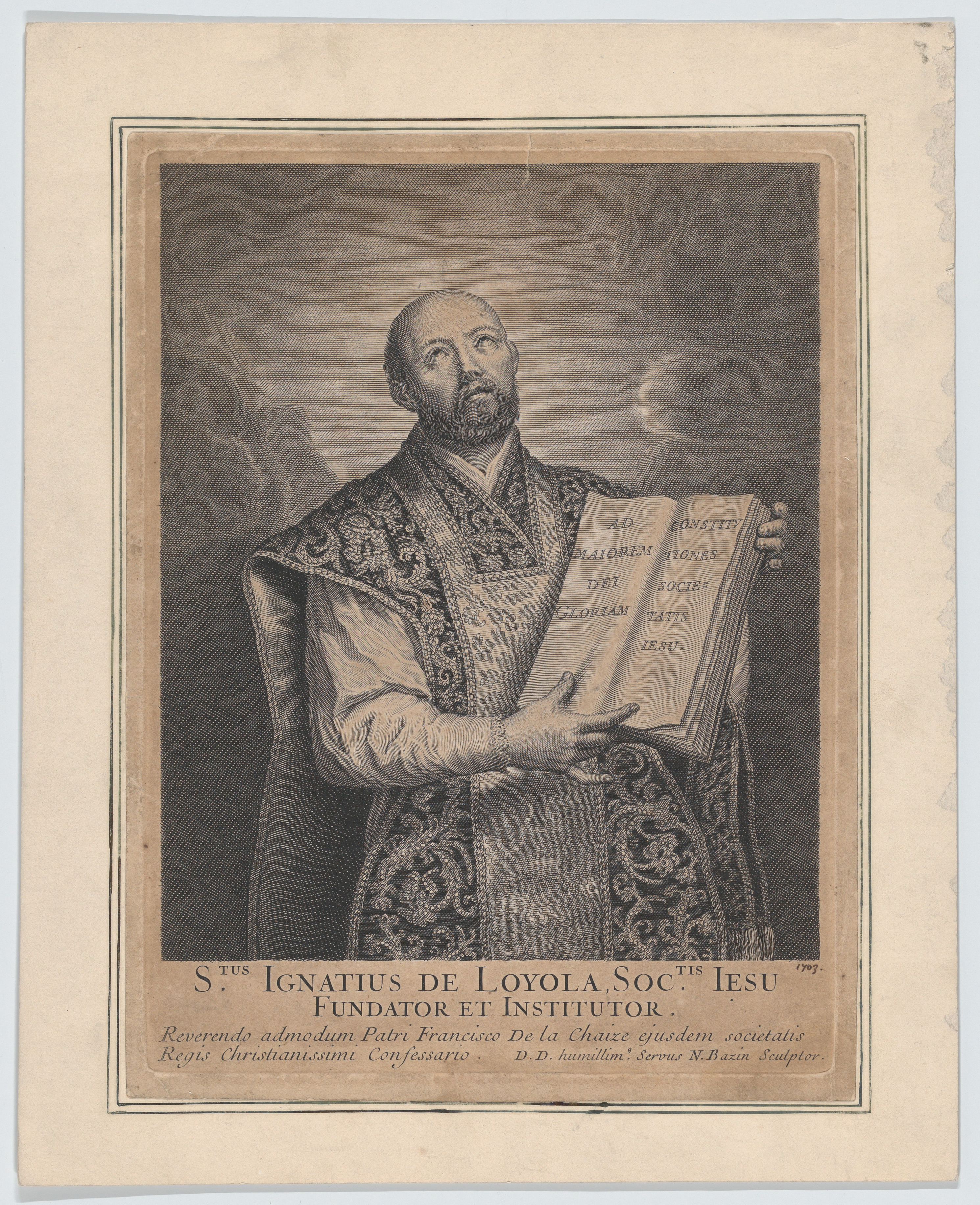
The Armor of the Soul: An Aesthetic Archaeology of St. Ignatius of Loyola
The figure of St. Ignatius of Loyola, founder of the Society of Jesus, exists in the collective memory not merely as a religious icon but as a paradigm of disciplined transformation. For the 2026 haute couture collection at Natalie Fashion Atelier, we isolate the aesthetic archaeology of the engraving—specifically the 17th and 18th-century copperplate portraits that depict Ignatius in his clerical armor. These are not soft, devotional sketches. They are hard, linear, and architectural. The engraver’s burin carves a silhouette of absolute control: the black cassock, the white collar, the severe profile. This is not a fabric; it is a structural manifesto.
To deconstruct this classical elegance is to understand that the engraving’s power lies in its negative space and its line weight. The black of the cassock is not a void; it is a dense, impenetrable mass that defines the form by what it refuses to reveal. The white of the collar is not a detail; it is a sharp, geometric interruption. In 2026, this translates to a silhouette that prioritizes architectural containment over fluid drape. The body is a vessel for spiritual armor.
Materiality of the Burin: From Metal to Muslin
The engraving process itself—the act of cutting into a metal plate with a burin—is the primary material informant. The resulting line is not a brushstroke; it is a controlled incision. For the atelier, this dictates a fabric treatment that mimics the hardness of metal and the precision of cut. We are not draping; we are incising the silhouette.
Key Materiality Transpositions:
Lacquer-Finish Wool Crêpe: This fabric is treated to a high-shine, almost vitreous finish, replicating the polished surface of a copper plate. Its weight is substantial, falling in rigid, columnar shapes. The silhouette is a direct translation of the cassock’s severe verticality. The hem is not soft; it is a clean, laser-cut edge that holds its line like a plate mark.
Bonded Leather with Micro-Engraving: A new composite material for 2026. A thin layer of matte calf leather is bonded to a rigid structural mesh. The surface is then micro-engraved using a laser to replicate the intricate cross-hatching and parallel lines of the original copperplate. This creates a textile that is both a garment and a relief sculpture. The engraving pattern is not decorative; it is the structural grid that dictates the garment’s tension points.
Starched Cotton Organza with Metallic Threads: For the white collar—the iconic collaro—we use an organza that is starched to a paper-like stiffness. Silver and platinum threads are woven into the warp and weft to catch light exactly as the engraved white lines catch the eye against the black field. This collar is not a separate accessory; it is integrated into the bodice as a structural yoke, a sharp, geometric frame for the face.
Silhouette Architecture: The 2026 Ignatian Line
The 2026 haute couture silhouette derived from this aesthetic archaeology is defined by three distinct architectural principles: the Column, the Cleft, and the Crown.
The Column: The primary silhouette is a long, unbroken vertical line from shoulder to floor. This is the cassock’s legacy. However, the 2026 interpretation is not monastic; it is martial. The fabric is cut on the bias but structured with internal boning to create a compressed, tubular form. The waist is not cinched; it is implied by the tension of the fabric against the body. The effect is one of controlled power, a silhouette that does not move with the body but contains it.
The Cleft: The engraving’s reliance on sharp, angular lines—the cleft of the chin, the sharp edge of the jaw, the precise fold of the cassock—informs a new approach to necklines and armholes. For 2026, we introduce the “Ignatian Cleft”: a deep, geometric V-neck that is not a drape but a cut-out. It is a precise incision into the fabric, often lined with a contrasting metal thread or a micro-engraved leather insert. This creates a visual tension between the solid mass of the garment and the exposed skin, echoing the engraving’s interplay of black ink and white paper.
The Crown: The head of St. Ignatius in the engravings is always presented with a distinct, almost architectural silhouette. The tonsure or the biretta creates a crown-like geometry. For 2026, this informs a series of structured headpieces and high collars that extend the vertical line of the silhouette upward. These are not hats; they are sculptural extensions of the garment, made from the same micro-engraved leather or lacquered wool. They frame the face with the same precision as the engraver’s burin frames the saint’s profile.
Color Palette: The Monochrome of the Plate
The palette is deliberately restricted. We work within the binary of the copperplate: black and white, with a single accent of oxidized silver.
Noir d’Encre (Ink Black): A black that is not a color but a depth. It is achieved through a proprietary dyeing process that uses carbon-based pigments, creating a surface that absorbs light rather than reflects it. This is the black of the engraved line, the black of the void.
Blanc de Craie (Chalk White): A white that is not soft but chalky and mineral. It is achieved by layering a matte white finish over a slightly textured base. This is the white of the paper, the white of the collar, the white of the saint’s skin.
Argent Oxydé (Oxidized Silver): A metallic accent that is not bright but tarnished and historical. This is the color of the silver thread in the organza, the color of the micro-engraved lines on the leather. It is a whisper of the metal plate itself.
Construction Techniques: The Atelier as Engraver
The construction of the 2026 Ignatian silhouette requires a return to bespoke, hand-intensive techniques that mirror the engraver’s craft.
Hand-Cut Incisions: All necklines, armholes, and structural seams are cut by hand using a scalpel on a cutting mat, not with scissors. This ensures a precision that replicates the burin’s line. The cut edges are then sealed with a liquid resin to prevent fraying, creating a clean, permanent line.
Internal Armatures: The columnar silhouette is achieved through a hidden internal armature of corset-grade steel boning, covered in the same micro-engraved leather. This armature is not a separate undergarment; it is sewn directly into the seams of the outer fabric. The garment becomes a wearable structure, a piece of architecture for the body.
Laser Micro-Engraving: For the surface texture, we employ a precision laser to engrave the fabric. This is not a print; it is a physical removal of material to create a relief. The pattern is derived directly from the cross-hatching of the original engraving. The laser’s depth is calibrated to the fabric’s weight, ensuring that the engraving does not compromise the garment’s structural integrity.
In conclusion, the 2026 haute couture silhouette informed by the aesthetic archaeology of St. Ignatius of Loyola is not a costume. It is a translation of a spiritual discipline into a material form. It is a silhouette of containment, precision, and controlled power. It is the armor of the soul, rendered in lacquered wool and micro-engraved leather. It is the line of the burin, made flesh.