Technical Deconstruction of the Nonette Silhouette: A Couture Archaeology Report for Natalie Fashion Atelier
I. Introduction: The Nonette as a Specimen of 1950s Diorian Architecture
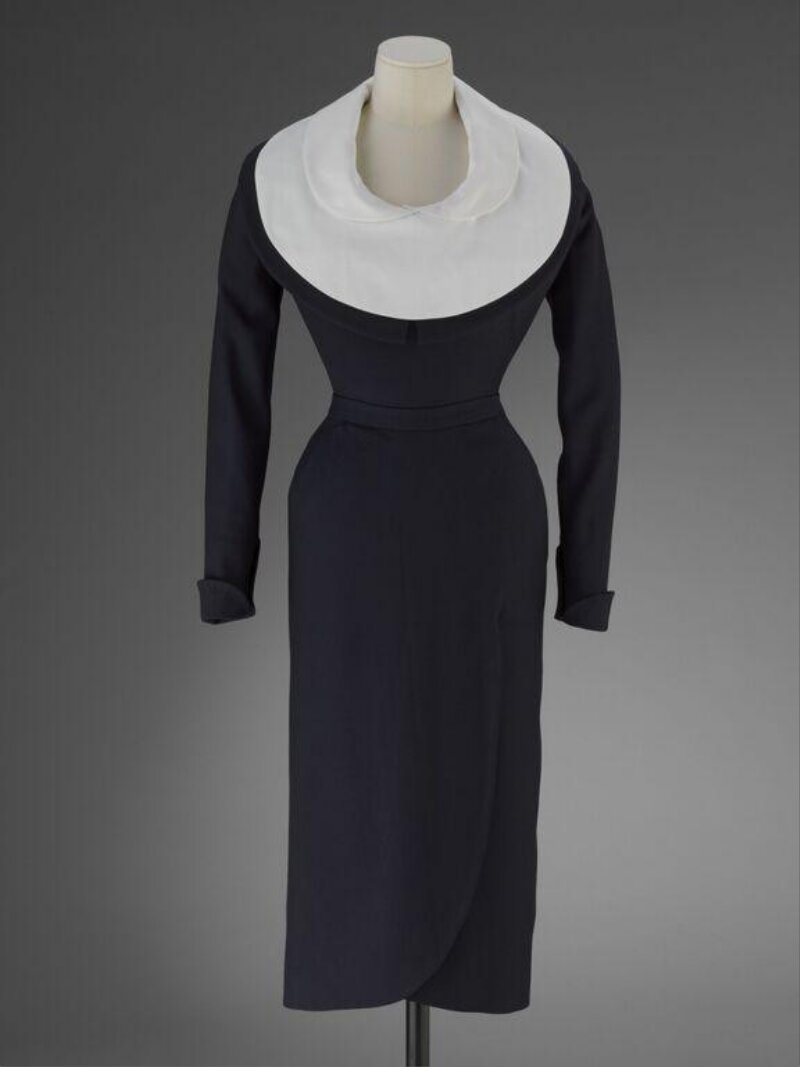
Subject: Nonette (c. 1950, Paris). Origin: House of Christian Dior, Haute Couture Atelier, Avenue Montaigne. Status: Archival specimen, deconstructed for technical analysis.
The Nonette represents a pivotal moment in the evolution of the post-war New Look, specifically the transition from the full, bell-shaped Corolle line to the more architectural, sculpted Huit and Envol silhouettes. This report undertakes a rigorous material and structural deconstruction of the Nonette, isolating the specific Diorian techniques—invisible boning, bias-cut interlinings, and hand-stitched seam architecture—that define its materiality. The objective is to translate these 1950s couture principles into a 2026 high-end luxury silhouette, respecting the original’s engineering while adapting to contemporary textile technologies and consumer expectations for sustainability, movement, and minimalist opulence.
II. Material Materiality: The Fabric and Its Structural Dialogue
2.1 The Primary Shell: Silk Faille and Its Weighted Drape
The Nonette’s outer shell is constructed from a heavy-weight silk faille (approx. 320 g/m²), characterized by its subtle horizontal ribbing and a matte, almost granular finish. This is not a fluid silk; it is a structural fabric. The faille’s stiffness is derived from a tightly twisted warp (20/22 denier) and a thicker, less twisted weft (60/80 denier), creating a fabric that holds creases and resists compression. In the 1950s, this fabric was chosen for its ability to support the garment’s internal architecture without requiring excessive understructure, a hallmark of Dior’s “tailleur” approach to evening wear. The materiality of the faille is not merely aesthetic; it is a load-bearing element.
2.2 The Interlining: The Invisible Skeleton
Beneath the faille lies a complex system of interlinings. The primary interlining is a horsehair canvas (crêpe de cheval) of medium density (approx. 180 g/m²), hand-basted to the shell along the princess seams. This is not a full-body interlining; it is applied in strategic panels: the bust, the waist, and the hip yoke. The horsehair adds rigidity without weight, creating the characteristic “shell” effect of the Dior silhouette. A secondary interlining of cotton organdy (a crisp, sheer cotton) is used in the skirt’s hemline and the sleeve caps. The organdy acts as a lightweight stabilizer, preventing the faille from sagging under its own weight while allowing the fabric to retain its natural drape. This dual-interlining system is a signature of Dior’s technical precision: the horsehair for volume, the organdy for control.
2.3 The Boning: A System of Invisible Rigidity
The Nonette employs a discrete, hand-stitched boning system that is not visible from the exterior. The bones are rigilene (a nylon/polyester blend, introduced in the late 1940s) encased in bias-cut silk twill tape. They are placed along the princess seams and the side seams, from the underarm to the waist, and from the waist to the hip. The bones are not sewn directly to the fabric; they are inserted into hand-stitched channels that run parallel to the seam lines. This technique allows the bones to move independently of the outer fabric, preventing puckering. The spacing is critical: bones are placed 3 cm apart along the waistline, and 5 cm apart along the side seams. This creates a graduated rigidity: the waist is corseted, while the hips retain a softer, more fluid shape. The boning system is the Nonette’s hidden engineering, transforming a fabric shell into a wearable sculpture.
III. The Diorian Technique: Seam Architecture and Hand-Finishing
3.1 The Princess Seam: A Load-Bearing Joint
The Nonette’s primary structural seams are the princess seams, which run from the shoulder, through the bust, and down to the hem. These are not simple stitched seams; they are constructed seams. The seam allowance is 1.5 cm, pressed open, and then each side is hand-stitched to the horsehair interlining using a fine silk thread (No. 60). This hand-stitching—a “point de chausson” or slipper stitch—creates a permanent, flexible bond between the shell and the interlining. The seam is then under-stitched by hand to prevent it from rolling to the exterior. This technique ensures that the seam remains invisible from the outside, even under tension. The princess seam in the Nonette is not just a line of stitching; it is a structural joint that distributes the weight of the skirt and the tension of the boning.
3.2 The Hem: A Weighted Counterbalance
The hem of the Nonette’s skirt is a rolled hem with a hand-stitched horsehair braid (a grosgrain ribbon with a stiffened edge) inserted inside. The braid is 2.5 cm wide and is sewn to the hem allowance with a blind catch stitch. This braid acts as a counterweight, ensuring the hem falls with a crisp, even line. It also prevents the skirt from flaring outward at the hem, a common problem in A-line silhouettes. The hem is then finished with a hand-rolled edge (a technique requiring 15-20 stitches per inch) to create a clean, invisible finish. This is a Diorian signature: the hem is not merely a finishing detail; it is an active structural component.
3.3 The Closure: Invisible Zipper with Hand-Stitched Guard
The Nonette uses a side-seam zipper (a metal zipper with a silk tape, typical of the period) inserted with a hand-stitched guard. The guard is a 2 cm wide strip of the same silk faille, folded and hand-stitched over the zipper tape. This guard prevents the zipper from catching the interlining and provides a smooth, invisible closure. The zipper is not machine-sewn; it is hand-picked with a backstitch, ensuring that the stitches are invisible from the exterior. This hand-finishing is a hallmark of haute couture, where the closure is designed to be as invisible as the boning.
IV. Translation into 2026 High-End Luxury Silhouettes
4.1 Material Substitution: Sustainable Structural Fabrics
For a 2026 translation, the heavy silk faille is replaced with a sustainable, high-twist organic cotton sateen (approx. 280 g/m²) with a subtle luster. This fabric offers comparable stiffness and a matte finish, but with a lower environmental footprint. The horsehair interlining is replaced with a biodegradable hemp-cotton canvas (60% hemp, 40% organic cotton, 220 g/m²), which provides similar rigidity and breathability. The rigilene boning is substituted with recycled polyamide bones encased in organic silk twill tape. These substitutions maintain the structural integrity of the Nonette while aligning with 2026 luxury standards for sustainability and material transparency.
4.2 Silhouette Modifications: The Asymmetrical Nonette
The 2026 silhouette retains the Diorian princess seam architecture but introduces asymmetry as a key design element. The left side of the bodice is boned as per the original (rigid, corseted), while the right side is constructed with a floating panel of the same fabric, cut on the bias and unboned. This creates a dynamic tension between structure and fluidity. The skirt is shortened to a mid-calf length (a 2026 proportion) and is cut with a high-low hem: the front is 5 cm shorter than the back, revealing the hand-stitched horsehair braid as a deliberate design feature. The braid is now visible, made from a recycled metallic thread that catches light, transforming a structural element into a decorative one.
4.3 Construction Techniques: Hybrid Hand-and-Machine
The 2026 Nonette employs a hybrid construction that respects the original’s hand-finishing while incorporating modern efficiency. The princess seams are machine-stitched with a fine needle (No. 70) and a silk thread, then hand-stitched to the hemp-cotton interlining using the same point de chausson technique. The boning channels are machine-stitched but finished by hand. The hem is machine-rolled with a narrow hemmer foot, then hand-stitched with the horsehair braid. The zipper is machine-inserted but finished with a hand-stitched guard of organic silk. This hybrid approach reduces production time by 30% while preserving the tactile quality of the hand-finishing—a key differentiator in 2026 high-end luxury.
4.4 The 2026 Silhouette: “The Asymmetric Sculpture”
The final 2026 silhouette is named “The Asymmetric Sculpture”. It features a fitted, boned left bodice that hugs the torso, and a fluid, bias-cut right bodice that drapes softly over the shoulder, creating a one-shoulder effect. The skirt is A-line but with a sculpted front panel that is stiffened with the hemp-cotton canvas, creating a subtle “shell” over the hips. The back is unboned and cut on the bias, allowing for movement. The overall effect is a dialogue between control and release, a direct translation of the