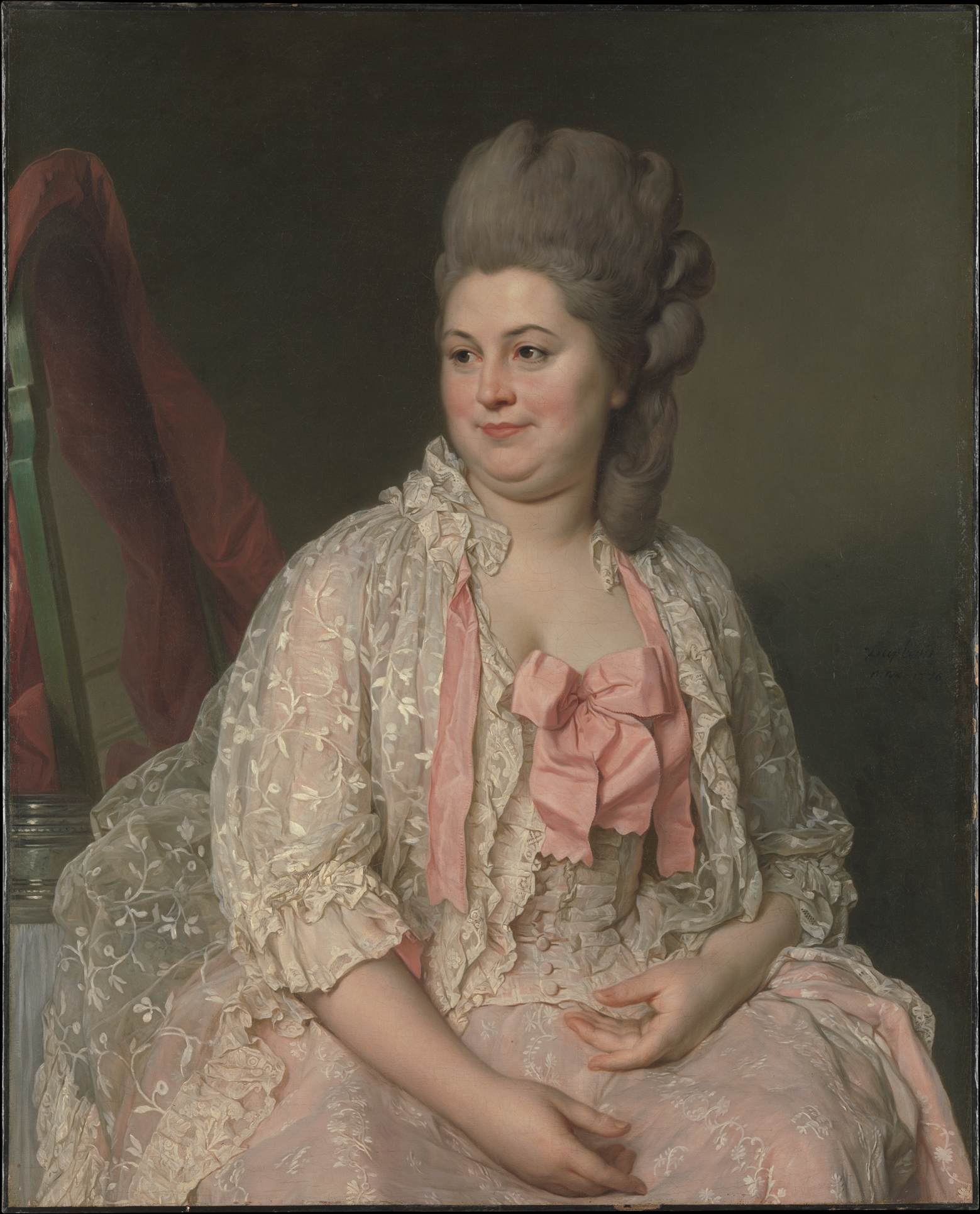
Madame de Saint-Morys: An Aesthetic Archaeology of Classical Elegance
Historical Context and the Subject’s Aura
The oil-on-canvas portrait of Madame de Saint-Morys (Eléonore Elisabeth Angélique de Beauterne, 1742–1824), preserved in the archives of the French nobility, presents an isolated yet profoundly instructive artifact. This is not a painting of ostentatious courtly display; rather, it captures a moment of restrained, intellectual grace. The sitter’s bearing—a subtle tilt of the head, a direct yet composed gaze—speaks to a pre-Revolutionary sensibility where personal power was expressed through fabric, posture, and the deliberate absence of excess. For the 2026 couture landscape, this portrait offers a blueprint for silhouettes that command through quiet authority, not volume or ornament. The “isolated aesthetic archaeology” of this piece allows us to strip away the noise of period fashion and focus on the fundamental architectural principles: the interplay of verticality, the strategic use of negative space, and the tension between a structured bodice and a fluid skirt.
Materiality of Oil on Canvas: Translating Texture into Textile
The medium itself—oil on canvas—imparts a specific material vocabulary. The painter’s brushstrokes create a surface that is both smooth and impasto, suggesting a tactile dialogue between light and shadow. For 2026, this translates directly into fabric innovation. We are not replicating the portrait’s silk or velvet; we are capturing its optical density. Consider a double-faced cashmere treated with a micro-embossed finish that mimics the painterly drag of a brush. Or a jacquard woven with metallic threads at varying tensions, creating a surface that shifts from matte to lustrous as the wearer moves—a living canvas. The “isolated” nature of this artifact means we are free from the constraints of historical accuracy; we are extracting the sensation of the paint—its weight, its depth, its ability to hold a crease of light—and applying it to modern luxury textiles.
Deconstructing Classical Elegance: The Silhouette Blueprint for 2026
The classical elegance of Madame de Saint-Morys is not found in a single garment but in the proportional relationship between the body and the fabric. Her gown, likely a robe à la française or a transitional robe à l’anglaise, is characterized by a fitted bodice that elongates the torso and a skirt that falls in a single, uninterrupted column from the waist. This is the antithesis of the pannier; it is a silhouette of linear grace. For 2026, we deconstruct this into three key components:
1. The Sculpted Bodice as a Second Skin
The portrait’s bodice is a masterpiece of internal engineering. It is not merely a garment; it is a structural corset that defines the wearer’s posture. The 2026 interpretation abandons boning in favor of high-tension, bias-cut panels of technical faille that are bonded to a micro-mesh base. This creates a “soft armor” that molds to the torso without restricting breath. The neckline, a modest yet deliberate décolletage, is reimagined as a sharp, asymmetric cutaway that exposes the clavicle and upper sternum—a zone of vulnerability and strength. The key is the absence of visible fastenings; the bodice should appear as a single, seamless piece, much like the painted surface of the canvas.
2. The Column Skirt: Fluid Architecture
Madame de Saint-Morys’s skirt, while voluminous, does not break the vertical line. It falls in a controlled cascade, suggesting weight and movement simultaneously. For 2026, we achieve this through asymmetric draping and the use of liquid-weight satin with a subtle, water-like finish. The skirt is cut on the bias from the hip, creating a single, unbroken sweep that pools at the floor. The hem is not finished with a traditional seam but with a laser-cut edge that prevents fraying and adds a clean, architectural precision. This is a skirt that moves with the wearer, not against her—a direct homage to the painted fabric’s illusion of life.
3. The Power of Negative Space: The “Unpainted” Zones
The most radical lesson from this portrait is the strategic use of emptiness. The background is dark, almost void-like, forcing the viewer’s eye to the sitter’s face and the folds of her gown. In 2026 couture, this translates to cutouts and sheer panels that are not decorative but structural. A keyhole opening at the midriff or a transparent tulle insert at the side seam creates a visual pause, a moment of breath within the silhouette. These “unpainted” zones are framed with hand-stitched grosgrain ribbon to emphasize their intentionality. They are not about revealing skin; they are about revealing the architecture of the garment itself.
Material Palette for 2026: From Canvas to Couture
The palette is drawn directly from the painting’s tonal range: deep ivory, charcoal, and a single accent of muted gold. The primary fabric is a double-faced wool crepe that holds a crease like a brushstroke. For the bodice, a matte, silicone-coated silk gazar provides structure without shine. The accent gold is reserved for a single element: a hand-embroidered chain stitch along the neckline or the hem, mimicking the painter’s signature. The entire garment is lined with a cupro-charcoal blend that adds weight and a whisper of sound as the wearer moves—a tactile memory of the canvas.
Conclusion: The 2026 Silhouette as a Painted Gesture
The legacy of Madame de Saint-Morys for 2026 is not a costume but a philosophy of restraint. Her portrait teaches that true elegance is the mastery of line, the control of volume, and the courage of emptiness. The resulting silhouette is a vertical, sculpted column that honors the body’s natural geometry. It is a garment that does not shout but resonates with the quiet authority of a brushstroke. For the Natalie Fashion Atelier, this is the ultimate luxury: a silhouette that is both a historical artifact and a living, breathing gesture of timeless sophistication. The 2026 collection will not recreate the past; it will paint with fabric, using the canvas of the body to create a new masterpiece of classical elegance.