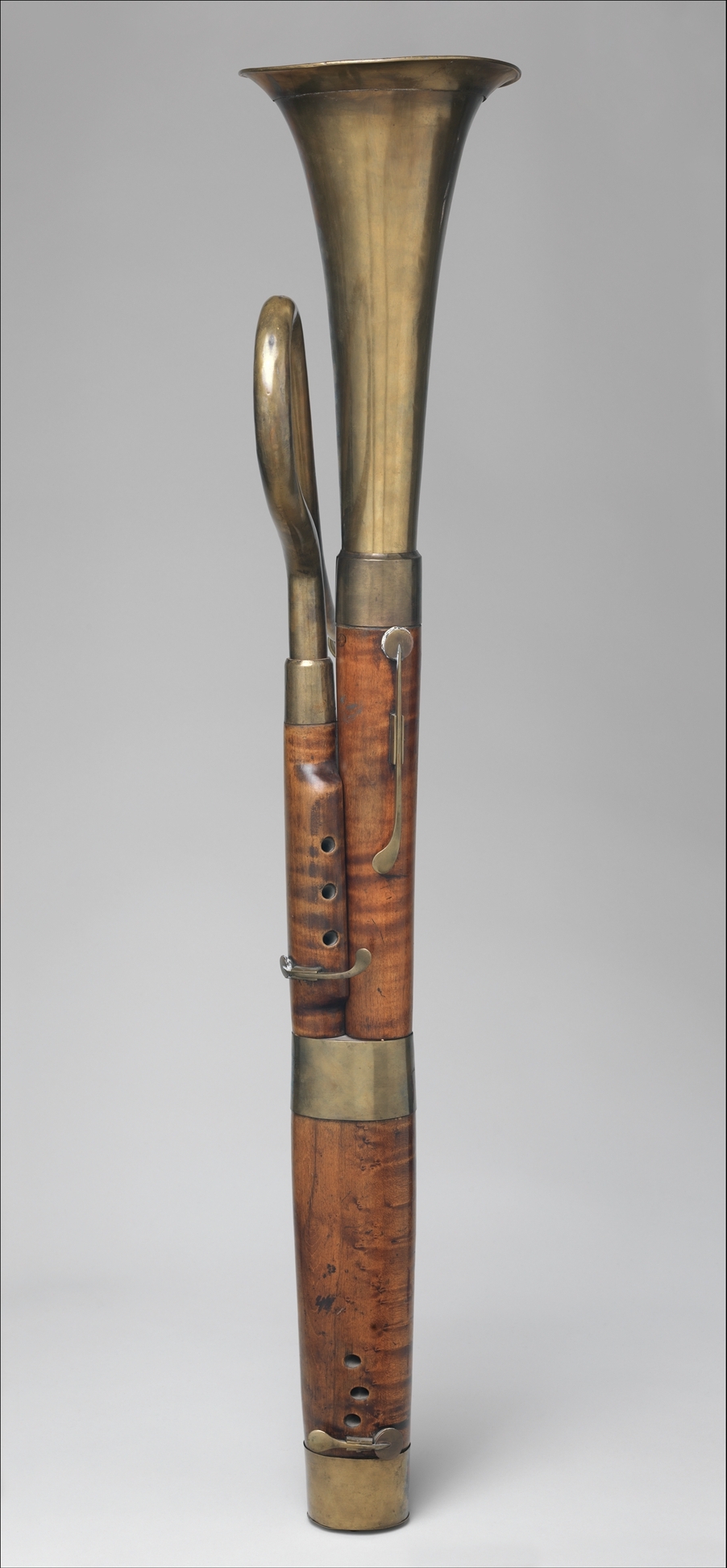
Deconstructing the Bassoon: Acoustic Architecture as Silhouette
The bassoon, a masterwork of French lutherie, presents a unique paradox within the annals of aesthetic archaeology. Its form is neither purely geometric nor entirely organic; it is a negotiation between the rigid demands of acoustics and the pliable nature of wood. For the 2026 haute couture collection of Natalie Fashion Atelier, this instrument offers a profound lexicon of form. The bassoon’s brass and wood construction is not merely a material fact, but a thesis on structural tension and the articulation of volume. The 2026 silhouette must therefore be understood as an acoustic architecture—a garment that resonates with the same complex harmonics as the instrument itself.
The Dialectic of Brass and Wood: A Material Grammar
The bassoon’s body is a study in contrasts. The wood, typically maple, provides a warm, resonant, and forgiving core. In the context of couture, this translates to a foundational fabric—a double-faced cashmere or a sculpted wool crepe—that holds the memory of the body’s movement. The brass, however, is the agent of precision. The intricate keywork, the bocal (the metal crook), and the bell ring are elements of rigid articulation. For 2026, this duality informs a new materiality: a garment where soft, draped volumes are punctuated by hard, metallic exoskeletons. The brass is not an ornament; it is a structural necessity, a system of levers and fulcra that control the flow of fabric and light.
We propose a silhouette where the primary volume—the wood—is a continuous, flowing line, perhaps a bias-cut gown in a dense, liquid satin. This represents the bassoon’s resonant bore. Over this, a series of brass elements—laser-cut titanium or polished bronze appliqués—act as the keywork. These are not random embellishments but are placed at specific stress points: the shoulder, the hip, the small of the back. They function as architectural corsetry, dictating how the fabric falls and how the body moves within the garment. The brass becomes a silent score, a set of instructions for the drape.
The S-Shape and the Spiral: Reinterpreting the Bassoon’s Profile
The bassoon’s most distinctive visual feature is its folded, S-shaped profile. This is not a decorative flourish; it is a functional necessity to reduce the instrument’s length to a manageable form. For the 2026 silhouette, this S-curve becomes a primary design principle. We are moving away from the straight, vertical line of the classical column gown. Instead, the new silhouette will embrace a spiral torsion—a garment that wraps and folds upon itself, creating a dynamic, three-dimensional volume.
Consider a coatdress constructed from a single, continuous piece of wool and brass mesh. The fabric is cut on a bias that creates a natural twist at the waist, mirroring the bassoon’s wing joint. The brass is integrated as a structural spine, a series of articulated plates that run from the shoulder blade down to the hem, forcing the fabric into a helical shape. This is not a static form; the garment is designed to shift and re-form with every movement, just as the bassoon’s sound is shaped by the player’s breath and fingers. The silhouette becomes a living, breathing architecture.
Acoustic Draping: The Logic of the Bocal and Bell
The bocal, the slender metal tube that connects the reed to the bassoon’s body, is a masterclass in transition. It is a point of extreme tension, where the player’s breath is compressed before entering the resonant chamber. In the 2026 collection, this translates to the neckline and shoulder construction. We will employ a technique we term acoustic draping, where a rigid, metallic collar—a brass gorget—acts as the bocal. It is a precise, almost surgical element that channels the fabric from the body’s core to the shoulder, creating a taut, controlled volume.
The bell of the bassoon, the flared opening at the instrument’s end, is the point of release. It is where the compressed sound expands into the atmosphere. For the couture silhouette, this is the hemline and train. A 2026 evening gown might feature a tightly fitted bodice (the bocal) that suddenly erupts into a dramatic, flared skirt (the bell). However, this flare is not a simple A-line. It is a complex, asymmetrical volume, constructed from multiple panels of silk organza and brass wire. The wire is embedded within the fabric, creating a structure that is both rigid and fluid. The hem does not fall flat; it curls and unfurls, catching the light like the polished brass of a bassoon bell.
Patina and Provenance: The Aesthetic of Imperfection
Aesthetic archaeology demands that we consider not just the object, but its history. A vintage bassoon carries the patina of decades of use—the worn lacquer, the tarnished brass, the subtle warping of the wood. For 2026, this translates to a deliberate imperfection in material finish. We will not use pristine, mirror-polished metals. Instead, we will employ oxidized brass and distressed wood veneers in our textiles. The fabric itself will be treated to mimic the wear of time—a subtle fading at the seams, a slight pilling on the surface, a deliberate irregularity in the weave.
This is not a nostalgia for decay; it is a celebration of provenance. The garment, like the bassoon, is an object that has lived. The 2026 silhouette is not a perfect, untouched form. It is a form that has been shaped by use, by breath, by the passage of time. The brass will be allowed to tarnish; the wood will be allowed to show its grain. This patina is the ultimate luxury—a signifier of authenticity and history in an age of mass-produced perfection.
Conclusion: The Silent Score of the Body
The bassoon, in its isolation as an aesthetic artifact, offers a complete system for the 2026 silhouette. It is a system of tension and release, of rigid structure and fluid volume, of acoustic precision and organic warmth. The Natalie Fashion Atelier collection will not merely reference the instrument’s shape; it will embody its logic. The brass will be the score, the wood the resonance, and the body the musician. The resulting silhouette is a silent symphony—a garment that speaks of the same profound, complex beauty as the bassoon itself.