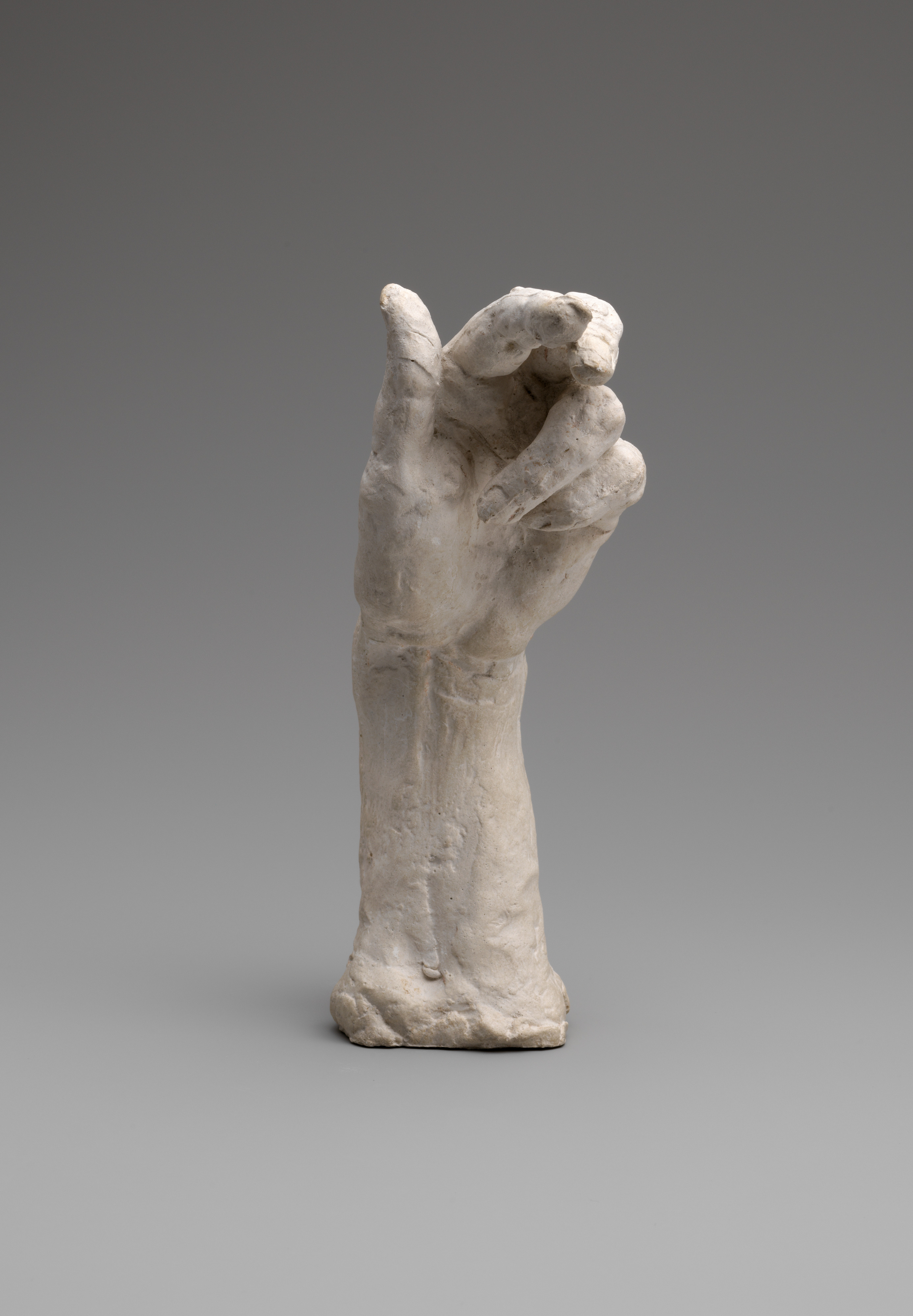
Artifact NFA-774: The Isolated Hand – A Foundation in Plaster
Within the archival taxonomy of Natalie Fashion Atelier, artifact NFA-774, designated "The Isolated Hand," represents a pivotal exercise in aesthetic archaeology. This object, a cast plaster study of a human hand severed from its anatomical context, transcends mere anatomical reference. It is a treatise on form, tension, and negative space. Sourced from a global heritage of classical sculpture and anatomical draftsmanship, its value lies not in its origin, but in its isolation. Stripped of narrative, gender, and era, the hand exists as a pure architectural study. The materiality of cast plaster is essential: it provides a matte, mineral finish that absorbs light, eliminating distraction and emphasizing the stark dialogue between convex and concave forms, the rigid structure of bone, and the supple suggestion of tendon. This artifact is our primary source for deconstructing the very principle of classical elegance—a balance of strength and grace, structure and flow—which we will codify into the silhouette language of 2026.
Deconstruction of Classical Elegance: Articulation, Tension, and Void
Classical elegance, as excavated from NFA-774, is a dynamic equilibrium, not a static pose. Our technical analysis reveals three core principles:
Articulated Structure: The hand’s elegance derives from its complex, interconnected architecture. Each phalange is a distinct volume, yet subordinate to the metacarpal foundation. This creates a cascading rhythm—a controlled, segmented flow from wrist to fingertip. The elegance is in the clarity of each joint’s purpose, a lesson in constructing a silhouette where every seam, dart, and panel has a defined structural role, creating a holistic movement.
Dynamic Tension: Even at rest, the plaster hand exhibits latent kinetic energy. The slight flexion of the fingers creates a tension between the dorsal (taut, elongated) and palmar (softer, concave) planes. This is the essence of sophisticated allure: a suggestion of imminent movement, a breath held. In silhouette terms, this translates to the strategic placement of tension—a fitted bodice against a fluid skirt, a rigid shoulder line melting into a soft sleeve, creating a narrative of contrast within a single form.
The Sanctity of Negative Space: Perhaps the most profound lesson is in the voids—the spaces between the fingers, the hollow of the palm. In isolation, these negative spaces become shapes of equal importance to the positive mass of the plaster. They frame light and shadow, defining the hand’s form as much as its solid boundaries. This principle elevates design from the manipulation of fabric to the architectural crafting of space around the body.
Material Translation: From Mineral Plaster to Haute Couture Textiles
The matte, mineral quality of the cast plaster provides the key to 2026’s material lexicon. It instructs a move away from overt luminosity toward sophisticated, light-absorbing textures that emphasize form over surface glitter.
The "Liquid Plaster" Drape: We have pioneered a technique with our textile mills to create a wool-silk-cashmere composite that mimics the way plaster falls and sets. It possesses a heavy, malleable drape that can be sculpted to hold sharp, architectural lines (the dorsal tension) while collapsing into soft, minimalist folds (the palmar concavity). This fabric becomes the literal embodiment of the artifact’s tension, allowing for silhouettes that appear both carved and fluid.
Matte Mineral Finishes and Biomorphic Embellishment: The plaster’s finish informs a new palette of non-reflective whites, mineral greys, and earthen tones. Embellishment, when applied, follows the biomechanical logic of the hand’s tendons. Rather than scattered crystals, we employ three-dimensional trapunto quilting that traces anatomical lines, or fine chains applied like articulated skeletal structures beneath sheer layers, echoing the hidden architecture. The void spaces are honored through precise laser-cutting and strategic sheer panels, making the absence of fabric as eloquent as its presence.
Informing the 2026 Silhouette: The Articulated Architecture
The direct translation of artifact NFA-774 into the 2026 collection yields a silhouette philosophy we term "Articulated Architecture." This approach re-conceives the body as a series of elegantly connected volumes, informed by the hand’s segmented grace.
The Articulated Sleeve and Glove
The sleeve becomes the most direct homage. We move beyond the leg-of-mutton or the lantern, to develop a sleeve built in distinct, articulated sections—a rigid, structured shoulder cap (the metacarpal) flowing into a fitted forearm (the phalanges), perhaps culminating in a sharp, elongated cuff (the fingertip). This creates a rhythmic, angular silhouette that changes dynamically with movement. Evening gloves are re-engineered as external exoskeletons, crafted from stiffened silk or leather, with seams placed to mirror the bony topography of the hand, transforming an accessory into an integral architectural element of the gown’s silhouette.
Bodice as Palmar Architecture and the Drama of the Void
The bodice is treated as the palm’s complex concavity. Darts and seams radiate from a central point (akin to the center of the palm) to create a sculpted, embracing shape that highlights the negative space around the collarbones and sternum. Back treatments become paramount, focusing on the spinal column as a central architectural ridge, with open voids or intricate corsetry mimicking the woven structure of tendons. This creates elegance from behind—a silent, powerful statement.
Full-skirted silhouettes will be engineered not for mere volume, but to frame the negative space between the body and the skirt’s flare. Through precise internal structures, we create a sphere of influence around the wearer, a protected aura defined by the skirt’s shape, much like the space enclosed by a cupped hand. The result is a silhouette that is as much about the empowered space it commands as the form it covers.
Conclusion: The Hand as Genesis
Artifact NFA-774, the isolated plaster hand, is far from a relic. It is a generative blueprint. Through its lens, classical elegance is decoded into the technical principles of articulated structure, dynamic tension, and sacred void. For the 2026 Natalie Fashion Atelier collection, this informs a radical yet refined silhouette strategy—one where clothing is approached as architectural anthropology for the body. The resulting designs will not merely clothe but articulate, creating a modern elegance that is both monumentally quiet and pulsating with latent life, a direct lineage cast not in plaster, but in the most sophisticated métier of our age.