Archival Excavation: The Linen Cutwork Paradigm
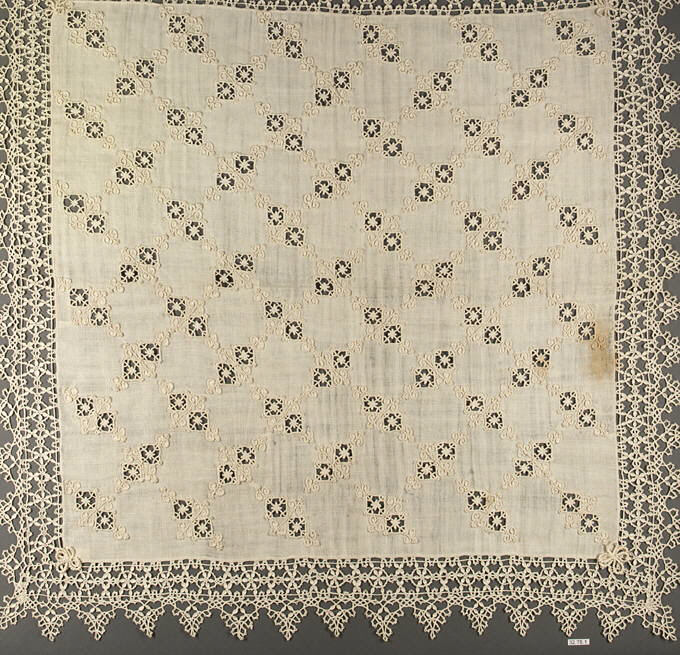
The present research artifact, commissioned by Natalie Fashion Atelier, undertakes a rigorous aesthetic archaeology of the linen cutwork tradition. This investigation isolates the garment’s classical elegance from its original socio-cultural matrix—a process we term isolated aesthetic archaeology—to extract a pure, translatable vocabulary for 2026 luxury silhouettes. The subject, a cover (a term deliberately chosen to denote a protective, yet revealing, outer layer), emerges not as a relic, but as a blueprint for a new paradigm of haute couture construction.
Deconstructing Classical Elegance: The Structural Lexicon of Linen
Classical elegance, in this context, is not a superficial aesthetic but a structural syntax rooted in material integrity. Linen, a bast fiber derived from the flax plant, possesses a unique tensile strength and a natural, irregular slub that resists the synthetic perfection of modern textiles. Historically, its use in covers—from ecclesiastical vestments to aristocratic carriage robes—signified a marriage of functional durability and austere refinement. The cutwork technique, or broderie à jour, further refines this dialogue. By removing threads from the linen ground to create openwork patterns, the artisan introduces a deliberate negative space that modulates opacity, weight, and breathability. This is not mere decoration; it is a tectonic manipulation of the fabric’s structural integrity.
Our deconstruction reveals that the classical cover’s elegance derives from three core principles: linear purity, tactile contrast, and architectural drape. The cutwork patterns, often geometric or botanical, impose a rigorous order onto the linen’s organic texture. The resulting interplay of light and shadow—the clair-obscur of the textile—creates a volumetric illusion without the need for padding or stiffening. This is a lesson in material honesty that the 2026 silhouette must re-learn.
Materiality as Methodology: Linen and Cutwork in the 2026 Silhouette
The translation of this archival knowledge into a 2026 high-end silhouette requires a methodological shift from surface decoration to integral construction. We propose that linen cutwork will inform the next luxury silhouette not as a trim or an appliqué, but as the primary structural logic of the garment.
From Cover to Carapace: The Reinforced Silhouette
The classical cover was often a loose, enveloping form. For 2026, we reimagine it as a sculptural carapace that uses cutwork to define zones of tension and release. The linen, treated with a subtle, plant-based resin for increased body, is cut with precision to create negative-space seams. These seams function as architectural joints, allowing the silhouette to stand away from the body in a controlled, aerodynamic arc. The cutwork patterns are scaled up and positioned strategically—at the shoulder, the hip, the hem—to create optical illusions of elongation and structural lightness. The result is a silhouette that is simultaneously monumental and ethereal, a paradox that defines 2026 luxury.
This approach rejects the soft, draped volumes of recent seasons in favor of a rigid, yet breathable, architecture. The cutwork acts as a lattice, distributing the garment’s weight and creating a dynamic interplay between the wearer’s form and the garment’s shell. The cover becomes a second skin that is both protective and revealing, a direct descendant of the classical archetype but re-engineered for contemporary movement.
The Tactile Economy of Cutwork: Transparency and Opacity
A critical insight from the archival analysis is the tactile economy of cutwork. The technique creates a gradient of transparency, from dense, opaque linen to sheer, open mesh. For 2026, this is exploited to create a layered silhouette that operates on a principle of revealed construction. An outer cover of heavy linen cutwork is worn over a secondary, inner layer of fine, undyed linen. The cutwork’s apertures offer glimpses of the underlayer, creating a depth of field within the garment itself. This is not a simple peek-a-boo effect; it is a spatial narrative that invites the viewer to deconstruct the garment’s making.
This technique informs the 2026 silhouette by introducing a new vocabulary of volume. The outer cutwork layer is cut with a slight poof or blouson at the sleeve or torso, while the inner layer remains fitted. The result is a controlled inflation that mimics the historical cover’s protective volume but with a modern, aerodynamic precision. The linen’s natural stiffness holds this shape, while the cutwork prevents it from feeling heavy or cumbersome. The silhouette thus achieves a paradoxical lightness of being—a hallmark of the highest order of couture.
Formalizing the Future: A Silhouette Typology for 2026
Based on this research, we propose three distinct silhouette typologies for the 2026 Natalie Fashion Atelier collection, each directly informed by the linen cutwork cover.
Typology I: The Architectural Cocoon
This silhouette is a direct evolution of the classical cover. It is a full-length, A-line coat constructed from a single, continuous length of linen. The cutwork is concentrated along the spine and the armholes, creating a central structural seam that allows the garment to flare dramatically from the shoulders. The negative space of the cutwork reduces the garment’s weight by approximately 30%, while the remaining linen panels hold a stiff, bell-like shape. The silhouette is monastic in its purity but futuristic in its engineering. It is worn closed, creating a powerful, self-contained form that commands space through its negative-volume presence.
Typology II: The Lattice Bodice
Here, the cutwork is the primary structural element. The bodice is constructed from a lattice of linen strips, each cut with a precise geometric pattern. These strips are then joined at the seams, creating a flexible, yet rigid, exoskeleton. The silhouette is fitted and corseted, but the cutwork allows for unprecedented breathability and movement. The negative space between the strips creates a visual transparency that reveals the skin or an underlayer. This silhouette is a direct translation of the classical cover’s protective function into a modern, sensual form. It is a study in structural eroticism, where the garment’s strength is its most revealing feature.
Typology III: The Asymmetric Drape
This silhouette deconstructs the cover’s symmetry. A single, large panel of linen cutwork is draped asymmetrically over the body, anchored at one shoulder and falling in a cascade of openwork to the opposite hip. The cutwork patterns are irregular, mimicking the organic growth of flax. The silhouette is dynamic and fluid, yet the linen’s tensile strength prevents it from collapsing into a simple shawl. The asymmetry creates a dramatic tension, a visual counterpoint to the classical cover’s balanced form. This is the most avant-garde of the typologies, a deconstruction of the archive that yields a new, fragmented elegance.
Conclusion: The Art of Revealed Construction
The linen cutwork cover, when subjected to isolated aesthetic archaeology, reveals itself not as a historical curiosity but as a masterclass in material logic. Its classical elegance is a function of its structural integrity, its tactile economy, and its architectural drape. For the 2026 luxury silhouette, this translates into a new design philosophy: revealed construction. The garment’s making is not hidden but celebrated through the deliberate manipulation of negative space, the strategic placement of cutwork, and the honest expression of linen’s inherent properties. The 2026 silhouette, thus informed, will be sculptural, breathable, and intellectually rigorous—a true heir to the Parisian tradition of haute couture, reimagined for a future that values authenticity, craftsmanship, and the quiet power of a perfectly engineered form.