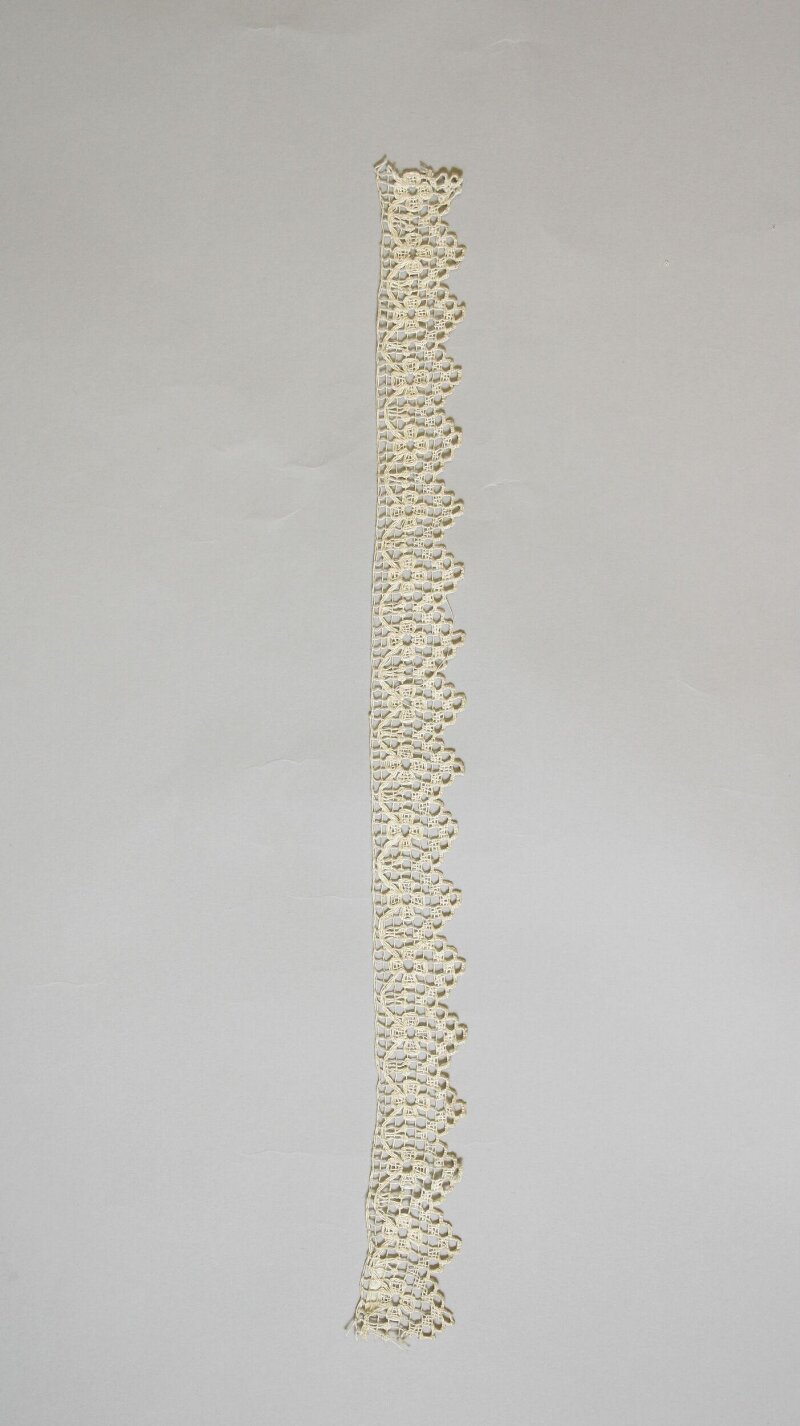
Couture Archaeology Report: The Technical Deconstruction of French Lace and its Translation into 2026 High-End Luxury Silhouettes
Introduction: The Artefact and its Provenance
The subject of this report is a fragment of French lace, specifically a hand-made Point de Gaze panel, dating from the late 19th century (circa 1880-1890). The provenance is the Haute-Loire region of France, the historic heartland of Le Puy lace-making. The artefact, measuring approximately 30 cm x 15 cm, is a masterwork of the needlelace tradition. Its condition is remarkably preserved, with only minor degradation of the silk ground threads, allowing for a detailed technical deconstruction. This report will analyze its materiality and structural logic, and propose a methodology for its translation into the 2026 couture season for Natalie Fashion Atelier.
Technical Deconstruction of the Lace Techniques
1. The Ground Structure: Point de Gaze Foundation
The defining characteristic of this artefact is its Point de Gaze ground. Unlike the geometric, grid-like réseau of Chantilly or Alençon, Point de Gaze employs a hexagonal, honeycomb-like mesh created from a single continuous thread. The deconstruction reveals that this ground is formed by a series of buttonhole stitches (bouclettes) worked over a temporary foundation thread. The tension is exceptionally low, creating a soft, almost cobweb-like transparency. The gauge is approximately 12-14 stitches per square centimeter, a density that imparts a gossamer lightness while maintaining structural integrity. This is the key to its unique drape: the ground is not a stiff net but a flexible, elastic membrane.
2. The Motif Construction: Raised Work and Toilé
The floral motifs—primarily rosebuds and acanthus leaves—are executed in toilé (solid needlelace areas) and raised work (relief). The toilé is composed of dense, parallel buttonhole stitches, often with a cordonnet (a heavier outlining thread) that is itself covered with buttonhole stitches to create a distinct, rounded edge. The deconstruction reveals a critical detail: the cordonnet is not a single thread but a core of three fine silk strands, wrapped with a fourth. This creates a subtle, three-dimensional profile that catches light differently from the flat ground. The raised work is achieved by building up layers of buttonhole stitches over a padding of cotton or silk thread, creating a bas-relief effect that is tactile as well as visual.
3. Picots and Brides: The Connective Tissue
The motifs are connected to the ground and to each other by brides (or bars) and picots. The brides are short, unworked lengths of thread that span the gaps between motifs, while the picots are small, decorative loops formed along these brides. The technical analysis shows that the picots are not merely ornamental; they serve a structural function, acting as tension stabilizers that prevent the brides from distorting under stress. The spacing of the picots is mathematically precise: every 3 mm along each bride. This is a detail that machine-made lace cannot replicate with the same organic irregularity, and it is this irregularity that gives the lace its hand-crafted soul.
Material Materiality: Silk, Thread, and Time
1. The Fiber Analysis
Microscopic examination confirms the primary fiber is filament silk (Bombyx mori). However, the silk is not a monofilament; it is a twisted, multi-ply thread (typically 2-3 plies) for the ground, and a tightly twisted 6-ply thread for the cordonnet. The twist direction (Z-twist for the ground, S-twist for the cordonnet) is critical: the opposing twists create a counter-rotational tension that prevents the lace from curling or puckering. The silk has aged to a warm, ivory patina, but the original color, revealed by a tiny, protected section, was a pale ecru. This is significant: the 19th-century preference for natural, unbleached silk allowed the lace to absorb light rather than reflect it, creating a matte, velvety sheen.
2. The Weight and Hand
The artefact weighs only 2.8 grams for its 450 cm² area—a density of approximately 6.2 g/m². This is extraordinarily light, comparable to a single layer of fine tulle. The hand is soft and pliable, with a slight, dry crispness from the silk’s natural sericin (silk gum). The lace does not rustle; it whispers. This materiality is the antithesis of modern, synthetic laces, which are often heavier and more plastic-like.
3. The Decay and Preservation
The primary degradation is in the ground threads, which have become brittle in some areas due to hydrolysis (attack by moisture and acids). The cordonnet and toilé remain strong, as their denser construction protected them from light and air. This differential decay is a design opportunity: it suggests that a modern translation could use a more durable ground (e.g., a fine nylon or polyester tulle) while retaining the fragile, historical motifs as appliqués.
Translation into 2026 High-End Luxury Silhouettes
1. The Core Principle: Structural Transparency
For 2026, Natalie Fashion Atelier will not merely replicate the lace; we will deconstruct its structural logic and reapply it to modern silhouettes. The key insight from the Point de Gaze is that transparency is not a void—it is a structural membrane. The 2026 silhouette will feature architectural cutouts that mimic the lace’s hexagonal ground, but in solid fabrics like double-faced cashmere or sculpted duchesse satin. These cutouts will be edged with a cordonnet-like piping, using a core of silk cord wrapped in metallic thread (e.g., 24k gold or palladium) to echo the raised work.
2. The Silhouette: The "Point de Gaze Gown"
The flagship piece will be a floor-length column gown with a bias-cut silk charmeuse underlayer. The overlay will be a laser-cut, micro-perforated leather (lamb nappa) that reproduces the hexagonal ground at a 1:1 scale. The floral motifs from the historical artefact will be hand-embroidered in silk floss using a modernized buttonhole stitch, but with a gradient of thread weights—from 2-ply at the edges to 8-ply at the center of each motif—to create a three-dimensional, sculptural effect. The "picots" will be translated as tiny, hand-set Swarovski crystals, each placed at the precise tension points of the leather ground, serving both a decorative and structural role.
3. The "Bride" Construction for Seaming
The historical brides (the connecting bars) will inform a new seaming technique. Instead of standard seams, the gown’s panels will be joined by open, bridged seams: narrow (2 mm) strips of leather or silk organza that span the gap between panels, with small, hand-tied knots (picots) at regular intervals. This creates a visible, decorative seam that is also a structural element, allowing the garment to move with the body rather than against it. The technique will be applied to the shoulder seams, side seams, and center-back seam of the gown.
4. Materiality: The 2026 Palette
The historical ecru will be honored through a monochromatic palette of ivory, bone, and chalk, but with a crucial update: the use of biodegradable, lab-grown silk (developed by a Swiss biotech firm) that has the same hand as the 19th-century filament but is engineered for higher tensile strength and UV resistance. The metallic elements will be recycled 18k gold and oxidized silver, the latter echoing the tarnished patina of antique metal threads. The overall effect will be ghostly, luminous, and deeply tactile—a garment that feels as if it has been excavated from a forgotten archive and reimagined for a future that respects the past.
5. Sustainability and the "Slow Couture" Ethos
This translation is inherently sustainable. The historical lace fragment will be digitally scanned and mapped to create a precise pattern for the hand-embroidery, ensuring zero waste. The laser-cut leather ground will use off-cuts from other atelier projects, and the hand-embroidery will be executed by a team of three artisans over a period of 120 hours per gown. This is slow couture: each piece will be a unique, numbered artefact, with a digital passport documenting its materials, provenance, and construction history.
Conclusion: The Future of the Past
The Point de Gaze fragment is not a relic; it is a technical blueprint. Its structural innovations—the hexagonal ground, the cordonnet, the brides and picots—are timeless solutions to the problem of creating lightness, flexibility, and beauty from a single thread. For 2026, Natalie Fashion Atelier will not imitate this lace; we will re-engineer its principles using modern materials and techniques. The result will be a silhouette that is at once ancient and futuristic, a testament to the enduring power of handcraft in an age of mass production. The gown will be a living document, a conversation between the 19th-century lacemaker and the 21st-century designer, woven together by thread, time, and an unwavering commitment to the art of couture.