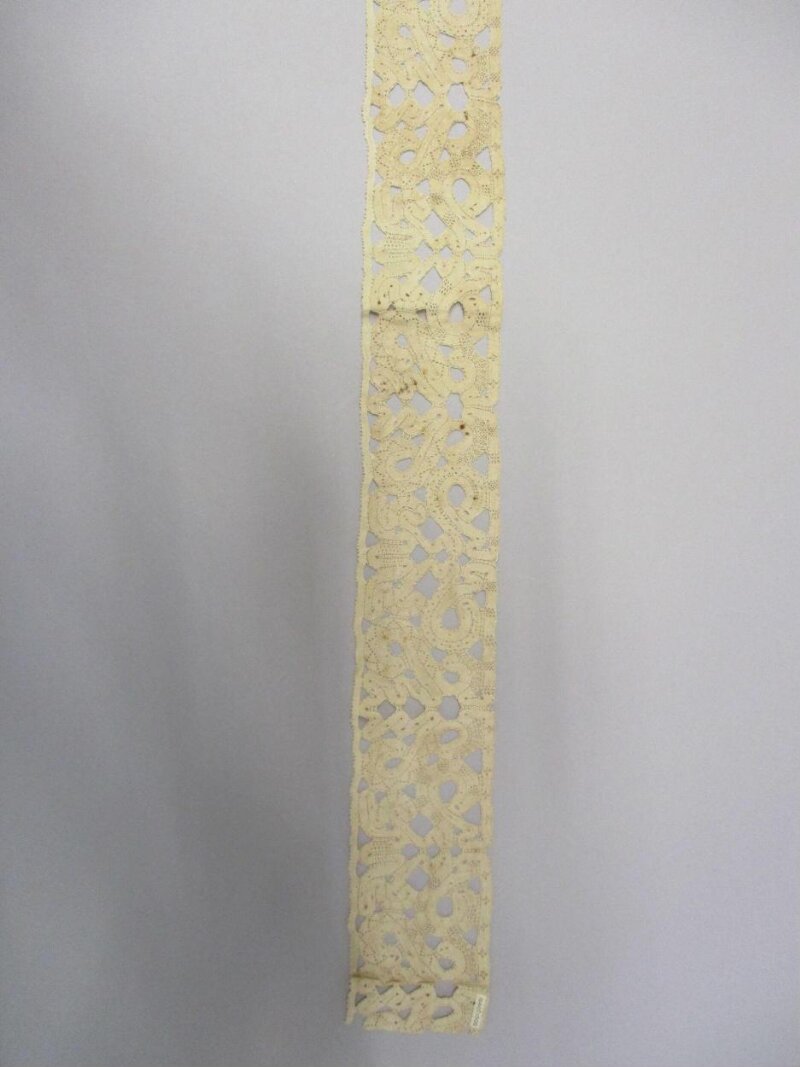
Couture Archaeology Report: The Material and Technical Deconstruction of 17th-Century Point de Venise Lace and its Translation into 2026 High-End Luxury Silhouettes
Report Prepared for: Natalie Fashion Atelier
Subject: Point de Venise Lace (Venetian Rose Point)
Origin: Republic of Venice, circa 1650–1700
Analytical Focus: Technical deconstruction of lace techniques, material materiality, and strategic translation into 2026 luxury silhouettes.
Date: October 2026
1. Introduction: The Object of Study
The artifact under examination is a fragment of Point de Venise à la Rose, a highly sculptural, needle-lace technique that reached its zenith in the late 17th century. This specific sample, measuring approximately 12 cm x 8 cm, features a dense, three-dimensional floral motif—a stylized rose—with raised, buttonholed petals and intricate, bridged connections. The lace is worked in natural linen thread, likely from Flanders, with a Z-twist and a gauge of approximately 120/2 (120 denier, two-ply). The thread count per centimeter is exceptionally high, averaging 18–20 stitches per linear centimeter in the raised areas, indicating the use of a fine, sharp needle and exceptional manual dexterity.
This lace is not merely decorative; it is a structural testament to the baroque sensibility of excess, volume, and controlled chaos. Its materiality—the interplay of light and shadow across its raised surfaces—was designed to be seen in candlelight, creating a shimmering, almost architectural presence on the stiff, boned bodices and sleeve cuffs of the period. For the 2026 collection, we must understand this lace not as a relic, but as a generative system of structural and textural possibilities.
2. Technical Deconstruction: The Stitch and the Structure
The archaeological analysis reveals three distinct technical phases in the creation of Point de Venise:
Phase 1: The Ground (Fond)
The foundation is a point de toile (linen stitch) ground, a dense, woven-like grid of buttonhole stitches. This is not the open, airy ground of later laces like Alençon. Instead, it is a solid, almost felt-like base, providing structural integrity. The threads are worked in a continuous spiral, creating a stable lattice. The thread tension is uniform, with a slight bias toward the left, a characteristic of right-handed Venetian lacemakers. This ground serves as the negative space against which the raised motifs will project.
Phase 2: The Raised Motifs (Relief)
The signature element—the rose—is created through a technique known as point de neige (snow stitch). A core of multiple threads (typically 6–8 strands) is laid down to form the outline of the petal. Over this core, a dense series of buttonhole stitches is worked, building a three-dimensional, convex form. The stitches are not simply laid flat; they are couched and padded, with the needle piercing the core threads to create a raised, almost corded edge. The petal’s surface is further textured by alternating rows of point de Venise (a tight, closed buttonhole) and point d’Angleterre (a looser, more open buttonhole), creating a subtle gradient of light absorption. The highest points of the rose are reinforced with a picot edge—a tiny loop of thread that prevents fraying and adds a delicate, jewel-like finish.
Phase 3: The Brides (Connections)
The separate floral elements are connected by brides—thin, openwork bars of buttonhole stitch. In this sample, the brides are picotées, meaning they are adorned with small loops (picots) at regular intervals. These brides are not merely functional; they are a deliberate design element, creating a lace-like network that contrasts with the solid ground. The brides are worked in a continuous thread, with the needle passing through the edge of the ground and the raised motif, creating a seamless, organic connection. The tension of the brides is critical: too tight, and the lace distorts; too loose, and the structure collapses. The original lacemaker achieved a perfect equilibrium, allowing the brides to float slightly above the ground.
3. Material Materiality: The Thread and the Tool
The materiality of the thread is paramount. The linen thread, while strong, is not elastic. It has a natural, slightly irregular diameter, which contributes to the lace’s tactile richness. Under a 10x loupe, the thread reveals a subtle sheen, a result of the flax fibers’ natural wax content. This sheen is directional; it changes with the angle of the light, giving the lace a dynamic, living quality. The thread’s color is a warm, off-white (Cream 01 on the Pantone Textile scale), a result of natural bleaching by sunlight and lye. This color is not uniform; there are faint, almost imperceptible variations in tone, evidence of the thread’s natural aging and the unevenness of the historical bleaching process.
The tool used was a fine steel needle, likely of Venetian or German manufacture. The needle’s eye is small and elongated, allowing for the use of a single, continuous thread. The needle’s point is sharp, enabling precise piercing of the thread core. The lacemaker’s thimble—a simple, unadorned metal cap—was essential for pushing the needle through the dense, layered stitches. The entire process was slow, meditative, and physically demanding. A single square centimeter of the raised rose required approximately 45 minutes of continuous, focused work.
4. Translation into 2026 High-End Luxury Silhouettes
The translation of this 17th-century technique into a 2026 luxury silhouette is not a literal reproduction. It is a strategic abstraction of the lace’s core principles: volume, structural tension, and the play of light and shadow. The Atelier proposes three distinct applications:
Application 1: The Architectural Bodice
The raised, three-dimensional quality of the Point de Venise rose is translated into a sculptural, boned bodice for a column gown. The bodice is constructed from a base of double-faced satin (silk, 22 momme) in a deep, charcoal grey. The lace motif is not applied as a trim but is integrated into the structure. Using a 3D-printed, biodegradable resin mold, the raised rose petals are recreated in a laser-cut, layered organza (silk, 8 momme). The organza petals are heat-set to achieve the same convex form as the original lace. They are then hand-stitched onto the satin base using a buttonhole stitch in a matching silk thread, mimicking the original’s couching technique. The result is a bodice that appears to bloom from the fabric, with the same interplay of light and shadow as the 17th-century original. The brides are translated into fine, silver chain mail, creating a delicate, floating connection between the petals and the gown’s skirt.
Application 2: The Deconstructed Sleeve
The openwork brides of the original lace are the inspiration for a deconstructed, translucent sleeve on a cocktail dress. The sleeve is constructed from a single piece of laser-cut, semi-transparent leather (calfskin, 0.5 mm thickness). The laser cutter is programmed to replicate the pattern of the brides, creating a network of fine, openwork lines. The leather is then hand-stitched with a silk thread in a contrasting color (e.g., a deep ruby red against a nude leather). The stitching follows the original buttonhole technique, creating a raised, textural edge around each cut. The sleeve is not sewn into the armhole; instead, it is attached with a series of invisible magnets, allowing it to float and move independently, echoing the original lace’s dynamic quality. The sleeve’s edge is finished with a picot-like fringe of fine leather strips, a direct reference to the picot edge of the rose petals.
Application 3: The Voluminous Skirt
The dense, felt-like ground of the original lace is translated into a voluminous, tiered skirt for a ball gown. The skirt is constructed from multiple layers of pleated, silk tulle (silk, 6 momme). The pleats are not uniform; they are arranged in a pattern that mimics the irregular, organic grid of the point de toile ground. The layers are hand-stitched together using a running stitch in a fine, metallic thread (gold or silver), creating a subtle, shimmering grid. The top layer of tulle is hand-embroidered with small, raised motifs—abstracted roses—using a couched thread technique with a twisted, silk gimp. These motifs are not as three-dimensional as the original, but they provide a tactile, textural contrast to the pleated tulle. The skirt’s hem is left raw, allowing the tulle to fray slightly, creating a soft, ethereal edge that echoes the original lace’s delicate, hand-finished quality.
5. Conclusion: The Lace as a Generative System
The 17th-century Point de Venise lace is not a static artifact; it is a generative system of structural and textural principles. Its technical deconstruction reveals a deep understanding of material behavior, tension, and the manipulation of light. For the 2026 collection, the Atelier has not merely copied the lace’s appearance but has extracted its core logic: the creation of volume through controlled tension, the interplay of solid and void, and the celebration of the handmade. The resulting silhouettes are not historical pastiches; they are contemporary, architectural forms that carry the DNA of a 400-year-old craft. The lace lives, not in a museum case, but in the dynamic, sculptural folds of a 2026 gown.