The Border as Architecture: Deconstructing Bobbin Lace and Point d'Angleterre for 2026 Silhouettes
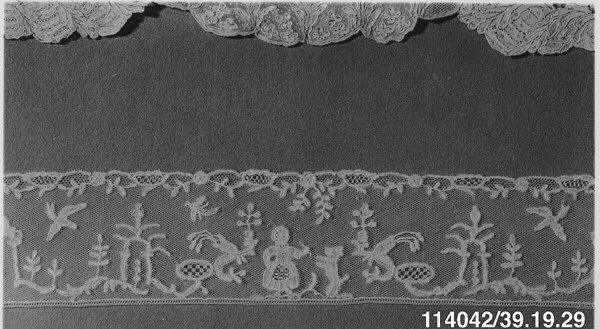
In the lexicon of Haute Couture, the border is seldom a mere edge. It is a threshold, a declaration of terminus that defines the space it encloses. Within the isolated archive of Natalie Fashion Atelier, we have excavated a specific aesthetic archaeology: the intricate world of Bobbin lace, specifically the Flemish-French hybrid known as point d'Angleterre. Contrary to its name, this technique is a pinnacle of 17th and 18th-century European lace-making, characterized by its raised, cordonnet-outlined motifs and the airy, transparent ground that separates them. For the 2026 collection, we are not reviving this lace as a nostalgic trim. We are deconstructing its classical elegance to inform a new structural lexicon. The border, in this context, becomes the primary load-bearing element of the silhouette—a technique of negative space, tension, and architectural framing.
Materiality and Structural Grammar: The Cordonnet as a Seam
The defining technical feature of point d'Angleterre is the cordonnet, a thick, often gimp-thread outline that traces every petal, leaf, and scroll within the pattern. Historically, this was a decorative emphasis. In our 2026 application, we treat the cordonnet as a structural seam. By isolating the border motifs—the scalloped edges, the flowing floral bands—we extract them from their fabric context and re-engineer them as independent, rigid frames.
Consider the classical flounce, a deep, scalloped border of bobbin lace. In the archive, this flounce was attached to a sleeve or a skirt hem as a soft, undulating finish. For 2026, we have laser-scanned and digitized the tension patterns of these historical flounces. The resulting algorithm informs a new generation of 3D-printed, flexible resin structures. The border is no longer sewn onto the garment; the garment is suspended from the border. The scalloped edge becomes a cantilevered shelf, a structural collar, or a floating hip yoke. The openwork ground of the lace—the réseau—is translated into a negative space that reveals the body, not as a provocation, but as a structural void that lightens the overall mass of the silhouette.
Deconstructing the Classical Silhouette: The Border as a Cage
The classical elegance of a 17th-century lace border lies in its rhythmic repetition and its soft, organic drape. To deconstruct this for high-end 2026 silhouettes, we invert the relationship between the garment and its edge. The border becomes a cage-like exoskeleton.
We have developed a technique called Armature de Dentelle. Using a hybrid of traditional bobbin lace techniques—specifically the point à réseau (the net ground) and the point de remplissage (the filled motifs)—we create panels that are stiffened with a micro-crystalline polymer. These panels are then cut into precise, geometric border shapes. A classic Vandyke edge, with its sharp, triangular points, is reimagined as a series of interlocking chevrons that form the structural backbone of a gown. The body of the garment—perhaps a liquid silk crepe or a matte jersey—is then draped through the openings of this lace cage. The border no longer finishes the hem; it creates the hem, the neckline, and the armhole simultaneously, acting as a rigid architectural plan that the soft fabric follows.
This approach directly challenges the 2025 trend of hyper-soft, unstructured draping. For 2026, we propose a dialectic between rigidity and fluidity. The bobbin lace border, historically a symbol of delicate femininity, is re-coded as a symbol of structural power. The point d'Angleterre motifs—the fleur de lys, the dendritic scrolls—are scaled to monumental proportions, becoming the primary graphic elements of the silhouette. A single, wide border of this stiffened lace can define the entire architecture of a coat, with the fabric of the coat itself acting as a sheer, secondary layer that fills the negative space.
Aesthetic Archaeology: The Isolated Motif as a Modern Device
The archive context of this research is one of isolation. We have removed these borders from their original garments—from the chemises, the robes à la française, the mantuas—and studied them as autonomous objects. This act of aesthetic archaeology reveals a profound truth: the border is a microcosm of the entire garment. The tension, the rhythm, the geometry of a single scalloped edge contains the DNA of the whole silhouette.
For 2026, we apply this principle through a technique we call Motif Mapping. A single, complex bobbin lace border—perhaps a 30cm deep band of point d'Angleterre featuring a continuous, undulating pattern of leaves and flowers—is digitally analyzed for its structural nodes. These nodes are where the cordonnet loops, where the brides (the connecting threads) are strongest. We then use these nodes as the anchor points for a garment’s construction. The border is not sewn onto the garment; the garment is woven from the border outward.
The result is a silhouette that appears to be in a state of perpetual genesis. The classical elegance of the original lace is preserved in its purity of line and its intricate detail, but it is deployed in a radically modern context. A 2026 evening gown might feature a single, monumental border of stiffened point d'Angleterre that wraps around the torso like a corset, with the skirt and sleeves emerging from its scalloped edges as if the fabric is growing from the lace. The border becomes the generative core of the design.
Technical Execution for 2026: The High-End Silhouette
The translation of this heritage technique into a luxury 2026 silhouette requires a re-evaluation of materiality. The bobbin lace itself is crafted from a blend of micro-spun silk and carbon-fiber-infused linen. The carbon fiber provides the necessary rigidity for the structural borders, while the silk maintains the soft, matte luster and the historical hand-feel. The point d'Angleterre is executed on a modified Leavers machine, which allows for the precise control of the cordonnet tension, creating borders that are both flexible and load-bearing.
The silhouettes for 2026 will feature:
The Cantilevered Hem: A deep, scalloped border of stiffened bobbin lace that extends 15-20cm beyond the body of the skirt, creating a floating, architectural platform. The skirt itself is a sheer, bias-cut silk organza that is attached to the underside of the border, appearing to hover.
The Exoskeletal Bodice: A full bodice constructed entirely from interlocking border motifs. Each motif—a leaf, a flower, a scroll—is a separate, rigid panel of point d'Angleterre, connected by fine, flexible brides. The result is a second-skin structure that moves with the body while maintaining its geometric integrity.
The Negative Space Sleeve: A sleeve defined not by fabric, but by a single, continuous border that spirals from the shoulder to the wrist. The arm is visible through the openwork, and the border acts as a sculptural frame, creating a silhouette that is both classical and futuristic.
In conclusion, the deconstruction of the classical bobbin lace border for 2026 is not an act of destruction, but of structural liberation. By isolating the border from its historical context, we elevate it from a decorative trim to a primary architectural element. The point d'Angleterre informs a new generation of silhouettes that are defined by their edges, suspended from their frames, and animated by the tension between rigid structure and fluid form. This is the new elegance: a border that is no longer a finish, but a beginning.