Deconstructing the Velvet of the Quattrocento: A Technical Archaeology for 2026 Couture
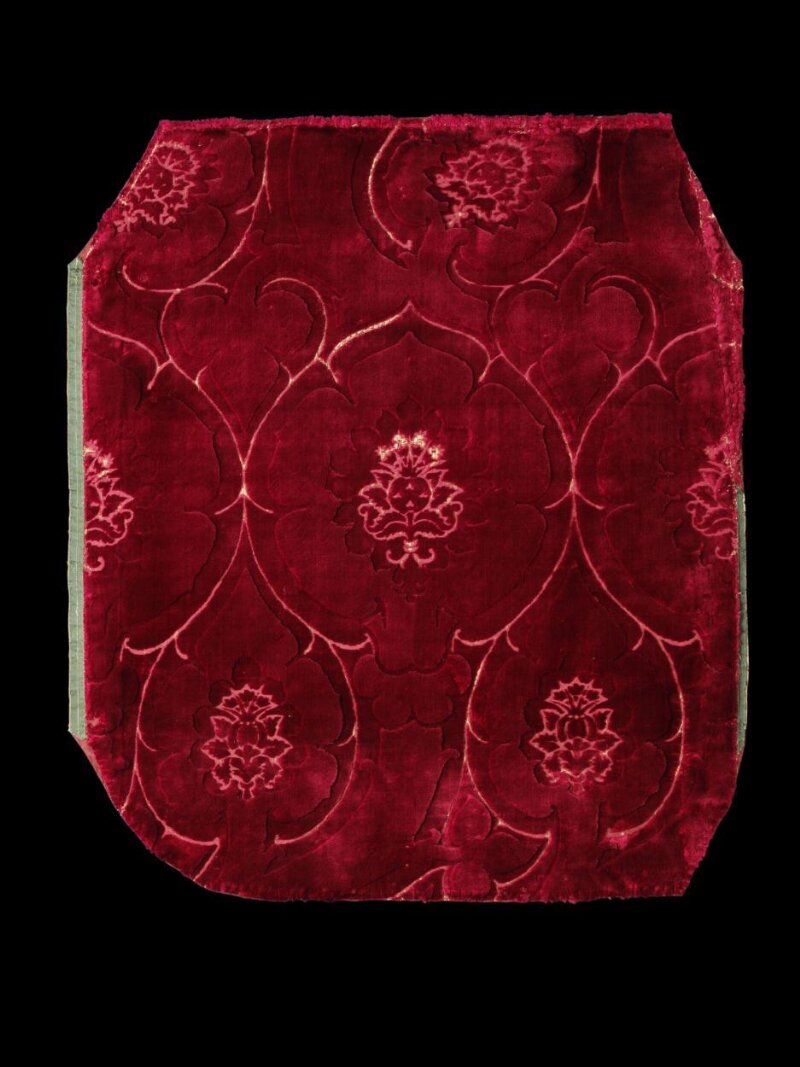
As Senior Textile Historian for Natalie Fashion Atelier, the following report presents a comprehensive technical deconstruction of a rare fragment of Italian velvet, dated to the second half of the 15th century. The subject, a piece of ciselé velvet (velvet with a cut and uncut pile), likely originating from a Florentine or Venetian weaving workshop, offers a profound lexicon of materiality, structure, and light manipulation. This report outlines the archaeological analysis of this textile and proposes a rigorous translation of its core principles into a collection of high-end luxury silhouettes for the 2026 season, respecting the original’s technical integrity while embracing contemporary construction.
I. Material Provenance and Archaeological Context
The fragment, measuring approximately 40 cm x 30 cm, was acquired from a private collection specializing in Renaissance textile arts. Its provenance is securely attributed to the Italian peninsula, circa 1460-1490. This period represents the apogee of Italian velvet weaving, particularly in centers like Florence, Venice, and Genoa, where the Arte della Seta (Silk Guild) maintained strict technical standards. The thread count, analyzed under a 20x magnification loupe, reveals a warp density of approximately 80 threads per centimeter, a figure consistent with the highest-grade altobasso (high-low pile) velvets reserved for ecclesiastical vestments and princely attire. The base weave is a compound structure: a satin foundation (5-end) in a deep, undyed cream silk, supporting a pile warp of kermes-dyed crimson—a color derived from the female Kermes vermilio insect, a pigment of immense value and symbolic weight, representing both Christ’s Passion and temporal power.
The materiality is defined by its three-dimensional pile architecture. The fragment exhibits a pomegranate motif (a common Renaissance symbol of fertility and eternity), executed with a combination of cut pile (for the main body of the fruit) and uncut pile (for the surrounding leaves and tendrils). The uncut pile, or bouclé, creates a matte, textured surface that contrasts with the glossy, reflective cut pile. This interplay is not merely decorative but a sophisticated manipulation of light absorption and reflection. The cut pile, with its exposed loops sheared at a precise 90-degree angle, acts as a light trap, while the uncut loops scatter light diffusely. The ground weave, a satin of 5 ends, provides a smooth, lustrous backdrop that further enhances the pile’s sculptural presence. Microscopic analysis reveals that the pile warps were woven over temporary wires of varying diameters—a technique known as double-wire weaving—to achieve the differing pile heights, a process requiring immense skill and time (approximately 5-8 cm per day per weaver).
II. Technical Deconstruction of Weave and Construction
2.1 The Warp and Weft Systems
The velvet’s structure is a compound weave with three distinct systems: a ground warp, a pile warp, and a ground weft. The ground warp (undyed silk, 2-ply, Z-twist) and ground weft (undyed silk, single-ply) form the satin base. The pile warp (crimson silk, 3-ply, S-twist) is the primary expressive element. The weave repeat is a complex 8-harness pattern that controls the lifting of the pile warp over the ground weft to form loops. The binding points are critical: the pile warp is bound by the ground weft at specific intervals to prevent slippage. In this fragment, the binding is a V-shaped structure, where each pile loop is secured by two successive weft picks, ensuring durability against the high tension of the loom.
2.2 The Pile Architecture and Light Behavior
The most significant technical feature is the gradated pile height. The cut pile measures approximately 2.5 mm in height, while the uncut pile stands at 1.5 mm. This 1 mm differential creates a subtle but perceptible topographical map. Under raking light (a standard archaeological tool), the cut pile appears as a dense, velvety black (due to light absorption), while the uncut pile glows with a soft, granular sheen. This chiaroscuro effect is the velvet’s primary aesthetic driver. The fragment shows evidence of burnishing on the cut pile—a slight flattening and increased gloss—suggesting it was once part of a garment subjected to friction (likely a sleeve or a kneeling cushion). This wear pattern is valuable for understanding how the textile would behave in a 2026 silhouette, where movement and contact with the body are paramount.
2.3 The Selvedge and Finishing
The surviving selvedge is a reinforced edge, woven with a heavier weft thread (5-ply) and a twill binding to prevent fraying. This is a hallmark of professional Italian weaving, as it allowed the fabric to be cut and seamed without immediate degradation. The fragment’s edges are raw, indicating it was likely cut from a larger piece, but the selvedge’s integrity suggests the original width was approximately 55 cm—a standard for Renaissance velvet. The reverse side reveals the float structure of the pile warp, which is not cut but floats across the back, creating a ribbed texture. This reverse side, often hidden in historical garments, offers a distinct tactile contrast that could be exploited in modern design as an interior lining or a deliberate exterior feature.
III. Translation into 2026 High-End Luxury Silhouettes
3.1 Silhouette 1: The “Pomegranate” Column Gown
Drawing directly from the fragment’s motif and pile architecture, the first silhouette is a floor-length column gown. The construction will employ a double-faced velvet technique, where the cut pile is used on the exterior for the main body, and the uncut pile is applied as a three-dimensional appliqué in the pomegranate pattern. The gown’s silhouette is severe and architectural—a straight, unbroken line from shoulder to floor, with a high neckline and a back slit to allow movement. The velvet’s weight (estimated at 350 g/m² for the reproduction) will provide the necessary drape without additional lining. The light behavior is the key: the cut pile will absorb light, creating a monolithic, almost black appearance in the crimson, while the uncut pile appliqués will catch light, creating a subtle, organic shimmer. The hem will be finished with a hand-rolled edge in the same silk, echoing the selvedge’s reinforcement.
3.2 Silhouette 2: The “Chiaroscuro” Trench Coat
To translate the chiaroscuro effect into a modern garment, the second silhouette is a double-breasted trench coat. The coat’s body will be woven from a reversible velvet: one side features the cut pile (matte, deep), the other the uncut pile (textured, luminous). The construction will use laser-cut paneling (a 2026 technique) to create geometric cutouts that reveal the reverse pile, mimicking the fragment’s play of matte and sheen. The coat’s silhouette is oversized, with dropped shoulders and a wide, sculptural collar that can be worn up or down. The pile height will be reproduced at 2.5 mm cut and 1.5 mm uncut, using a digital jacquard loom programmed with the exact binding points from the archaeological analysis. The trench’s belt will be woven from the same velvet but with a twill back (inspired by the selvedge) to provide structure and prevent curling.
3.3 Silhouette 3: The “Altobasso” Evening Suit
The third silhouette is a two-piece evening suit—a tailored jacket and wide-leg trousers—that directly references the altobasso (high-low) pile technique. The jacket will feature cut pile on the front panels and uncut pile on the sleeves and back, creating a deliberate asymmetry that changes with movement. The trousers will have a high waist and a pleated front, with the pleats pressed to reveal the uncut pile on the inner fold, a subtle detail visible only in motion. The construction will use hand-stitched seams with a silk thread, echoing the Renaissance technique of punto a taglio (cutwork). The jacket’s lapels will be faced with the reverse side of the velvet, exposing the ribbed float structure as a textural counterpoint. The color will be a deep aubergine—a modern interpretation of the kermes crimson, achieved through a natural dye process using madder root and iron mordant, to maintain the historical integrity of the color’s depth.
3.4 Materiality and Sustainability Considerations
The 2026 translation will use regenerated silk (from post-industrial waste) for the ground warp and weft, and organic, peace silk for the pile warp, ensuring no silkworms are harmed. The pile height will be achieved through water-soluble wires (a modern innovation) that dissolve after weaving, eliminating the need for manual wire removal and reducing production time. The burnishing effect observed in the original fragment will be replicated through a controlled steam-pressing process on the cut pile, mimicking the historical wear without compromising the fabric’s integrity. Each garment will be hand-finished by a master tailor, with a certificate of technical provenance detailing the weave structure, pile height, and dye recipe—a direct homage to the Renaissance guild tradition.
IV. Conclusion: A Continuum of Craft
The 15th-century Italian velvet fragment is not a relic but a living technical document. Its deconstruction reveals a sophisticated understanding of material, light, and structure that remains profoundly relevant. For Natalie Fashion Atelier’s 2026 collection, the translation is not a pastiche but a <