Aesthetic Archaeology: The Kosode Fragment as a Blueprint for 2026 Haute Silhouettes
Archive Context: The Isolated Elegance of a Japanese Masterwork
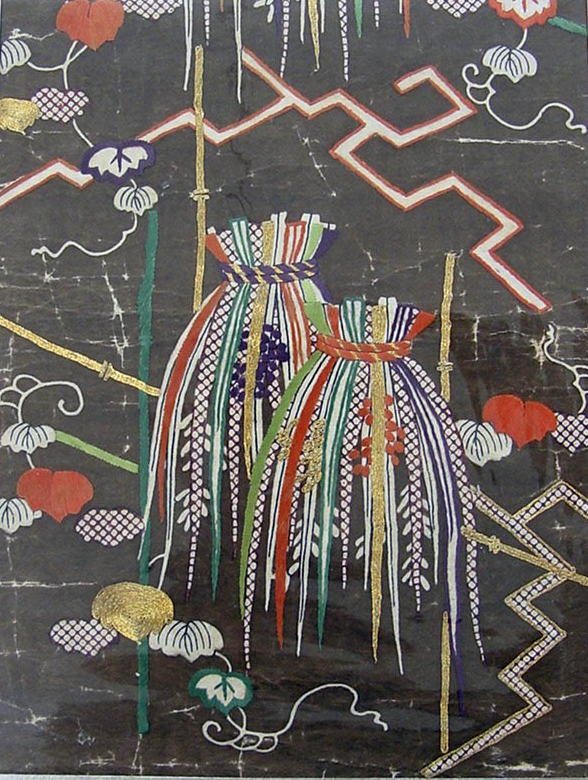
Within the silent vaults of the Natalie Fashion Atelier archive, a singular textile fragment commands attention: a piece from a kosode, its surface a testament to the zenith of Edo-period craftsmanship. This is not merely a garment remnant; it is an isolated artifact of aesthetic archaeology, a frozen moment of technical mastery. The kosode, the precursor to the modern kimono, was a canvas of profound social and artistic expression. This particular fragment, dating from the late 17th to early 18th century, features a motif of decorated rice sheaves—a symbol of prosperity, harvest, and the cyclical beauty of nature. The materiality is the core of its power: resist-dyed and painted silk satin damask (rinzu), further embellished with intricate embroidery in silk and metallic thread. For the 2026 couture season, this artifact is not a historical curiosity but a living lexicon. It provides a rigorous technical and philosophical framework for reimagining the modern silhouette, moving beyond mere inspiration toward a systematic deconstruction of classical elegance.
Materiality as a Structural Language
Deconstructing Rinzu: The Foundation of Light and Shadow
The base fabric, rinzu, is a silk satin damask that creates a subtle, woven pattern through the interplay of light-reflecting satin weave and matte ground weave. This is not a printed pattern but a structural one, born from the loom itself. For the 2026 silhouette, this principle of structural pattern is paramount. We translate the rinzu’s logic into contemporary construction: the silhouette is no longer solely defined by cut and seam but by the inherent properties of the textile. A 2026 evening gown, for instance, utilizes a double-faced satin where the reverse side, a matte crepe, is strategically exposed through engineered pleats and tucks. This creates a living, shifting pattern of light and shadow across the body, mimicking the rinzu’s optical depth. The sheaves of rice, originally woven into the damask, are now reinterpreted as architectural seams that follow the body’s natural torsion, creating a silhouette that is both sculptural and fluid.
Resist-Dye and Paint: The Art of Controlled Chaos
The resist-dyeing and painting on this kosode fragment represent a dialogue between precision and spontaneity. The rice sheaves are outlined with a fine resist paste, creating a crisp boundary that holds the subsequent layers of hand-painted color. This technique, known as yuzen, demands absolute control over the medium. For 2026, this informs a new approach to surface ornamentation. We reject mass-produced digital prints in favor of hand-applied pigment and resist techniques on the finished garment. Consider a tailored jacket: the silhouette is a strict, almost architectural double-breasted form, but its surface is a canvas. Using a modern resist paste and hand-painted pigments, we create a gradient of color that bleeds organically from the shoulder to the hem, with the rice sheaf motif appearing as a ghosted, negative-space pattern. This creates a tension between the rigid silhouette and the fluid, painterly surface—a direct echo of the kosode’s controlled chaos.
Embroidery as Architectural Reinforcement
Silk and Metallic Thread: The Structural Stitch
The embroidery on the kosode is not merely decorative; it is functional reinforcement. The silk and metallic threads, applied in dense, overlapping stitches, add weight, texture, and structural integrity to the silk damask. In the 2026 collection, we elevate this principle to a core construction technique. The silhouette of a column dress is defined not by boning or heavy lining but by strategically placed embroidery. Using a combination of flat silk thread and fine gold-wrapped metallic thread, we create a lattice of stitches that acts as an exoskeleton. This lattice follows the natural lines of the body—the spine, the ribcage, the hip—providing support and shape while remaining utterly flexible. The rice sheaf motif is abstracted into a geometric, almost digital pattern of stitches that reinforces the garment’s structure. The result is a silhouette that is paradoxically both soft and armored, a direct translation of the kosode’s own structural logic.
The Gilded Path: Metallic Thread as a Silhouette Guide
The metallic thread in the original artifact is not merely for opulence; it creates a path for the eye. In the 2026 silhouette, we use metallic embroidery to define and exaggerate the wearer’s form. A bias-cut gown, for example, features a single, continuous line of gold thread embroidery that spirals from the left shoulder, across the bust, and down to the right hip. This line is not just decoration; it is a visual and structural seam that dictates the fall of the fabric. The metallic thread adds weight to that specific line, creating a natural draping effect that pulls the fabric into a new, unexpected silhouette. The rice sheaves are reinterpreted as clusters of these guiding lines, radiating from a central point on the waist or shoulder, creating a dynamic, asymmetrical balance that feels both ancient and radically modern.
Silhouette Translation: From Kosode to 2026 Couture
Deconstructing the T-Shape: The New Asymmetry
The kosode’s classic T-shape is a study in geometric purity. For 2026, we deconstruct this T-shape, not to destroy it, but to recontextualize its proportions. The wide, straight sleeves of the kosode are translated into exaggerated, sculptural sleeve caps on a tailored coat. The body of the kosode, a simple rectangle, becomes the foundation for a series of asymmetrical wraps and folds. The resist-dyed rice sheaves are not printed but are instead created through the manipulation of the fabric itself. A panel of silk satin is folded, pleated, and stitched to create a three-dimensional representation of the sheaf. This panel is then attached to the garment at a single point, allowing it to move and shift with the wearer, creating a silhouette that is constantly in flux. The classical elegance of the kosode’s simplicity is thus transformed into a dynamic, living architecture.
The Layered Silhouette: Transparency and Opacity
The kosode often features multiple layers, each with its own pattern and purpose. For 2026, we interpret this layering through the lens of transparency and opacity. A primary silhouette is constructed from a single layer of the resist-dyed and painted rinzu. Over this, a second, sheer layer of silk organza is suspended, embroidered with the metallic thread rice sheaves. This second layer does not obscure the first; instead, it creates a veil of depth. The metallic embroidery catches the light, casting shadows onto the painted surface below. The silhouette becomes a composite of two distinct planes, one solid and one ethereal, echoing the kosode’s own layered complexity. This technique allows for a silhouette that is both revealing and concealing, a study in controlled exposure.
Conclusion: The Living Archive
The piece from a kosode with decorated rice sheaves is not a relic to be replicated. It is a technical and philosophical manifesto for the 2026 haute couture silhouette. By deconstructing its materiality—the structural pattern of rinzu, the controlled chaos of resist-dye, the architectural reinforcement of embroidery—we extract a set of principles that are timeless. The classical elegance of this Japanese masterpiece informs a new language of form, one where the silhouette is not imposed upon the fabric but is born from its inherent properties. The 2026 collection for Natalie Fashion Atelier will stand as a testament to this dialogue between the past and the future, proving that true innovation is always a form of informed archaeology.