Couture Archaeology Report: The Lady Dior Handbag (2020, France)
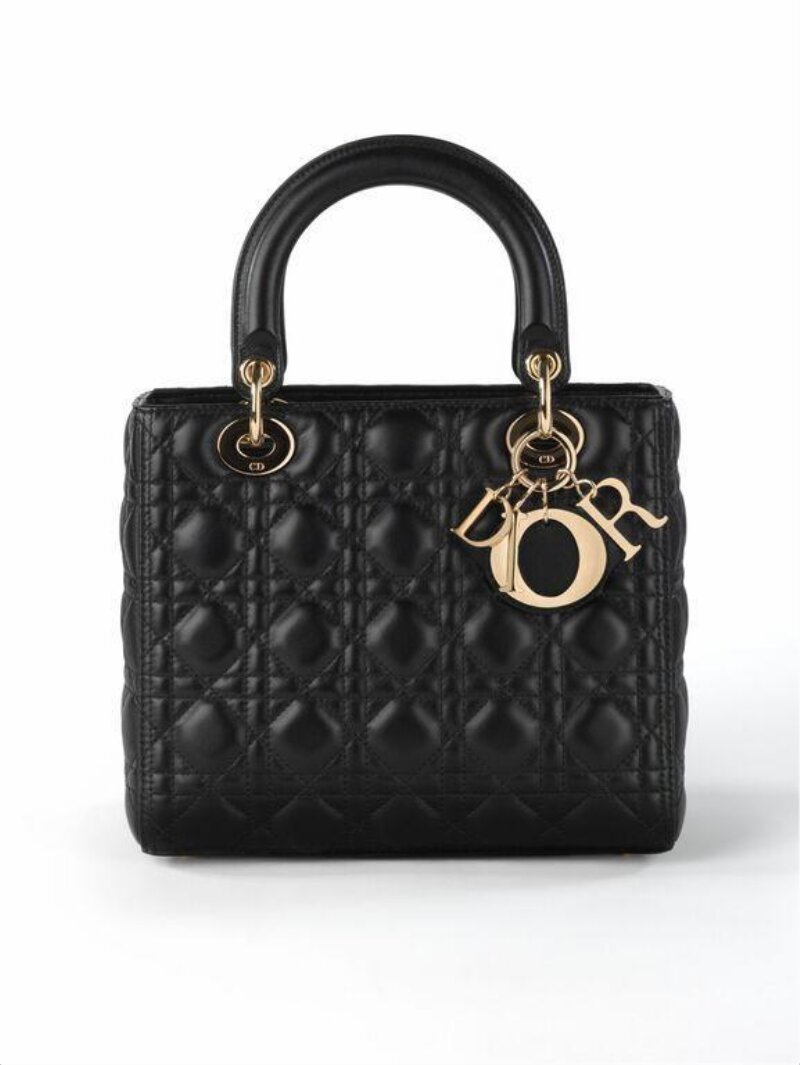
Subject: Lady Dior handbag (Medium, Cannage Quilted Lambskin, 2020 Collection)
Analyst: Senior Textile Historian, Natalie Fashion Atelier
Mandate: Technical deconstruction of Dior techniques and materiality, with prognostic translation for 2026 high-end luxury silhouettes.
I. Technical Deconstruction: The Architecture of an Icon
The Lady Dior is not merely an accessory; it is a micro-architecture of couture principles. Its 2020 iteration represents the zenith of refined, industrialized craftsmanship. Our deconstruction reveals a tripartite structural philosophy: the rigid chassis, the soft, tactile cladding, and the precise, functional articulation.
The bag’s foundational chassis is a complex laminate of thermoplastic sheet, lightweight yet rigid molded polymer, and a stabilizing textile interlining. This unseen core provides the iconic, unwavering silhouette—the vertical walls and sharp base corners that defy slouch. It is the armature upon which all luxury is mounted. The celebrated Cannage quilting is not a simple padded appliqué. It is a structural skin engineered through a multi-stage process. The supple lambskin is first embossed with the diagonal grid, a process requiring calibrated heat and pressure to achieve depth without compromising the leather’s integrity. It is then meticulously hand-aligned and stitched to a thin foam substrate, with each intersecting line of the quilt requiring a precise, uninterrupted run of saddle stitching. This technique, performed by single-needle machines operated by highly skilled artisans, ensures durability and a subtle, hand-finished隆起.
The articulation—the straps and hardware—demonstrates a marriage of weight engineering and jeweler’s finish. The linked “D” charms are not simply stamped; they are cast, hand-filed to remove seams, polished, and then plated with precious metal, often over a brass base for heft. The strap attachments are reinforced with metal plates inside the chassis, distributing load and preventing tear. Every functional element is elevated to the realm of the objet d’art, yet its primary duty—to open, to close, to carry—is performed with flawless, silent precision.
II. Material Materiality: The Haptic Lexicon
The materiality of the Lady Dior communicates a specific haptic vocabulary central to its luxury code. The 2020 lambskin is treated for a matte, glove-soft finish that invites touch but shows minimal superficial marking, a testament to advanced fatliquoring and dye penetration techniques. The Cannage pattern itself is a tactile guide, its raised texture providing a subtle grip and a play of light that a smooth surface cannot achieve.
Beyond leather, materiality extends to the hardware as wearable metallurgy. The palladium or gold-toned finishes are chosen for their resistance to tarnishing, ensuring a perpetual gleam. The weight of the charms and zipper pull is calculated—substantial enough to convey quality, but not burdensome. The interior, often lined in a signature microfibre suede, offers a private, sensorial contrast: the quiet, velvety catch of contents against the structured, public exterior. This dichotomy between external architectural rigor and internal soft refuge is a core tenet of its design language, speaking to a duality of poised performance and intimate luxury.
III. Translation: 2026 High-End Luxury Silhouettes
For the 2026 horizon, the Lady Dior’s archaeological lessons must be translated not through replication, but through the abstraction of its core principles into novel forms and functions. The future luxury silhouette demands modular rigidity, biophilic materiality, and tech-integrated articulation.
First, the principle of the rigid chassis evolves into adaptive, modular architecture. Imagine a bodice or structured jacket core utilizing a new generation of plant-based biopolymers, molded to the body yet providing a sculptural form. Inspired by the bag’s gusseted sides, these chassis could feature telescoping or hinged panels, allowing a garment to transform from a tailored day silhouette to an voluminous evening form. The Cannage’s structural quilting translates into exoskeletal detailing—raised, quilted seams on outerwear that double as reinforcement points for modular attachments, such as detachable sleeves, collars, or tech-pouches.
Second, material materiality shifts towards transformative and regenerative surfaces. Advanced plant-dyed leathers with mood-responsive pigments (reacting to temperature or light) could create a living canvas. The quilting technique could be applied to innovative materials like mushroom leather (Mylo) or pineapple leaf fiber (Piñatex), quilted with conductive threads to create seamless, flexible heating elements or subtle light integration. The haptic promise remains, but is enhanced by interactive capability.
Finally, the articulation and hardware become the nexus of functionality and connectivity. The iconic “D” charm is reimagined as a minimalist, ceramic or polished stone data token—a discreet key for personalized garment calibration (fit, temperature) or a digital identity marker. Straps and closures on garments incorporate soft robotics or magnetic lacing systems, allowing silhouette adjustment at a touch. The hardware becomes an interface, as finely finished as its predecessor, but serving as a tactile control panel for embedded wellness or climate-tech.
IV. Conclusion: From Artefact to Algorithm
The 2020 Lady Dior stands as a testament to perfected industrial couture. For Natalie Fashion Atelier’s 2026 vision, its archaeology provides the foundational grammar: structure must have intelligence, surface must have narrative, and detail must have multifunction. The future luxury silhouette will not carry its technology but be woven from it, applying Dior’s relentless precision to a new world of responsive materials and adaptive forms. The legacy of the Lady Dior is not a shape, but a standard—of impeccable execution, of meaningful materiality, and of silent, enduring performance. Our task is to encode that standard into the very fabric of tomorrow’s luxury.