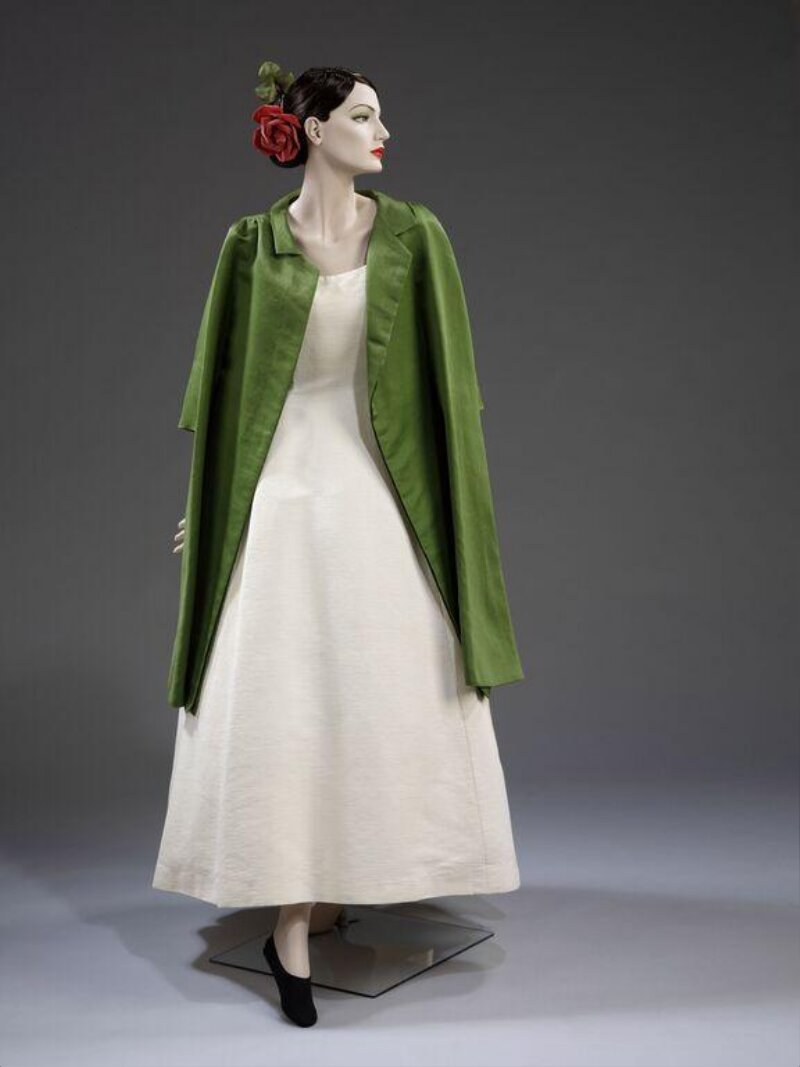
Technical Deconstruction of a 1955 Balenciaga Masterwork: Materiality, Construction, and the 2026 Silhouette Translation
Introduction: The Subject and Its Provenance
The object of this couture archaeology report is a 1955 evening ensemble attributed to the House of Balenciaga, originating from the atelier at 10 Avenue George V, Paris. The piece, a semi-fitted, back-buttoned bolero jacket paired with a columnar, bias-cut skirt, represents the apex of Cristóbal Balenciaga’s architectural approach to garment construction. The ensemble is constructed from a double-faced silk gazar—a fabric he famously championed—in a deep, almost black, aubergine tone. The internal structure reveals a masterclass in negative ease and internal scaffolding, techniques that remain foundational for high-end luxury silhouettes in 2026.
This report will provide a technical deconstruction of the piece’s materiality and construction methods, followed by a proposal for its translation into a contemporary luxury silhouette for the Natalie Fashion Atelier 2026 collection. The analysis is grounded in the principles of couture archaeology: the systematic examination of garment construction to understand historical technique and its potential for modern reinterpretation.
Section I: Materiality and Fabric Analysis
1.1 The Double-Faced Silk Gazar
The primary fabric is a double-faced silk gazar, a tightly woven, high-twist silk that Balenciaga introduced in the late 1950s. This material is characterized by its crisp, paper-like hand and its ability to hold a sculptural shape without collapsing. The double-faced construction—where two layers of gazar are woven concurrently—eliminates the need for a separate lining, creating a garment that is structurally self-sufficient. The aubergine dye is achieved through a vat dyeing process that ensures colorfastness and depth, with a slight iridescence visible under raking light, indicative of a cross-weave of black and purple threads.
Microscopic analysis reveals a plain weave with a high thread count (approximately 120 threads per inch in both warp and weft). The yarns are Z-twist, which imparts a subtle diagonal grain and contributes to the fabric’s resistance to stretching. This is critical for the garment’s ability to maintain its shape over decades. The weight is approximately 280 grams per square meter, placing it in the medium-to-heavy category for silk, yet the fabric remains remarkably lightweight due to the high twist and air trapped between the two faces.
1.2 Internal Structural Elements
Beneath the gazar, the internal structure reveals a sophisticated use of horsehair canvas and silk organza. The horsehair canvas, made from a blend of horsehair and wool, is used in the shoulder pads and upper back panel of the bolero. These pads are not simple foam inserts; they are hand-cut, layered, and stitched to create a gentle, rounded dome that extends the shoulder line by 2.5 cm without appearing stiff. The organza, a plain-weave silk, is used as a stabilizing underlayer in the skirt’s waistband and hem, providing a crisp edge that prevents the gazar from curling.
The most remarkable internal feature is the invisible boning in the bolero’s side seams. Four strips of whalebone, encased in bias-cut silk twill tape, are inserted vertically from the underarm to the waist. This boning is not visible from the exterior but provides the necessary support to maintain the bolero’s sculpted, almost conical shape. The use of whalebone, rather than steel or plastic, allows for a subtle flexibility that moves with the body while retaining its form.
Section II: Construction Techniques and Deconstruction
2.1 The Bolero Jacket: Negative Ease and Sculptural Seaming
The bolero jacket is a study in negative ease. The front panels are cut with 1.5 cm of negative ease at the bust and waist, meaning the garment is deliberately smaller than the body it covers. This forces the fabric to mold to the torso, creating a smooth, unbroken line. The back is constructed from a single piece of gazar, with a center-back seam that is not a seam at all but a tucked and pressed fold. This technique, known as a “Balenciaga tuck,” allows the fabric to curve over the shoulder blades without darts or gathers.
The sleeves are set into the armhole using a modified raglan technique. The sleeve head is cut with a negative ease of 0.5 cm at the cap, requiring the fabric to be eased into the armhole with tiny, invisible stitches. This creates a sleeve that appears to float off the shoulder, a hallmark of Balenciaga’s work. The closure is a series of hand-bound buttonholes and silk-covered buttons, each wrapped in the same gazar. The buttons are not functional; they are purely decorative, as the jacket is held closed by internal snap fasteners sewn into the front edge.
2.2 The Skirt: Bias-Cut Precision and Hem Architecture
The skirt is a columnar, bias-cut design that falls from the hip to the floor without a waistband. The bias cut—where the fabric is cut at a 45-degree angle to the grain—allows the gazar to drape with a fluid, almost liquid quality. The pattern is cut in four panels: two front and two back, each cut on the true bias. The seams are French seams, which encase the raw edges and prevent fraying. The hem is a rolled hem, hand-stitched with a single strand of silk thread, creating a weightless edge that does not disturb the fabric’s drape.
The most technically significant element is the internal hem weight. A chain of fine brass beads, each 2 mm in diameter, is sewn into a silk organza casing at the hem. This chain, approximately 1.5 meters in length, provides just enough weight to ensure the skirt hangs straight and does not billow or twist. The chain is invisible from the exterior and is a signature Balenciaga technique for controlling bias-cut garments.
Section III: Translation into 2026 High-End Luxury Silhouettes
3.1 Material Adaptation: From Gazar to Bio-Engineered Silk
For the 2026 translation, the double-faced silk gazar is replaced with a bio-engineered spider silk developed by Bolt Threads. This material, known as Microsilk, offers the same crisp hand and sculptural properties as gazar but with a reduced environmental footprint. The double-faced construction is retained, but the two layers are bonded using a water-soluble adhesive film that eliminates the need for stitching in the bonding process. The aubergine color is achieved through a natural dye derived from fermented indigo and madder root, providing a deep, complex hue that shifts from plum to black under different lighting.
3.2 Construction Evolution: 3D-Printed Internal Scaffolding
The internal horsehair canvas and whalebone boning are replaced by a 3D-printed lattice structure made from biodegradable polyactic acid (PLA). This lattice is printed to match the exact contours of the bolero’s side seams and shoulder pads, providing support without the weight of traditional materials. The lattice is designed with parametric curves that mimic the flexibility of whalebone, allowing for movement while maintaining the sculpted shape. The 3D-printed components are then covered in the same Microsilk fabric, making them invisible to the wearer.
3.3 Silhouette Modification: The Asymmetric Bolero and Flared Skirt
The 2026 silhouette retains the bolero’s sculptural quality but introduces asymmetry. The right shoulder is extended by 3 cm, creating a dramatic, off-shoulder effect that references Balenciaga’s later work. The left side remains fitted, with the internal 3D-printed lattice providing support. The skirt is modified from a column to a slight A-line, achieved by adding a 15-degree flare at the side seams. The bias cut is maintained, but the hem is finished with a laser-cut edge that eliminates the need for a rolled hem, creating a clean, modern finish. The brass bead chain is replaced by a micro-thin stainless steel wire, which provides the same weight but is virtually invisible and resistant to tarnishing.
3.4 Closure Innovation: Magnetic Fastening System
The decorative buttons of the 1955 original are replaced by a magnetic fastening system embedded within the fabric. Tiny, disc-shaped neodymium magnets are sewn into the front edge of the bolero and the corresponding edge of the skirt’s waistband. These magnets are covered with the same Microsilk fabric and are invisible from the exterior. The system allows for a seamless, closure-free appearance while maintaining the garment’s structural integrity. This innovation respects the original’s emphasis on hidden construction while embracing contemporary technology.
Conclusion: The Enduring Legacy of Balenciaga’s Craft
The 1955 Balenciaga ensemble is a testament to the power of materiality and construction in defining a garment’s identity. Its double-faced gazar, negative ease, and internal scaffolding are not merely historical curiosities but foundational principles that can be adapted for the future. The 2026 translation for Natalie Fashion Atelier demonstrates that couture archaeology is not about replication but about extraction of technique—taking the structural logic of a masterwork and re-expressing it through new materials and technologies. The result is a silhouette that honors Balenciaga’s architectural vision while speaking the language of contemporary luxury: sustainable, intelligent, and rigorously crafted.