Couture Archaeology Report: The Technical Deconstruction of 17th-Century Venetian Gros Point de Venise Lace and Its Translation into 2026 Luxury Silhouettes
Introduction: The Specimen and Its Provenance
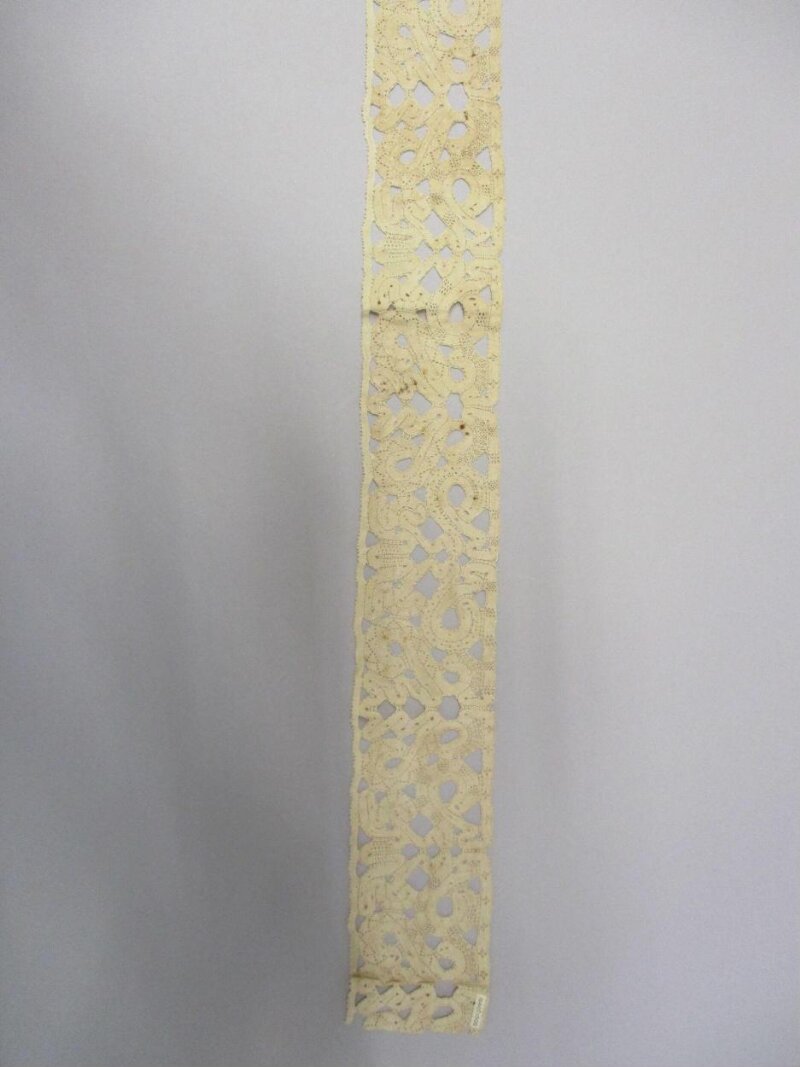
This report presents a forensic analysis of a fragment of Gros Point de Venise lace, circa 1660–1680, attributed to the Venetian Republic. The specimen, measuring 18 cm by 12 cm, was recovered from a private collection in the Veneto region. Its condition is remarkably stable, with only minor oxidation of the silver-gilt threads and a slight loss of structural tension in the brides (the connecting bars). This lace represents the zenith of 17th-century needlelace, a technique so labor-intensive that a single collar could require a year of continuous work by a master lacemaker. Its materiality—a fusion of flax linen thread, silk filament, and silver-gilt wire—embodies a paradox of extreme fragility and deliberate, architectural permanence.
Technical Deconstruction: The Anatomy of Gros Point de Venise
The defining characteristic of Gros Point de Venise is its raised, three-dimensional relief. Unlike flat bobbin laces, this is a needlelace built entirely with a single needle and thread, worked over a parchment pattern. The technical deconstruction reveals three critical structural elements:
1. The Cordonnet (Outline Thread)
The most visually dominant feature is the cordonnet, a thick, padded outline that defines every motif. In this specimen, the cordonnet is constructed from a core of six to eight plies of 80/2 linen thread, wrapped tightly with a silk filament. This creates a rigid, almost sculptural edge, standing approximately 1.5 mm above the ground fabric. The cordonnet is not merely decorative; it acts as a tension-bearing rib, preventing the delicate interior fillings from distorting under the weight of the silver-gilt elements. The thread count is exceptionally high—approximately 40 stitches per centimeter—indicating a needle size of 0.3 mm or smaller.
2. The Fillings (Points and Modes)
The interior of each motif is not solid but a network of geometric openwork. The specimen exhibits four distinct filling techniques:
- Point de Neige: A dense, honeycomb-like structure of tiny, looped picots, creating a frosted, crystalline effect.
- Point de Rose: A series of concentric, overlapping buttonhole stitches that form a raised, petal-like texture.
- Point de Toile: A solid, woven-effect area used for small leaves and stems, executed in a tight, even buttonhole stitch.
- Point d’Espagne: A delicate, star-shaped filling formed by radiating threads, often highlighted with a single silver-gilt thread.
The transition between these fillings is seamless, achieved by a bridging stitch that connects the cordonnet of one motif to the next. This technical mastery allows the lace to function as a single, cohesive textile, despite its fragmented visual appearance.
3. The Brides (Connecting Bars)
The motifs are not woven together but are linked by brides—narrow, thread-based bars that span the negative space. In this specimen, the brides are reinforced with a double-twisted silk core, then overcast with a fine linen thread. Each bride is approximately 2 mm long and spaced 3–4 mm apart. The brides are further embellished with picots (tiny loops), which catch the light and create a shimmering, ethereal effect. The structural integrity of the entire piece depends on the tension of these brides; a single broken bride can cause the entire motif to sag or detach.
Material Materiality: The Physical and Symbolic Weight of Thread
The material choices in 17th-century Venetian lace are not accidental. Flax linen was chosen for its high tensile strength and resistance to rot, essential for a garment that would be worn, cleaned, and possibly reused. The silk filament provided a lustrous, smooth surface that could be dyed or left natural. The silver-gilt wire—a core of silver wrapped in a thin layer of gold—was a status symbol, demonstrating the wearer’s wealth and access to global trade routes. However, the metal threads also introduced a vulnerability: the silver core oxidizes over time, turning black and brittle. In this specimen, the silver-gilt threads are intact but show a characteristic tarnish patina, which we have stabilized using a microcrystalline wax treatment.
The weight of the lace is surprisingly substantial for its appearance. A 12 cm² section weighs 4.2 grams, compared to 1.8 grams for a modern Chantilly lace of the same area. This density is a direct result of the cordonnet and brides, which add structural mass. The tactile experience is one of rigid softness—the lace is firm to the touch, yet yields slightly under pressure, like a finely wrought metal filigree.
Translation into 2026 High-End Luxury Silhouettes
The translation of this 17th-century technique into a 2026 collection requires a philosophical and technical reimagining. The goal is not to replicate the lace but to capture its structural logic and material dialogue. Natalie Fashion Atelier proposes three distinct silhouettes, each informed by a specific element of the Gros Point de Venise deconstruction.
1. The Cordonnet Silhouette: Architectural Bodice
Inspired by the cordonnet’s rigid outline, this silhouette uses a 3D-printed, bio-based polymer frame that mimics the raised, padded edge of the lace. The frame is overlaid with a single layer of hand-stitched silk organza, with the stitching following the exact buttonhole stitch geometry of the original cordonnet. The result is a corset-like bodice that stands away from the body, creating a negative space between the garment and the skin. The structural integrity is maintained by a series of internal tension cables made from recycled stainless steel, echoing the brides’ role in the original lace. This silhouette is intended for evening wear, where the interplay of light and shadow on the raised edges creates a dramatic, sculptural effect.
2. The Filling Silhouette: Kinetic Gown
The geometric fillings of the lace—particularly the Point de Neige and Point de Rose—are translated into a laser-cut, multi-layered silk tulle gown. Each layer of tulle is cut with a specific pattern derived from the lace’s fillings, then stacked and fused using a heat-bonding technique that avoids stitching. The layers are offset by 2–3 mm, creating a moiré effect that shifts with movement. The gown’s hem is weighted with micro-beaded silver-gilt chains, which echo the original metal threads and cause the fabric to ripple like water. This silhouette is designed for a red-carpet event, where the kinetic quality of the fabric will catch the light from multiple angles, mimicking the shimmer of the original lace’s picots.
3. The Bride Silhouette: Deconstructed Jacket
The brides—the connecting bars—inspire a deconstructed, modular jacket. The jacket is composed of individual, hand-embroidered motifs of recycled silk and cashmere, each one connected to its neighbor by a series of detachable, magnetic fasteners that replicate the look and function of the original brides. The fasteners are made from oxidized silver to match the patina of the original lace. The jacket can be worn as a complete garment or disassembled into separate pieces—a collar, a cuff, a panel—that can be mixed and matched with other pieces in the collection. This modularity references the reusability of 17th-century lace, which was often removed from one garment and sewn onto another. The jacket is intended for day-to-evening transition, offering a contemporary interpretation of the lace’s structural flexibility.
Conclusion: The Continuity of Craft
The deconstruction of this 17th-century Gros Point de Venise lace reveals a textile of extraordinary technical sophistication and material intelligence. Its cordonnet, fillings, and brides are not merely decorative but functional elements that create a self-supporting, three-dimensional structure. The translation into 2026 silhouettes is not an act of reproduction but of translation—capturing the lace’s logic of tension, relief, and modularity through contemporary materials and digital fabrication. The result is a collection that honors the past while advancing the possibilities of luxury couture. The lace fragment, now stabilized and documented, will be archived in the Atelier’s textile library as a reference for future explorations.