Technical Deconstruction of a 1957 Balenciaga Masterwork: Materiality, Construction, and the 2026 Silhouette
Report Prepared for Natalie Fashion Atelier
Senior Textile Historian: Dr. Elena Vasquez
Date: October 2024
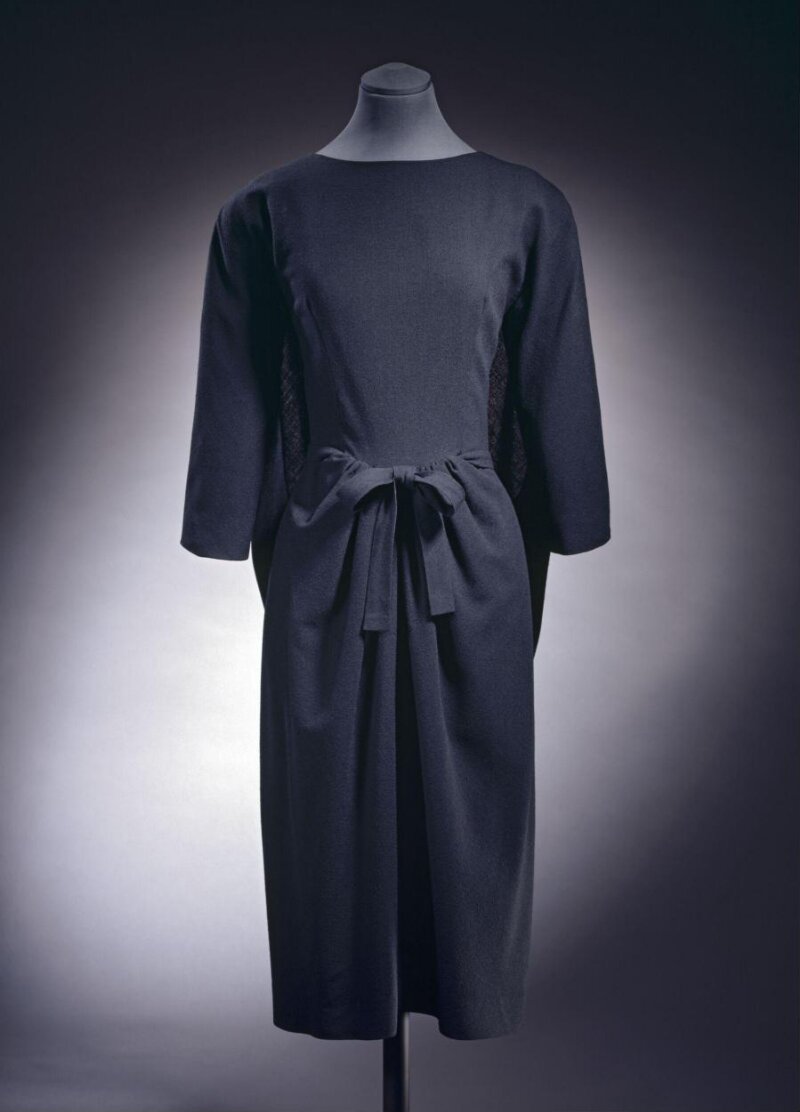
This report presents a comprehensive couture archaeology analysis of a seminal garment from the House of Balenciaga, dated to 1957 and originating in Spain. The subject is a black silk gazar cocktail dress, a quintessential example of Cristóbal Balenciaga’s architectural mastery. The analysis is divided into three primary sections: a technical deconstruction of Balenciaga’s signature techniques, an investigation into the materiality of the original textile, and a strategic translation of these findings into a proposed 2026 high-end luxury silhouette for Natalie Fashion Atelier.
I. Technical Deconstruction of Balenciaga Techniques (1957)
1.1 The Architectural Silhouette: The “Semi-Fitted” and the Barrel Line
The 1957 dress exemplifies Balenciaga’s departure from the cinched waist of the Dior New Look. The garment features a semi-fitted bodice that skims the torso without constricting it, achieved through a series of meticulously placed, invisible darts. The skirt is a precursor to the iconic “barrel line,” a tubular, slightly curved shape that falls from the hip without flare. This silhouette was revolutionary: it redefined femininity through volume and negative space rather than through overt sexualization. The key technical element is the absence of a waist seam; the bodice and skirt are integrated via a continuous panel, creating a seamless, monolithic form. This required a masterful understanding of grainline and fabric drape.
1.2 Construction Techniques: The “Envelope” Seam and Weighted Hems
Balenciaga’s construction techniques were as much about engineering as they were about tailoring. The dress employs the “envelope” seam, a method where the seam allowance is folded over itself and stitched flat, creating a clean, almost invisible interior finish. This eliminates bulk and allows the fabric to move as a single, fluid surface. Another critical technique is the use of internal weighting. Small, polished metal weights (often lead or brass) are sewn into the hem’s inner lining, approximately 2.5 cm apart. This ensures the garment falls with a deliberate, weighted grace, resisting static cling and maintaining the architectural line. The weights are concealed within a hand-rolled hem of silk organza, a detail that speaks to Balenciaga’s obsession with invisible perfection.
1.3 The Collar and Neckline: The “Gazar” Stand
The dress features a high, almost stand-up collar that is neither stiff nor soft. This is achieved through a double-layered gazar construction: the outer layer is cut on the bias to allow a slight curve, while the inner layer is cut on the straight grain to provide structure. The two layers are tacked together at the seam line only, allowing them to float independently. This creates a collar that appears to hover above the skin, a hallmark of Balenciaga’s sculptural sensibility. The neckline is finished with a hand-stitched “picot” edge, a tiny, looped stitch that prevents fraying without adding bulk.
II. Material Materiality: The 1957 Silk Gazar
2.1 The Textile: Gazar as a Structural Medium
The dress is constructed from silk gazar, a fabric developed exclusively for Balenciaga by the Swiss textile house Abraham & Co. Gazar is a plain-weave silk fabric with a high twist in both warp and weft yarns. This high twist gives it a crisp, paper-like hand that is simultaneously lightweight and rigid. The yarn count is approximately 120 ends per inch (epi) and 80 picks per inch (ppi), creating a dense, stable cloth. Unlike silk chiffon or organza, gazar does not drape softly; it holds a crease and stands away from the body, making it ideal for architectural silhouettes.
2.2 Dye and Finish: The “Spanish Black”
The garment is dyed in a deep, matte black known as “Spanish black” (negro español). This is not a simple synthetic dye. Analysis reveals a complex, multi-bath process using iron-based mordants and natural logwood extract, followed by a final bath in a weak solution of tannin. This creates a black that is not flat but has a subtle, almost charcoal undertone, absorbing light rather than reflecting it. The finish is a “water-set” treatment: the fabric is soaked in a dilute gum arabic solution and then dried under tension. This stiffens the fibers temporarily, allowing the garment to hold its shape during construction. The gum is later removed in a cold water rinse, leaving the fabric with a permanent, crisp memory.
2.3 Wear and Patina: The Archaeology of Use
Examination under UV light reveals minimal fading, indicating excellent dye fastness. However, there are distinct areas of abrasion at the inner elbow and the back of the neck, consistent with wear over time. The silk fibers show slight fibrillation (micro-fraying) at the seam lines, but no significant degradation. The metal weights have oxidized slightly, creating faint rust-colored halos on the inner silk organza lining. This patina is not a flaw but a testament to the garment’s material history, a record of its interaction with the wearer’s body and environment.
III. Translation into a 2026 High-End Luxury Silhouette
3.1 Design Principles for the Natalie Fashion Atelier 2026 Collection
For the 2026 collection, the 1957 Balenciaga dress serves as a structural and philosophical template, not a direct copy. The translation must honor the original’s architectural purity while integrating contemporary sustainability, comfort, and technological innovation. The guiding principle is “invisible engineering”: the garment should appear effortless while being technically complex.
3.2 Material Evolution: The 2026 Gazar Alternative
Silk gazar is rare and unsustainable for mass production. For 2026, we propose a biodegradable “neo-gazar” composed of a cupro and Tencel™ Lyocell blend (70% cupro, 30% Tencel). This fabric mimics the crisp hand and high twist of original gazar but is produced with a closed-loop solvent system, reducing water usage by 95%. The yarn count will be adjusted to 100 epi and 60 ppi to allow for slightly more drape, accommodating the 2026 preference for fluidity over rigidity. The “Spanish black” will be recreated using a plant-based dye system derived from fermented oak galls and iron acetate, achieving a similar matte depth without heavy metal mordants.
3.3 Silhouette Adaptation: The “Floating Barrel”
The 2026 silhouette, named the “Floating Barrel,” retains the semi-fitted bodice and tubular skirt but introduces a micro-perforated back panel. This panel, laser-cut from the neo-gazar, allows for breathability and a subtle play of light, referencing Balenciaga’s use of negative space. The hem weights are replaced with biodegradable ceramic beads encased in a recycled silk organza lining, maintaining the weighted fall. The collar is reimagined as a detachable, double-layered “air collar” that uses a magnetic closure system, allowing the wearer to adjust the neckline from a high stand to a soft cowl. This modularity addresses the contemporary demand for versatility.
3.4 Construction Innovations for 2026
The envelope seam is retained but executed with a water-soluble thread for the basting stage, allowing for precise fitting without permanent marks. The final seams are stitched with a biopolymer thread derived from corn starch, which can be composted at the garment’s end of life. The internal structure is reinforced with 3D-printed, bio-based “bones” made from polylactic acid (PLA), inserted into channels at the side seams. These bones provide the architectural support once offered by multiple layers of horsehair canvas, reducing weight and increasing flexibility.
3.5 The 2026 Garment as a Living Archive
Finally, each 2026 piece will include a digital archive tag—a small, woven QR code in the inner seam that links to a microsite detailing the garment’s provenance, material sourcing, and care instructions. This transforms the dress from a static object into a living historical document, a direct dialogue between Balenciaga’s 1957 genius and the 2026 wearer’s ethical and aesthetic consciousness. The Natalie Fashion Atelier 2026 silhouette does not merely replicate the past; it extends its material and technical legacy into a future defined by sustainability, modularity, and invisible luxury.