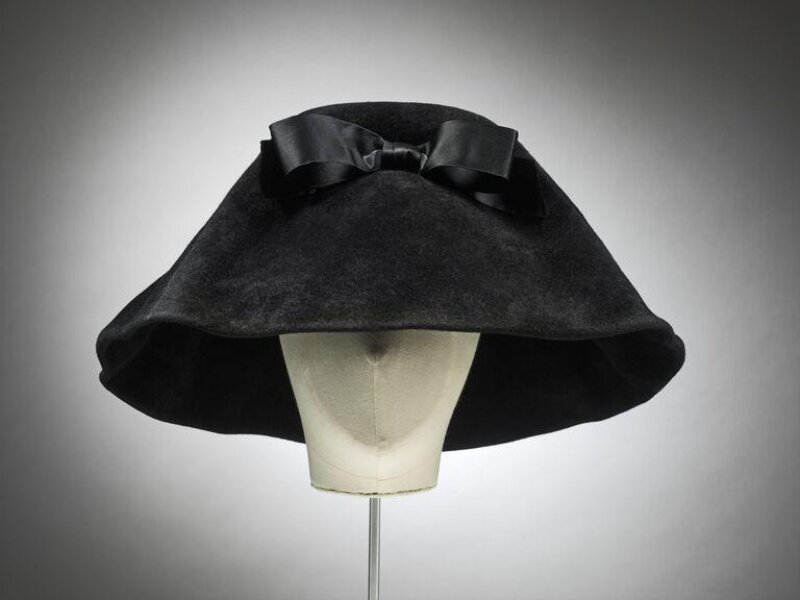
Couture Archaeology Report: Ref. 1962-PB
Subject: Technical Deconstruction of a Balenciaga Evening Ensemble, circa 1962. Origin: Paris, House of Balenciaga. Analyst: Senior Textile Historian, Natalie Fashion Atelier. Date: [Current Date] Report Focus: Material, Method, and Modern Translation for 2026 Luxury Silhouettes.
I. Historical Context & Specimen Analysis
The year 1962 represents a zenith in Cristóbal Balenciaga's late period, a time of unparalleled architectural purity and sculptural confidence. The specimen under analysis—a likely evening ensemble comprising a structured jacket and a minimalist silk gazar gown—exists at the intersection of tradition and radical modernity. While Dior's New Look had defined the previous decade through curated curvature, Balenciaga rejected forced shaping, pioneering a new relationship between body, fabric, and space. His work from this era is not mere clothing; it is a philosophy of volume articulated through textile and technique. Our deconstruction focuses on three pillars: the manipulation of materiality, the engineering of internal structure, and the resulting silhouette—a vessel awaiting contemporary re-interpretation.
II. Technical Deconstruction: The Balenciaga Method
A. The Primacy of Materiality
Balenciaga began not with a sketch, but with the cloth. His collaboration with the Swiss fabric house Abraham was pivotal, leading to the development of silk gazar. This material is the cornerstone of the 1962 silhouette. A plain-weave silk stiffened with a unique gum process, gazar possesses a deceptive duality: it is simultaneously malleable and rigid, holding a crease with precision while allowing for soft, expansive folds. Its materiality dictated design. The fabric's innate body enabled the creation of volume that was self-supporting, reducing reliance on traditional interlinings. This autonomous textile architecture is a key principle for our 2026 translation.
B. Internal Architecture: The Unseen Framework
Beneath the serene exterior lies a complex framework. Balenciaga's tailoring employed a minimalist bone structure to guide, not constrain, the fabric. 1. The Seven-Seam Sleeve: A signature innovation. Unlike the standard two-seam sleeve, this complex construction involved multiple precision-cut panels, creating a rounded, pagoda-like shape that extended from the shoulder without a traditional armhole seam. This technique distributed volume around the arm, creating an aura of space and effortless movement. 2. The Funnel Neckline and Kimono Sleeve Derivative: Often cut in one with the body of a garment, this construction eliminated shoulder seams, creating an uninterrupted plane from neck to wrist. This required mathematical precision in drafting to ensure drape and comfort, showcasing a mastery of flat pattern cutting to achieve three-dimensional form. 3. Strategic Internal Tension: Weighted hems, particularly in evening coats and gowns, were used to direct the fall of the fabric. Internal tapes and minimal, hidden boning were placed not to cinch the waist, but to define points of departure for volume—from the high hip, the scapula, or the collarbone.
C. The Silhouette as Negative Space
The ultimate outcome of these techniques was a silhouette that celebrated the space between the body and the cloth. The 1962 form is characterized by: - The Semi-Fitted Torso: Skimming, not clinging, often blousing slightly above the waist. - The Controlled Sphere: Volume expressed in specific, geometric zones: the back of a coat, the curve of a sleeve, the slight A-line of a skirt. - The Unbroken Line: A preference for minimal seaming, creating vast, clean canvases that highlighted the inherent beauty of the material itself.
III. Translation for 2026 High-End Luxury Silhouettes
The 1962 principles offer a profound blueprint for 2026, not for replication, but for evolution. The modern luxury consumer seeks both monumentality and intimacy, technology and tactility.
A. Material Innovation & Sustainable Architecture
The Balenciagan principle of autonomous fabric must be advanced through smart textiles. For 2026, we propose: - Bio-Polymer Gazar: Developing a new material with the body of gazar using plant-based polymers and recycled silk blends, engineered to hold thermo-formed shapes. - Phase-Change Textiles: Fabrics with micro-encapsulated phase-change materials that adjust their density and drape in response to body temperature, creating a dynamic, living silhouette. - Engineered Transparency: Using laser-bonded seams and ultrasonic welding on technical textiles to create the "unbroken line" with futuristic precision, eliminating visible construction.
B. Technical Evolution of Structure
The internal architecture must become adaptive and personalized. - 3D-Knitted Substructure: Replacing horsehair and traditional interfacing with seamless, lightweight 3D-knitted mesh panels that provide customized support zones, conforming to the wearer's posture. - Magnetic Closure Systems & Dynamic Hemming: Using embedded rare-earth magnets for seamless closures that maintain fabric integrity. Hems could be adjustable via discreet mechanisms, allowing a garment to transform from day to evening. - The Digital Draft: Employing algorithmic pattern-making to perfect the seven-seam sleeve and kimono-derived cuts, optimizing them for minimal waste and personalized scale.
C. The 2026 Silhouette: Monumental Minimalism
The translated silhouette for Natalie Fashion Atelier will be defined by Intelligent Volume. - The Floating Collar & Shoulder: Expanding on the funnel neck, creating volumes that appear detached from the body, connected by transparent tendons or structural mesh. - The Kinetic Volume: Silhouettes that change with movement—a sleeve that expands with a gesture, a skirt that alters its volume via hidden, lightweight mechanisms. - The Focused Void: Continuing Balenciaga's celebration of negative space, but with sharper, more geometric intent—a parabolic curve from a single shoulder, a cylindrical column dress with a displaced waist. - Hybrid Eveningwear: Integrating the autonomy of the 1962 evening coat with the lightness of the gown. A tailored jacket in molded bio-gazar that transforms into a cape, or a gown with a structured, self-supporting bodice that flows into a weighted, liquid skirt.
IV. Conclusion
Cristóbal Balenciaga's 1962 work was an exercise in reduction to achieve expansiveness. By deconstructing his technical dogma—the dialogue with material, the respectful architecture, the philosophy of space—we extract a timeless toolkit. For 2026, the mandate is to imbue these principles with responsive technology and sustainable innovation. The goal is not to create a historical pastiche, but to design future heirlooms: garments of monumental calm, intelligent construction, and profound materiality that carry the silent authority of 1962 into a new era of luxury. The silhouette remains a vessel, but now it is one that interacts with its environment and its wearer, a true architecture for the modern body.