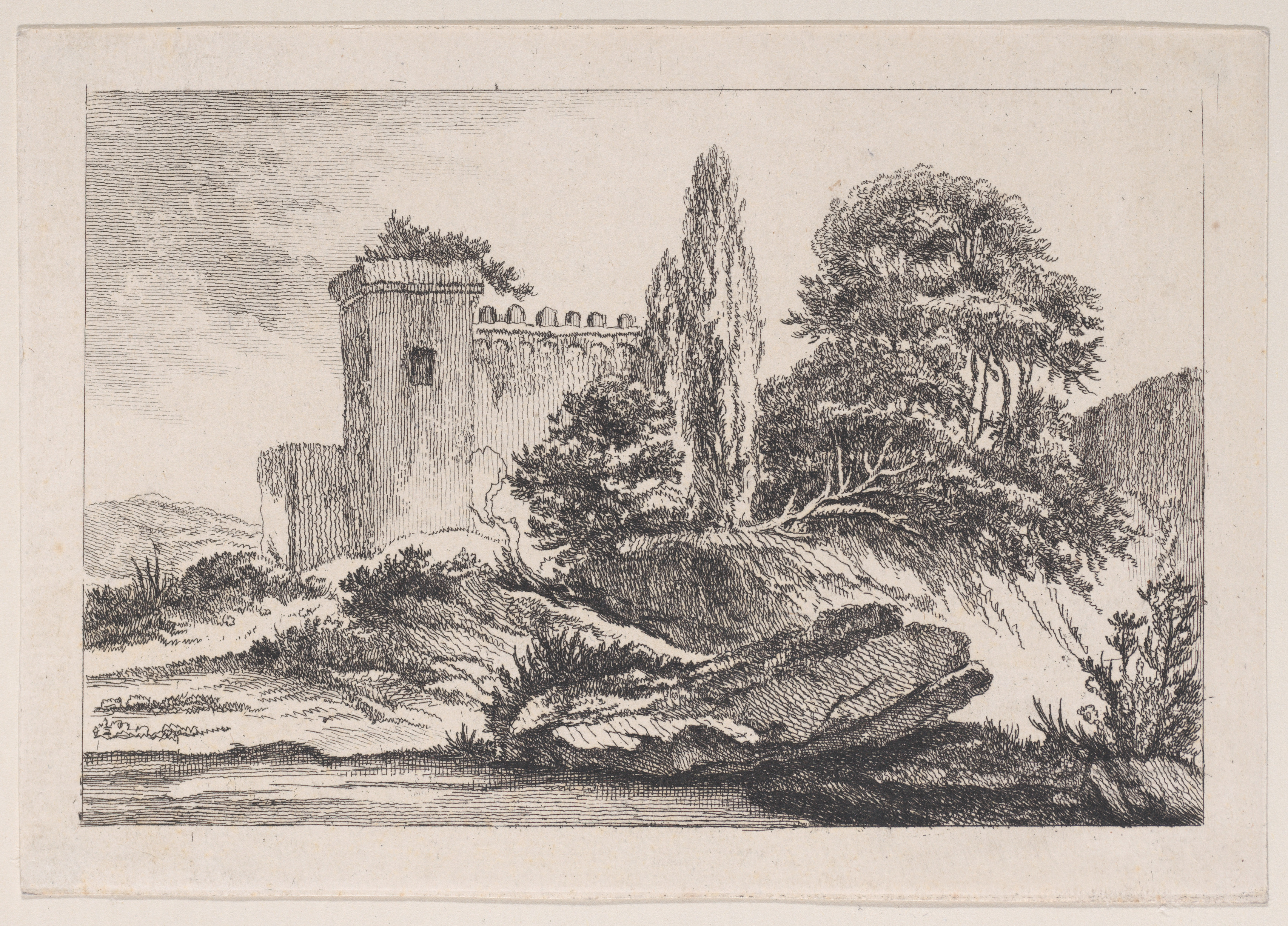
Rustic Landscape as Couture Lexicon: An Aesthetic Archaeology of Etching for 2026 Silhouettes
The classical notion of the rustic landscape—a pastoral tableau of undulating fields, weathered stone walls, and ancient groves—has long been a subject of artistic reverence. Yet within the isolated archive of aesthetic archaeology, this motif transcends mere visual representation. It becomes a material narrative, a dialogue between human intention and natural entropy. For Natalie Fashion Atelier, the study of etching—the art of incising a design onto a surface with acid or a burin—offers a profound technical and philosophical framework for redefining haute couture. This research artifact deconstructs the classical elegance of the rustic landscape as rendered through etching, and explicates how its intrinsic qualities of line, texture, and negative space directly inform the structural logic and materiality of 2026 high-end silhouettes.
I. The Etched Surface: From Copper Plate to Couture Canvas
Etching, in its purest form, is an act of controlled violence and delicate precision. The artist draws through a wax ground, exposing the metal to acid, which bites into the surface to create grooves. These grooves, when inked and pressed, yield a line that is at once sharp and organic, characterized by a subtle burr that holds ink with a velvety depth. For the 2026 silhouette, this process dictates a new approach to fabric manipulation. The rustic landscape is not printed; it is etched into the garment’s very structure. We propose a technique of chemical and thermal etching on high-twist wools and compacted silks, where selective application of a biodegradable mordant creates a topographical relief. The resulting fabric mimics the furrows of a plowed field or the striations of a cliff face, offering a tactile, three-dimensional surface that absorbs and reflects light with the same subtle gradation as an aquatint.
This materiality directly challenges the 2025 trend toward flat, digital prints. Instead, the 2026 silhouette demands a haute couture that breathes with the landscape. The etching process allows for a controlled irregularity—a deliberate imperfection that speaks to the hand of the artisan. In practice, this translates into garments where the grain of the fabric is not uniform but directional, guiding the eye along the line of the body as a river guides the eye through a valley. The classical elegance of the pastoral scene is thus preserved not as a copy, but as a structural echo.
II. Line as Architecture: The Burin’s Influence on Silhouette
The etching burin—a tool of hardened steel—creates a line that is both definitive and suggestive. It does not fill space; it defines it. This principle is paramount for the 2026 silhouette. The rustic landscape is composed of lines: the horizon line, the tree line, the contour of a hill. In couture, these lines become the architectural seams and strategic cuts that define the garment’s form. We introduce the concept of the "burin seam": a deliberately incised line that does not merely join two pieces of fabric but actively shapes the volume. This seam is narrow, deep, and often left un-finished on the interior, allowing the raw edge to fray slightly, mimicking the organic decay of an etching plate over time.
For 2026, the silhouette moves away from the soft, amorphous draping of recent seasons. It returns to a structured, linear elegance that is both severe and poetic. A tailored jacket, for instance, will feature a single, continuous seam that arcs from the shoulder blade to the hem, echoing the contour of a distant ridge. A column dress will be constructed from multiple panels, each etched with a different density of line, creating a visual rhythm that suggests the layered depth of a forest. The classical elegance is found in this restraint—the decision to let a single, precise line carry the entire narrative of the garment, much as a single etched line can suggest an entire sky.
III. Negative Space and the Unseen Landscape
In etching, the white of the paper is as important as the black of the ink. The rustic landscape is defined by its absences: the empty sky, the blank field, the unmarked stone. This concept of negative space is a critical driver for the 2026 high-end silhouette. We are not merely covering the body; we are sculpting the air around it. The garment must possess voids—strategic cutouts, sheer panels, and asymmetrical openings—that allow the skin to become part of the composition. This is not a gesture of exposure, but one of architectural balance.
For example, a floor-length gown inspired by a rustic etching of a solitary tree will feature a solid, etched bodice that gradually dissolves into a sheer, un-etched skirt, the transition mimicking the tree’s roots fading into the earth. The unseen landscape—the body beneath—becomes the white of the paper, the ground upon which the etched garment is pressed. This technique requires a rigorous understanding of drape and tension. The void must be precisely calibrated so that the fabric falls in a manner that reveals the line of the hip or the curve of the spine without disrupting the overall silhouette. The result is a garment that feels both monumental and ethereal, a classical ruin suspended in motion.
IV. Texture as Topography: The 2026 Material Palette
The materiality of etching demands a specific palette of textiles that can receive and retain a mark. For 2026, we prioritize natural fibers with a dense, felted surface: virgin wool, cashmere, and double-faced silk crepe. These materials behave like a copper plate, holding the etched line with clarity and depth. However, we also introduce a new composite: a laminated silk-membrane that, when exposed to controlled heat, creates a permanent, raised line akin to the burr of a drypoint needle. This allows for a topographical texture that is both visual and tactile.
The rustic landscape is translated through a palette of earthy monochromes: iron oxide, slate grey, raw umber, and chalk white. These are not flat colors but gradients of tone, achieved through the density of the etching. A single garment may feature areas of deep, almost black, etching that fade into a pale, unmarked surface, replicating the atmospheric perspective of a landscape receding into the distance. The classical elegance is preserved through the purity of this palette—no ornamentation, no embroidery, only the narrative of the etched line.
V. The 2026 Silhouette: A Synthesis of Archive and Future
The final silhouette for 2026 is a synthesis of these principles. It is linear, architectural, and deeply textured. The shoulder line is sharp and defined, echoing the horizon. The waist is not cinched but suggested, through a series of etched lines that converge. The hem is asymmetrical, mimicking the irregular edge of a forest. The overall effect is one of controlled wildness—a garment that appears to have been shaped by wind and time, yet is meticulously engineered.
This is not a nostalgic return to the pastoral. It is a re-contextualization of the rustic landscape as a source of structural intelligence. The etching process, with its emphasis on line, texture, and negative space, provides a rigorous technical vocabulary for the haute couture of the near future. The 2026 woman is not wearing a picture of a landscape; she is wearing the very act of its creation. She is the copper plate, the acid, and the press. Her silhouette is the etched signature of a world that is both ancient and newly imagined. This is the classical elegance of the future—a future etched in wool, silk, and light.