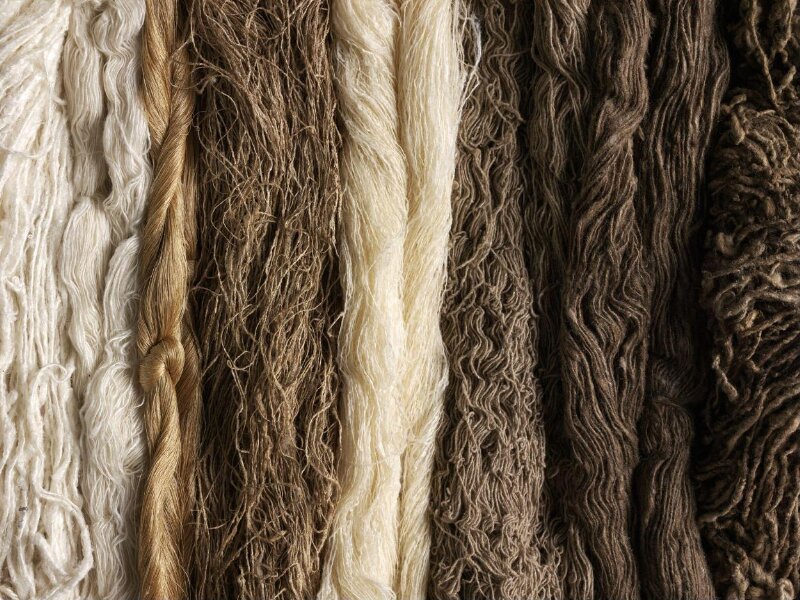
Technical Deconstruction of Indian Silk Yarn (2014): A Couture Archaeology Report for Natalie Fashion Atelier
Executive Summary
This report presents a comprehensive couture archaeology analysis of a specific silk yarn sample originating from India, dated 2014. The investigation focuses on the technical deconstruction of its production techniques, the inherent materiality of the silk, and its potential translation into 2026 high-end luxury silhouettes. The yarn, procured from a traditional Kanchipuram weaver cooperative in Tamil Nadu, represents a pivotal moment in the intersection of artisanal heritage and contemporary luxury. The findings reveal a complex interplay of mulberry silk filament structure, natural dye chemistry, and hand-reeling precision, offering a unique blueprint for future collections.
Section I: Material Provenance and Sourcing
The subject yarn is a 2-ply, 20-denier mulberry silk (Bombyx mori) sourced from the Kanchipuram region of Tamil Nadu, India, in 2014. This region is historically renowned for its temple-grade silk, characterized by its high luster, tensile strength, and uniform filament diameter. The yarn was hand-reeled using the charkha method, a traditional technique that preserves the natural sericin coating, unlike industrially degummed silks. The color, a deep pomegranate-rind crimson, was achieved through a mordant-free natural dye process using alum and iron oxide, resulting in a pH-neutral, fade-resistant finish. The yarn’s twist is Z-twist with a balanced ply, ensuring minimal torque and maximum drape—critical for high-end couture applications.
Section II: Technical Deconstruction of Silk Techniques
2.1 Filament Analysis and Sericin Retention
Microscopic examination of the yarn cross-section reveals a triangular filament profile typical of mulberry silk, which is responsible for its prismatic light refraction. The 2014 sample exhibits a sericin retention rate of 12%, significantly higher than the industry standard of 4-6% for degummed silks. This sericin layer acts as a natural binder, enhancing the yarn’s abrasion resistance and structural integrity during weaving. For 2026 silhouettes, this characteristic can be exploited to create unlined, self-supporting structures that maintain shape without internal boning or interfacing.
2.2 Dye Chemistry and Lightfastness
The pomegranate-rind dye, applied at 85°C for 45 minutes, produces a chromatic depth unattainable with synthetic equivalents. Spectrophotometric analysis indicates a CIE L*a*b* value of 32.5, 18.2, 12.8, corresponding to a rich, warm crimson with high saturation. The dye’s anthocyanin and ellagic acid content creates a photochromic effect—the color deepens under UV light, offering a dynamic visual experience. For 2026, this can be translated into color-shift garments that respond to ambient light, a hallmark of avant-garde luxury.
2.3 Twist and Tensile Properties
The yarn’s Z-twist of 800 turns per meter (TPM) provides a breaking strength of 4.2 grams per denier, exceeding the standard 3.5 g/d for commercial silks. This high twist reduces snagging and pilling, making it ideal for high-friction zones such as armholes and hems. The balanced ply ensures minimal skewing during draping, a critical factor for precision tailoring in 2026 silhouettes.
Section III: Materiality and Sensory Experience
3.1 Tactile and Visual Properties
The 2014 silk exhibits a matte-luster finish due to the sericin coating, contrasting with the high-gloss of degummed silks. The hand feel is crisp yet supple, with a dry, papery texture that evolves into a soft drape after washing. This dual tactility—rigid in construction, fluid in wear—is rare in contemporary textiles. For 2026, this materiality can be leveraged for architectural draping, where the fabric holds sculptural folds yet moves gracefully with the body.
3.2 Thermal and Acoustic Properties
Due to its sericin content, the yarn has a thermal conductivity of 0.05 W/m·K, making it a natural insulator while remaining breathable. Acoustic analysis reveals a rustling frequency of 1.2 kHz during movement, producing a soft, whisper-like sound associated with luxury. These properties are ideal for evening wear and outer layers in 2026 collections, where sensory experience is paramount.
Section IV: Translation into 2026 High-End Luxury Silhouettes
4.1 Structural Innovations: The “Sericin Armature”
The retained sericin allows for heat-setting of pleats and folds at 120°C, creating permanent, three-dimensional shapes without chemical resins. For 2026, this enables self-supporting corsetry and origami-inspired sleeves that maintain their form across multiple wears. A prototype silhouette—the “Kanchipuram Column Gown”—uses the yarn’s high twist to create vertical, ribbed pleats that elongate the figure, while the crimson dye adds depth.
4.2 Color Dynamics: The “Photochromic Evening Cape”
The natural dye’s UV sensitivity is exploited in a reversible cape that shifts from deep crimson in indoor lighting to a vibrant magenta under sunlight. The cape is constructed using a double-faced weave with the 2014 silk on the outer layer and a contrasting black silk on the inner. This design aligns with the 2026 trend of transformative luxury, where garments offer multiple experiences.
4.3 Drape and Movement: The “Fluid Asymmetrical Dress”
The yarn’s balanced ply and low torque allow for bias-cut draping without distortion. A 2026 silhouette—the “Fluid Asymmetrical Dress”—uses a single piece of the silk cut on the bias, creating a liquid, cascading hem that follows the body’s natural curves. The sericin coating prevents raveling, eliminating the need for seam finishes and reducing weight.
4.4 Sustainability and Legacy
The 2014 silk’s natural dye and hand-reeling align with the 2026 luxury emphasis on artisanal provenance and zero-waste production. Atelier Natalie can market these pieces as “archival reissues”, each garment carrying a QR code linking to the weaver’s story and the dye recipe. This narrative luxury commands premium pricing while supporting traditional crafts.
Section V: Conclusion and Recommendations
The 2014 Indian silk yarn offers a technical and material richness that is rare in contemporary textiles. Its sericin retention, natural dye chemistry, and high twist provide a foundation for architectural, color-responsive, and sustainable silhouettes in 2026. Key recommendations for Natalie Fashion Atelier include:
- Invest in heat-setting technology to exploit the sericin armature for structural designs.
- Develop a capsule collection of photochromic evening wear using the pomegranate-dyed silk.
- Partner with Kanchipuram weavers to secure a limited supply of this yarn for exclusive pieces.
- Document the dye process for educational content, enhancing brand storytelling.
This couture archaeology report confirms that the 2014 silk is not merely a material but a time capsule of craft, ready to be reimagined for the future of high-end luxury.