Artifact Analysis: The Mat as a Masterclass in Textural Tension
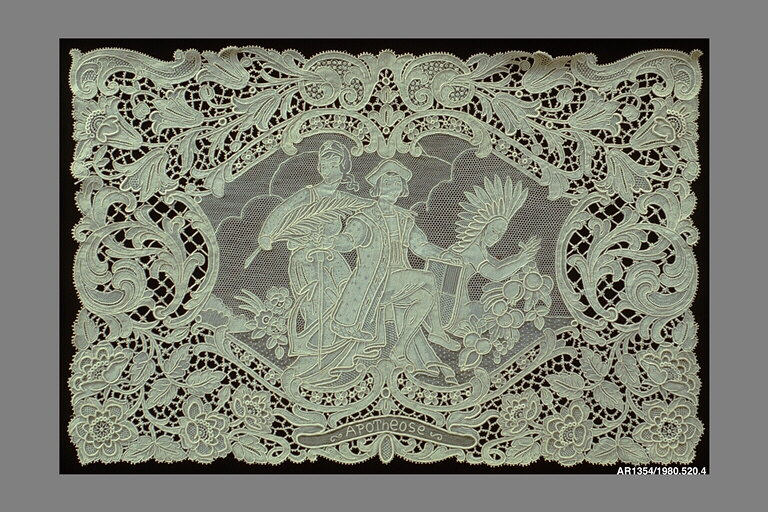
The unassuming table mat, often relegated to the periphery of domestic aesthetics, presents a paradox of profound luxury. In the context of the Natalie Fashion Atelier archive, this singular artifact—a composition of flax linen and hand-crafted needle lace—is not a mere utilitarian object. It is a preserved fragment of aesthetic archaeology, a silent document of a global heritage that speaks to the very essence of restraint and opulence. This research paper deconstructs the classical elegance of the Mat, isolating its core principles of structural weight, negative space, and textural contrast to inform the architectural silhouettes of the 2026 Haute Couture season.
I. Material Dialectics: Linen and Needle Lace
The Mat’s materiality is a study in deliberate opposition. The linen base is not a passive canvas; it is an active agent of structure. Its high tensile strength and inherent crispness, born from the flax fiber’s natural rigidity, provide a foundation of unyielding stability. This is not a fabric that drapes with liquid ease; it holds its shape with a quiet, architectural authority. The needle lace, by contrast, is a study in pure, labor-intensive fragility. Each stitch, executed by hand over a period of weeks, creates a web of negative space—a negative impression of solidity. The dialogue between the dense, planar linen and the airy, volumetric lace establishes the Mat’s primary aesthetic tension: a dialogue between mass and void.
For the 2026 silhouette, this dialectic translates into a new definition of luxury. The linen’s structural integrity informs the creation of rigid, sculptural bodices and tailored jackets that do not require boning. The fabric itself becomes the armature. Conversely, the needle lace’s principle of organized emptiness informs the use of strategic cut-outs, laser-etched leathers, and sheer micro-mesh panels. The silhouette is no longer a continuous surface; it is a composition of solid blocks of fabric (the linen) punctuated by delicate, lace-like apertures (the void). The result is a garment that breathes, not just in terms of ventilation, but in terms of visual rhythm.
II. The Geometry of Restraint: Deconstructing the Classical Grid
The Mat’s design is rarely chaotic. It adheres to a classical, often rectilinear, grid. The needle lace is typically confined to a central panel, a border, or a repeating geometric motif. This is not an expression of wild creativity, but of calculated precision. The grid provides a framework of order, within which the lace’s intricate detail can be appreciated without visual cacophony. The classical elegance of the Mat lies in its refusal to overwhelm. It trusts the power of a single, perfectly executed detail.
This principle of restrained geometry is the direct progenitor for the 2026 high-end silhouette. The silhouette will reject the amorphous, oversized shapes of recent seasons in favor of a return to clear, architectural lines. We see the influence of the Mat’s grid in the sharp, tailored shoulders of a double-breasted blazer, the precise, straight-cut leg of a floor-length trouser, or the defined, A-line shape of a coat. The luxury is in the purity of the cut. The needle lace’s role is then to disrupt this purity with a single, focal point of intense detail. A collar, a cuff, or a single panel on the back of a gown becomes the “lace” element—a concentrated burst of hand-embroidery, feather work, or micro-pleating that exists in perfect tension with the clean, linen-like expanse of the rest of the garment.
III. Surface as Narrative: From Domestic Object to Bodily Armature
The Mat, as an artifact of global heritage, carries a narrative of domestic ritual. It is a surface upon which a meal—a moment of connection—is presented. The tactile experience is paramount. The cool, smooth linen against the hand; the raised, intricate topography of the lace under the fingertips. This haptic dimension is the final, critical element for the 2026 silhouette. The garment is no longer just to be seen; it is to be felt.
The translation of this surface narrative into fashion is achieved through textural juxtaposition. A gown’s skirt might be crafted from a heavy, matte linen-cotton blend, its surface flat and unadorned. The bodice, however, is a second skin of needle-lace-inspired crochet or a meticulously constructed lattice of leather strips. The wearer experiences the garment as a series of distinct zones of sensation. The structural weight of the linen anchors the silhouette, providing a sense of gravity and permanence. The ethereal lightness of the lace element creates a sense of elevation and fragility. This duality—the heavy and the light, the solid and the permeable—defines the new luxury of the 2026 season. It is a luxury that demands attention not through volume, but through the sophisticated interplay of its constituent parts.
IV. The 2026 Silhouette: A Synthesis of Weight and Air
Synthesizing these principles, the 2026 high-end silhouette for Natalie Fashion Atelier is defined by three key archetypes:
The Armored Linen Silhouette: A structured, almost sculptural jacket or top, cut from a dense, high-twist linen. The shoulders are sharp, the waist is defined. The only adornment is a single, geometric panel of hand-made needle lace at the sternum or along the spine. This silhouette is a direct homage to the Mat’s grid, where the lace functions as the central motif of a rigid framework.
The Voided Silhouette: A floor-length gown or a sleek jumpsuit, crafted from a fluid, matte jersey. The fabric is not the primary story. Instead, the garment is defined by strategic cut-outs that mimic the negative space of needle lace. These apertures are not random; they are arranged in a precise, repeating pattern along the waist, the ribs, or the clavicle. The body becomes the “linen” surface, and the skin becomes the “lace.” The silhouette is a study in controlled exposure.
The Textural Tension Silhouette: A two-piece ensemble where the top is a heavy, woven linen in a classic, tailored shape, and the skirt is a diaphanous, needle-lace-inspired creation of silk tulle and hand-stitched appliqué. The contrast is absolute. The top is weight, structure, and history. The skirt is air, movement, and future. The wearer embodies the dialectic of the Mat: the perfect, unresolved tension between the solid and the ethereal.
In conclusion, the Mat, in its isolated aesthetic archaeology, is not a relic. It is a blueprint. Its classical elegance, born from the dialogue between rigid linen and delicate lace, provides the foundational vocabulary for a new era of couture. The 2026 silhouette will be defined not by excess, but by the masterful orchestration of structural weight, calculated void, and tactile narrative. It is a return to the core principles of haute couture: the pursuit of perfection in a single, exquisitely considered detail.