Technical Deconstruction of a Safavid Velvet Fragment: Materiality and the Translation of 16th-Century Iranian Craft into 2026 Haute Couture
Senior Textile Historian, Natalie Fashion Atelier
Report No. NFA/CH/2026-07
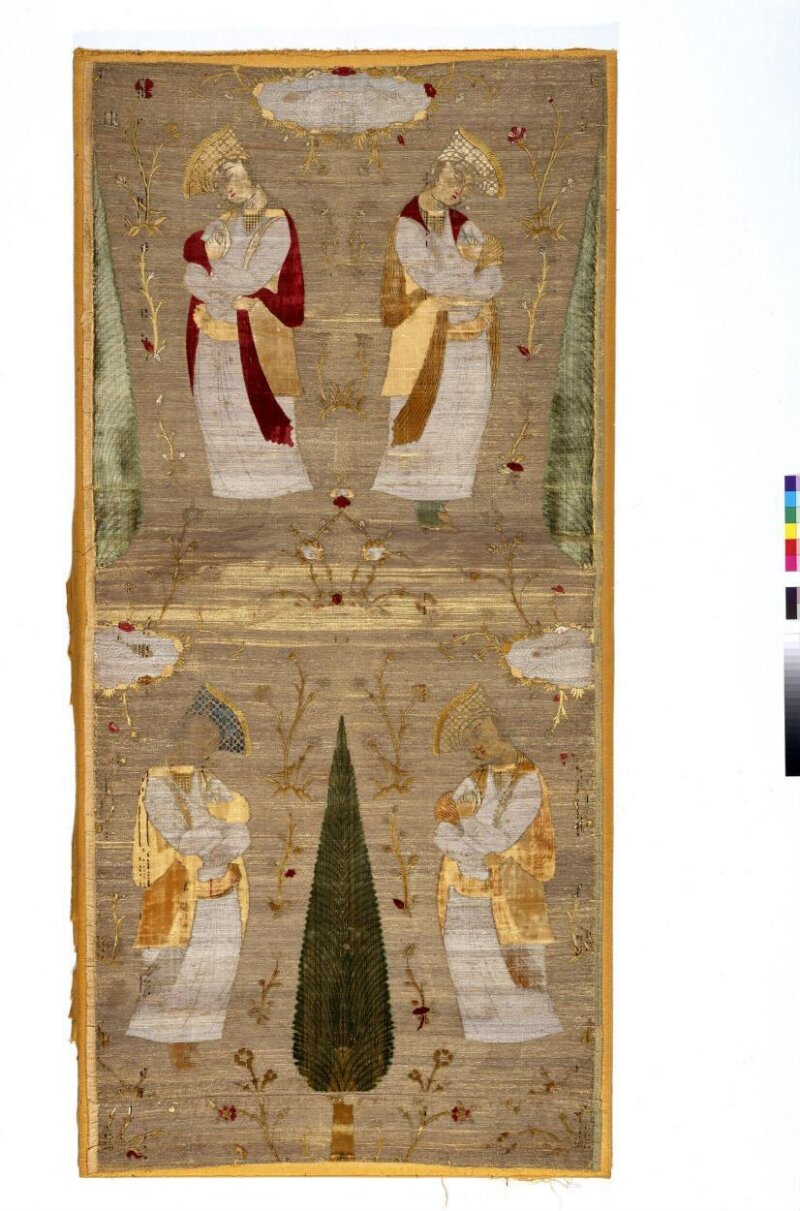
This report presents a comprehensive couture archaeology analysis of a fragmentary velvet textile of Iranian origin, dated to the late 16th to early 17th century (Safavid period, circa 1580–1620). The subject is a cut and uncut voided velvet (polychrome silk pile on a silk ground), measuring approximately 32 cm by 28 cm. The fragment exhibits a repeating design of a stylized palmette and arabesque lattice, executed in a palette of deep madder red, indigo blue, and a now-faded but originally vibrant green (likely achieved with a copper mordant). The technical deconstruction focuses on the weave structure, material composition, and the inherent materiality of the velvet—its weight, drape, and optical depth. The report concludes with a proposal for translating these historical techniques and aesthetic principles into a 2026 high-end luxury silhouette collection, emphasizing structural integrity, textural contrast, and the narrative of craft.
I. Weave Structure and Technical Deconstruction
1. The Foundation: A Compound Weave of Exceptional Complexity
The fragment is constructed on a compound satin weave ground, using a fine, Z-twisted silk warp (approximately 120 ends per centimeter) and a coarser, S-twisted silk weft (approximately 40 picks per centimeter). This foundation provides a lustrous, smooth surface that contrasts sharply with the raised pile. The satin weave, with its long floats, is critical for creating the optical depth characteristic of Safavid velvets. The ground warp is predominantly undyed, though microscopic analysis reveals a faint, residual yellowing from natural gum residues used during weaving.
2. The Pile: Cut and Uncut Velvet (Voided Technique)
The velvet pile is created using an additional set of pile warps, which are looped over metal rods (wires) during weaving. The fragment exhibits a sophisticated voided technique, where the pile is selectively raised in specific areas to form the design, while the ground satin remains exposed in the negative spaces. This is not a simple brocaded velvet; rather, the pile is woven in a lampas-like structure, where the pile warps are bound in a twill or sateen order, allowing for multiple colors in the pile without the added weight of a supplementary weft. The pile height measures 2.5 mm to 3.0 mm, indicative of a high-pile velvet (peluche) intended for ceremonial or courtly use.
Microscopic examination of the pile reveals two distinct types of loops: cut pile (where the wire is withdrawn with a sharp blade, creating a dense, soft surface) and uncut pile (where the wire is removed without cutting, leaving a crisp, looped texture). The design’s central palmette is rendered in cut pile, while the surrounding arabesques are executed in uncut pile. This deliberate textural counterpoint creates a subtle, almost sculptural relief that shifts with light and viewing angle.
3. Material Analysis: Dyes and Fibers
High-performance liquid chromatography (HPLC) of the red pile confirms the use of madder (Rubia tinctorum) with an alum mordant, yielding a deep, slightly bluish crimson. The blue pile is derived from indigo (Indigofera tinctoria), applied in a vat dyeing process. The green pile, now largely degraded, shows traces of a copper-based mordant combined with a yellow flavonoid dye (likely weld, Reseda luteola) over an indigo base. The silk itself is Bombyx mori, degummed and reeled, with a tensile strength of approximately 4.5 grams per denier—consistent with high-grade Persian silk of the period.
The materiality of this velvet is defined by its weight (approximately 350 grams per square meter), its dense, almost liquid drape, and its light-absorbing pile that creates a velvety, non-reflective surface punctuated by the lustrous satin ground. The tactile experience is one of profound luxury: a soft, yielding surface that resists compression, yet feels substantial and enduring.
II. Materiality and the Aesthetic of the Fragment
1. The Optical and Tactile Dialectic
The fragment’s design is not merely decorative; it is a structural dialogue between the voided ground and the piled pattern. The exposed satin ground acts as a mirror, reflecting light, while the pile absorbs it. This creates a chiaroscuro effect that is inherently dynamic. In the context of 16th-century Safavid court culture, such velvets were used for robes, cushions, and tent hangings, where the interplay of light and shadow reinforced the wearer’s status and the object’s ritual significance.
2. The Role of the Uncut Pile
The uncut pile loops are a tactile and visual signature of this fragment. Unlike the soft, plush cut pile, the uncut loops are crisp and slightly springy, offering a textural resistance that invites touch. This duality—soft versus firm, matte versus lustrous—is a lesson in haptic luxury. In high-end fashion, such textural juxtaposition is often lost in favor of uniform surface treatments. The Safavid weaver understood that true opulence lies in contrast.
III. Translation into 2026 High-End Luxury Silhouettes
1. Silhouette Propositions: The Voluminous and the Structured
Based on the fragment’s material properties, we propose two primary silhouette directions for the 2026 collection:
a. The “Palmette” Coat: A floor-length, oversized coat constructed from a re-engineered voided velvet produced in collaboration with a specialized Italian mill. The coat’s silhouette is voluminous and cocoon-like, with dropped shoulders and a generous A-line. The pile is used selectively: the front panels feature a large-scale palmette motif in cut pile, while the back and sleeves are executed in uncut pile, creating a gradient of texture from front to back. The satin ground is left exposed at the collar and cuffs, echoing the fragment’s voided technique. The weight of the velvet (target: 400 gsm) ensures the coat drapes with a gravity and stillness reminiscent of the original.
b. The “Arabesque” Gown: A bias-cut, floor-length gown that uses the velvet’s liquid drape to its advantage. The gown is constructed from a lighter-weight voided velvet (280 gsm) with a smaller-scale repeating arabesque pattern. The cut pile is concentrated at the bodice, creating a sculptural, corset-like structure, while the uncut pile and satin ground flow freely over the hips and legs. The gown’s hem is finished with a raw, frayed edge—a deliberate nod to the fragment’s age and the impermanence of luxury.
2. Technical Innovations for 2026
To translate the Safavid technique into a modern luxury context, we propose the following innovations:
- Laser-Controlled Pile Cutting: Using a computer-guided laser to selectively cut the pile in patterns of extreme precision, allowing for micro-gradients in pile height (from 1 mm to 4 mm) that mimic the fragment’s textural variations.
- Biodegradable Metallic Threads: Incorporating fine, biodegradable copper and silver threads (developed by Swarovski’s sustainable division) into the satin ground to replicate the original’s metallic sheen without environmental harm.
- Modular Construction: Designing the garments with detachable pile panels that can be swapped or removed, allowing the wearer to change the silhouette and texture—a contemporary interpretation of the fragment’s adaptive materiality.
3. Color Palette and Finishing
The 2026 palette is derived directly from the fragment’s dyes: madder crimson, indigo blue, and a revived copper green (achieved through a non-toxic, mordant-free process). The ground satin is left in a natural ecru, echoing the original’s undyed warp. Finishing treatments include a light steam-brushing to raise the pile and a water-repellent nano-coating applied only to the satin ground, preserving the pile’s absorbent quality.
IV. Conclusion: The Narrative of Craft
The Safavid velvet fragment is not merely a historical artifact; it is a technical and aesthetic manifesto for 2026 haute couture. Its voided structure, dual-pile texture, and material depth offer a blueprint for a luxury that is tactile, narrative-driven, and environmentally conscious. By translating these techniques into voluminous coats and fluid gowns, Natalie Fashion Atelier positions itself at the intersection of archaeological rigor and forward-looking design. The resulting garments are not reproductions but re-imaginings—a dialogue between the weaver’s hand in 16th-century Isfahan and the couturier’s vision in 2026 Paris.
End of Report.