Aesthetic Archaeology: Deconstructing Dürer’s “The Resurrection” for 2026 Haute Couture
Artifact Provenance and Silhouette Genesis
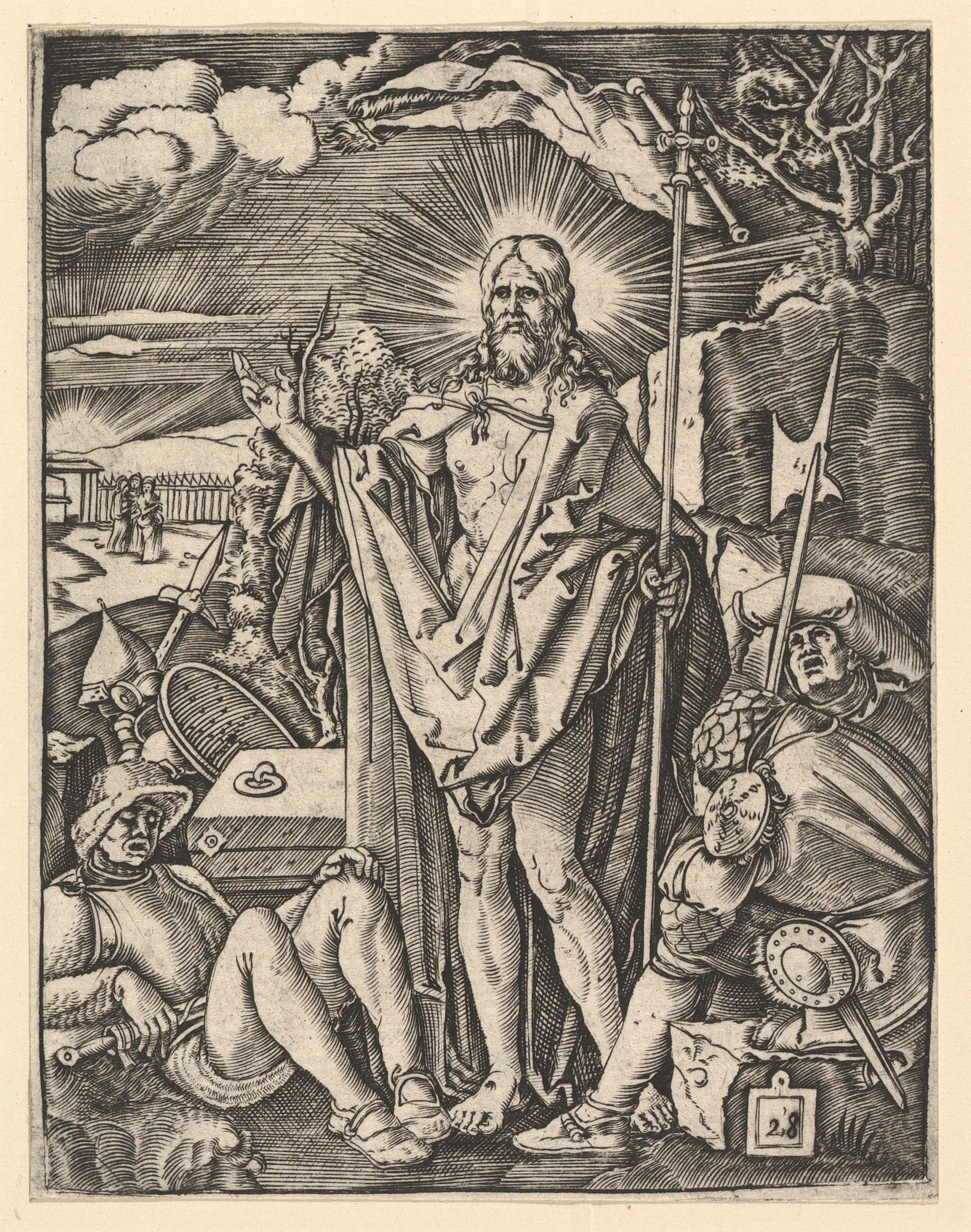
The artifact under examination—Albrecht Dürer’s “The Resurrection” from the “Passion of Christ” series, specifically the third state of three as an engraving—presents a paradox of stillness and ascension. The composition captures Christ standing before a closed tomb, a victory flag in one hand, a blessing gesture in the other, while Roman guards lie dormant in the foreground. This third state, with its refined cross-hatching and deepened chiaroscuro, offers a unique materiality: a monochromatic tension between light and shadow, surface and depth. For Natalie Fashion Atelier, this engraving informs 2026 high-end silhouettes through a rigorous deconstruction of classical elegance, translating verticality, drape, and structural contrast into wearable artifacts.
Materiality of the Engraving: Translating Line and Texture
The engraving’s third state is defined by its enhanced linearity—every fold of Christ’s garment, every contour of the tomb, is rendered with surgical precision. This technique parallels the couture atelier’s approach to fabric manipulation. The flag’s billowing form becomes a study in asymmetrical volume; the closed tomb’s geometric block informs structured, architectural shoulders. The guards’ reclining poses introduce a horizontal counterpoint, suggesting layered asymmetry in evening gowns and capes. Materiality here is not merely visual but tactile: the engraving’s incised lines translate into pleated organza, laser-cut leather, and embroidered tulle that mimic the interplay of light and shadow.
Silhouette Deconstruction: Verticality and the Resurrection Line
The central figure of Christ establishes a vertical axis—a line of ascension that dominates the composition. For 2026, this informs the “Resurrection Silhouette”: a columnar, elongated form that elongates the torso while maintaining a sense of ethereal lift. The flagpole becomes a structural element, suggesting corseted waistlines that flare into caped sleeves or train-like extensions. The blessing hand, with its open palm and extended fingers, inspires cut-out details at the shoulder or wrist, creating negative space that echoes the engraving’s chiaroscuro. The closed tomb—a solid, unyielding block—translates into structured bodices with geometric paneling, often in matte satin or stiffened silk, contrasting with the fluidity of the lower silhouette.
Classical Elegance Reimagined: The Third State as a Design Principle
Classical elegance in this context is not about static perfection but dynamic restraint. Dürer’s third state reveals a refined austerity—every line serves a purpose, every shadow deepens the narrative. For haute couture, this translates into minimalist construction with maximalist detail. The guards’ sleeping forms introduce a horizontal languor, which we interpret as draped, asymmetrical hemlines that pool at the floor, reminiscent of a reclining figure. The flag’s undulating fabric inspires cascading ruffles or waterfall pleats that move with the body, while the tomb’s planar surfaces suggest sharp, tailored jackets with exaggerated lapels or crisp, architectural collars.
Technique as Narrative: Cross-Hatching and Couture Craft
The engraving’s cross-hatching—a technique of intersecting lines to create depth—finds its couture equivalent in intricate embroidery, micro-pleating, and layered organza. Each stitch or fold becomes a line, building texture and volume. The third state’s enhanced contrast between light and dark informs a monochromatic palette—ivory, charcoal, and obsidian—with occasional accents of gilt thread or metallic lace to mimic the engraving’s highlights. The guards’ armor is reinterpreted as structured shoulder plates or sculptural belts, while Christ’s seamless garment inspires fluid, bias-cut gowns that wrap the body without interruption.
2026 Silhouette Applications: From Atelier to Runway
Three distinct silhouettes emerge from this archaeological deconstruction:
1. The Ascension Column: A floor-length gown with a structured, corseted bodice and a flared, asymmetrical skirt that mimics the flag’s movement. The closed tomb is referenced in a high, geometric neckline and sharp shoulder lines. Fabric choices include duchesse satin for structure and chiffon for fluidity.
2. The Dormant Guard Cape: A dramatic, floor-sweeping cape with horizontal draping at the hem, echoing the guards’ reclining forms. The cape is asymmetrically cut and lined in contrasting silk, with hidden pockets that create a sense of weight and release. This piece is ideal for evening wear, offering a modern interpretation of classical drapery.
3. The Blessing Hand Bodice: A cut-out shoulder design that exposes the collarbone and upper arm, framed by structured, sculptural sleeves. The open palm is suggested through intricate lace panels or beaded motifs at the wrist. This bodice pairs with high-waisted trousers or a column skirt, balancing negative space with textured volume.
Conclusion: The Third State as a Couture Imperative
Dürer’s “The Resurrection” in its third state offers a masterclass in controlled complexity. For Natalie Fashion Atelier, this engraving is not a historical relic but a living design lexicon. The 2026 silhouettes derived from this artifact embody a Parisian elegance that is both austere and opulent, structured and fluid. By deconstructing the classical elegance of the engraving—its verticality, its chiaroscuro, its narrative tension—we create garments that are not merely worn but experienced as artifacts of aesthetic archaeology. The third state reminds us that perfection lies in the refinement of line, the depth of shadow, and the silence of a closed tomb—a silence that, in 2026, will speak through the language of couture.