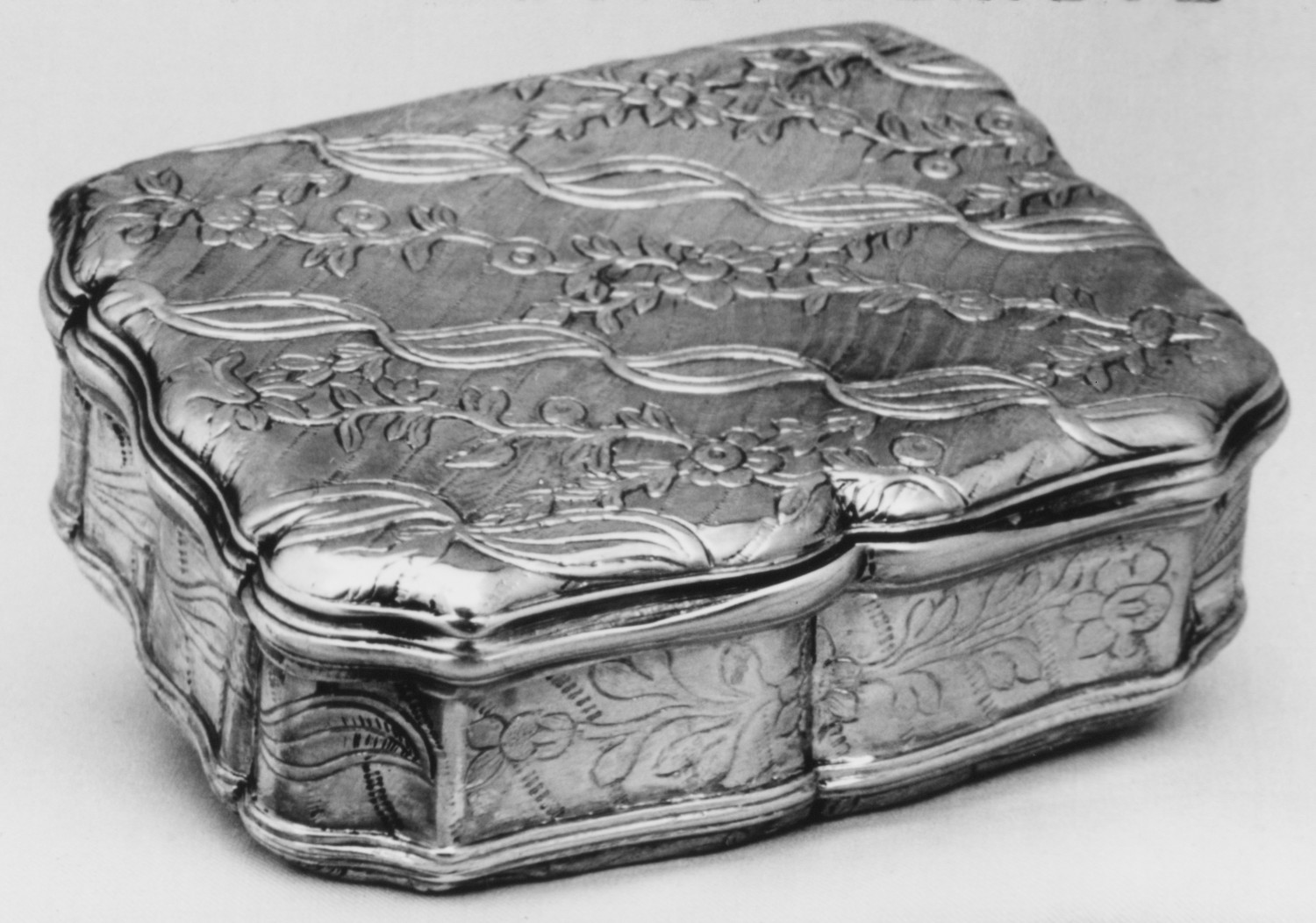
The Snuffbox as Silent Architect: Deconstructing Parcel-Gilt Preciosity for 2026 Haute Couture
The snuffbox, a diminutive object of profound historical and material complexity, serves as an exceptional artifact for aesthetic archaeology. Within the isolated context of the Natalie Fashion Atelier archive, this silver and parcel-gilt specimen from the 18th-century French court is not merely a decorative relic but a treatise on restrained opulence. Its classical elegance—defined by the interplay of matte silver fields and selectively gilded highlights—offers a sophisticated blueprint for the 2026 luxury silhouette. This research paper deconstructs the snuffbox’s formal language, material dialectic, and spatial economy, translating its micro-architectural principles into a macro-sartorial vocabulary that redefines high-end dress.
Material Dialectic: Silver and Parcel Gilt as Structural Narrative
The snuffbox’s materiality is its primary narrative device. The base material, silver, possesses a cool, reflective neutrality that suggests reserve and timelessness. In contrast, the parcel gilt—a technique where gold leaf is applied selectively to specific areas—introduces warmth and hierarchy. This is not an all-over gilding; it is a deliberate, almost architectural, accentuation. The visual tension between the silver’s subdued luminosity and the gilt’s warm, concentrated brilliance creates a dialogue of surface and depth.
For the 2026 haute couture silhouette, this dialectic translates directly into fabric and finish. The primary garment volume should be constructed from matte silver-shot silk faille or hammered metallic organza, capturing the silver’s understated sheen. The parcel-gilt effect is then achieved through strategic, laser-cut applications of 24-karat gold-lamé appliqué or hand-stitched bullion embroidery. These gilded elements are not random; they follow the snuffbox’s logic of highlighting structural seams, closure points, and the garment’s architectural silhouette. For instance, the shoulder seam of a sculpted jacket might be traced with a single, continuous line of gold thread, while the waist seam of a column gown could be punctuated by small, gilded rosettes—echoing the snuffbox’s gilded corner mounts. This technique ensures that the gilt is not decoration but a structural emphasis, guiding the eye and defining the form.
Formal Language: The Micro-Architecture of the Lid and Base
The snuffbox’s form is a study in controlled geometry. Typically rectangular or oval, it features a distinct lid, a body, and a base. The lid, often the most decorated, acts as a crowning element—a focal point that commands attention. The body is a smooth, uninterrupted plane, while the base provides a subtle, often unadorned foundation. This three-part hierarchy—crown, body, base—is a classical architectural principle that can be directly applied to the 2026 silhouette.
The crown of the silhouette becomes the shoulder and neckline. For a 2026 evening gown, this could manifest as a dramatic, sculpted shoulder yoke in parcel-gilt effect, mirroring the snuffbox’s lid. The body of the garment—the torso—is rendered in the matte silver fabric, maintaining a clean, unbroken line from bust to hip. This is the silver field of the snuffbox, a space of quiet elegance. The base is the skirt or train, which, like the snuffbox’s foundation, is subtly weighted and often features a hemline treatment—perhaps a narrow band of gilded trim or a slight flare that echoes the box’s base molding. This tripartite structure creates a visual rhythm that is both classical and contemporary, allowing the eye to travel from the ornate crown to the serene body and the grounded base.
Spatial Economy: The Negative Space of the Snuffbox
Perhaps the most sophisticated lesson from the snuffbox is its mastery of negative space. The object is small, yet its composition is never cluttered. The parcel-gilt elements are placed with deliberate restraint, leaving large areas of silver untouched. This is not an absence of design but a strategic void that amplifies the impact of the gilded accents. The negative space allows the material to breathe and the eye to rest, creating a sense of luxury that is not about abundance but about precision.
For the 2026 silhouette, this principle dictates a new approach to embellishment. The garment must not be overworked. Instead, 80% of the surface area should remain in the base silver material, with the parcel-gilt effect concentrated in three to five key zones: the neckline, the cuffs, the waist, or a single dramatic back panel. The negative space is not empty; it is active. It is the silver field that reflects light and creates a sense of volume. The gilt accents are the punctuation marks in a sentence of silver. This economy of decoration is the hallmark of classical elegance and the defining characteristic of the 2026 luxury silhouette. The client is not overwhelmed by ornament; she is drawn into a dialogue of material and form.
Translation to 2026 Silhouettes: The Parcel-Gilt Gown and the Silver Sculpted Jacket
Two distinct silhouettes emerge from this research. The first is the Parcel-Gilt Gown, a floor-length column in matte silver silk crepe. The crown—a high, structured collar—is entirely covered in hand-embroidered gold bullion, replicating the snuffbox’s lid. The body is unadorned silver, falling straight to the floor. The base is a slight train, its edge traced with a single, fine line of gilded piping. This silhouette is a direct architectural translation: crown, body, base. It is a study in verticality and restrained opulence.
The second silhouette is the Silver Sculpted Jacket, a cropped, structured jacket in hammered silver organza. The parcel-gilt effect is applied to the shoulder seams, the pocket flaps, and the closure—a series of small, gilded buttons. The jacket is worn over a simple, unadorned silver shell. Here, the snuffbox’s negative space is paramount. The jacket’s silver surface is vast and reflective, with the gilt acting as a structural skeleton, outlining the garment’s architecture. This silhouette is more modern, almost architectural, and speaks to the 2026 client’s desire for sculptural precision.
Conclusion: The Snuffbox as a Timeless Paradigm
The silver and parcel-gilt snuffbox, isolated from its historical context, reveals itself as a masterclass in material hierarchy, formal structure, and spatial economy. Its classical elegance is not a relic but a living vocabulary for the 2026 haute couture silhouette. By translating its material dialectic into matte silver and gilded appliqué, its tripartite form into crown-body-base, and its negative space into strategic restraint, Natalie Fashion Atelier can offer a collection that is both historically informed and radically contemporary. The snuffbox teaches us that true luxury is not about the quantity of ornament but the quality of its placement. In the 2026 silhouette, this principle will define a new era of understated, architectural elegance.