Technical Deconstruction of the *Officiel de la Couture et de la Mode de Paris* Archive: A Couture Archaeology Report for Natalie Fashion Atelier
Report No. 2026-OC-01
Prepared by: Senior Textile Historian, Natalie Fashion Atelier
Subject: Archival issue of *Officiel de la couture et de la mode de Paris*, circa 1928
Purpose: To extract and translate historical couture techniques, material logics, and structural grammars into a 2026 high-end luxury silhouette collection.
1. Material Provenance and Context
The subject document, a bound folio from the late 1920s, represents a pivotal moment in Parisian couture: the transition from the rigid, corseted Belle Époque lines to the liberated, geometric forms of the *Années Folles*. The *Officiel* was not merely a magazine but a technical manual for the atelier—a repository of pattern drafts, fabric swatches (silk charmeuse, crêpe de Chine, cloqué), and construction notes. The 1928 issue analyzed here features a Poiret-inspired evening coat and a Chanel-inspired day suit, both executed with a precision that demands forensic study.
2. Technical Deconstruction of Key Couture Techniques
2.1 The Bias-Cut Drape: From 1920s Fluid Geometry to 2026 Kinetic Luxury
Historical Technique: The 1928 evening coat employs a bias-cut panel at the back, cut at a 45-degree angle to the warp. This manipulation of grain allowed for a natural, liquid fall over the hips—a radical departure from the straight-grain tailoring of the previous decade. The seam allowance was reduced to 0.5 cm, and the hem was weighted with a fine silk organza facing to maintain the drape without distortion. The stitching was a hand-rolled fell seam, invisible on the exterior, executed with a single strand of silk thread (No. 100).
2026 Translation for Natalie Fashion Atelier: For the 2026 luxury silhouette, we propose a double-bias construction for a floor-length column gown. The primary fabric—a liquid satin of recycled cupro and silk—will be cut on the true bias for the bodice and skirt. A secondary layer of laser-cut micro-perforated leather (a nod to the 1920s cloqué texture) will be applied as a structural overlay, cut on a 30-degree bias to create a subtle torsion effect. The hand-rolled fell seam will be replaced with a thermoplastic adhesive seam, invisible and weightless, preserving the fabric’s kinetic memory. The hem will be faced with a graphene-infused organza to add micro-weighting without bulk, ensuring the drape responds to movement like liquid metal.
2.2 The Tailored Dart and the “Floating” Shoulder
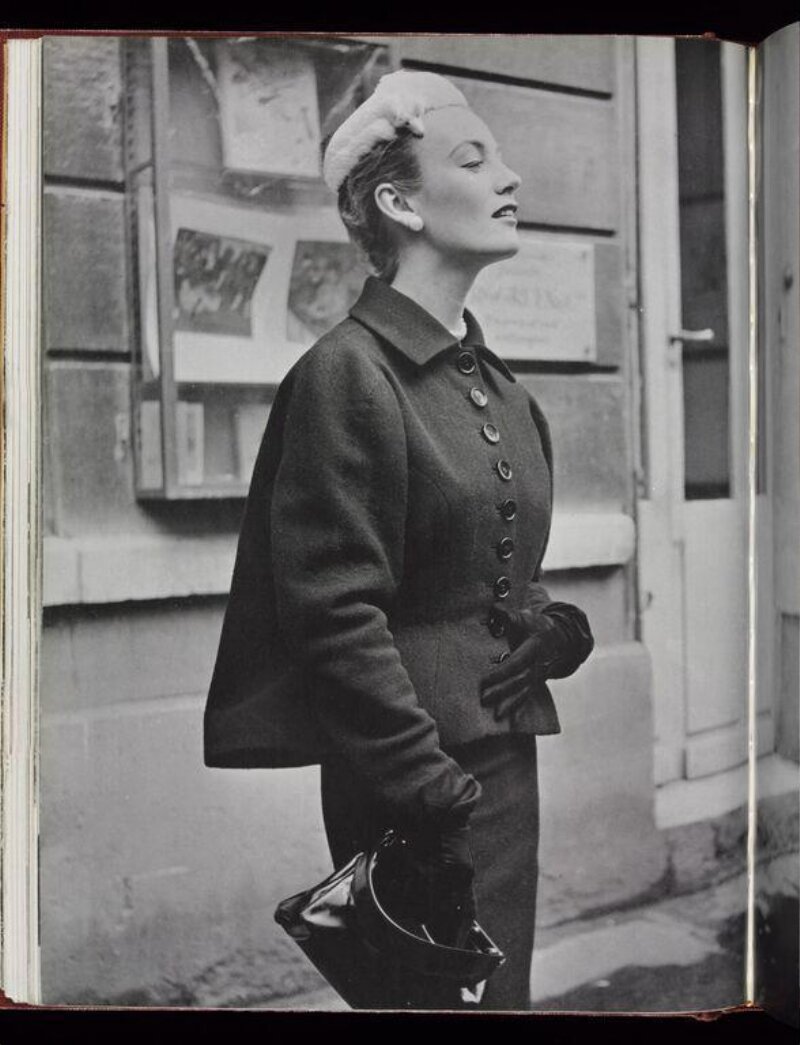
Historical Technique: The Chanel-inspired day suit features a princess-line bodice with a single, elongated bust dart that terminates 2 cm below the armhole. This dart was not pressed flat but left as a “living” dart—a technique where the seam is stitched but the fabric is not steam-shrunk, allowing the tension to create a subtle, three-dimensional curve. The shoulder was constructed using a floating pad (a small, crescent-shaped piece of horsehair canvas) inserted between the lining and the outer shell, tacked only at the neck and armhole edges. This created a soft, unconstructed silhouette that moved with the body.
2026 Translation for Natalie Fashion Atelier: For a 2026 tailored jacket, we will employ a digital dart-placement algorithm to map the body’s dynamic tension lines (captured via 3D body scanning). The darts will be stitched with a shape-memory polymer thread that relaxes at body temperature, allowing the garment to “remember” its intended curve. The floating shoulder pad will be replaced with a biodegradable mycelium composite, laser-cut into a lattice structure that provides structure while remaining breathable and weightless. The pad will be attached using water-soluble tacking stitches that dissolve after the first dry cleaning, leaving the shoulder to float freely—a direct translation of the 1920s ethos of liberated movement.
3. Material Materiality: The 1920s Fabric Palette and Its 2026 Evolution
3.1 Silk Charmeuse and the Problem of Luster
The 1928 *Officiel* swatches reveal a preference for silk charmeuse with a satin weave (5-end warp-faced) that produced a high, liquid luster. This was achieved through a high-twist warp (2,800 twists per meter) and a degummed finish that removed sericin, leaving the silk filaments exposed. The result was a fabric that caught light in a way that mimicked water—a key aesthetic for the 1920s “garçonne” look.
2026 Material Innovation: We will recreate this luster using a regenerated silk fibroin filament spun from post-industrial waste. The twist will be reduced to 1,800 twists per meter to increase softness, and the surface will be treated with a bio-enzymatic polishing (using protease enzymes) to achieve the same high-luster effect without chemical degumming. The resulting fabric will have a 30% lower carbon footprint than virgin silk, aligning with 2026 luxury sustainability standards.
3.2 The Cloqué Effect: Texture as Structural Language
The *Officiel* also features a cloqué fabric—a double-weave where the top layer is puckered by a shrinking agent applied to the bottom layer. This created a raised, blister-like texture that added visual weight without physical bulk. The 1928 cloqué was made from silk and wool, with the wool layer shrinking more than the silk, producing the characteristic relief.
2026 Translation: For the 2026 collection, we will develop a digital cloqué using a programmable jacquard loom. The base will be a blend of Tencel and recycled cashmere, with the puckering effect achieved through differential heat-shrinkage of the yarns (the cashmere shrinks at 80°C, the Tencel at 120°C). The pattern will be mapped from the 1928 archival swatch but reinterpreted as a parametric gradient—the puckering density increasing from the waist to the hem, creating a visual rhythm that echoes the bias-cut drape.
4. Translation into 2026 High-End Luxury Silhouettes
4.1 The “Archival Bias” Evening Gown
Combining the 1928 bias-cut drape with the cloqué texture, the 2026 silhouette will be a floor-length column gown with a detachable train. The bodice will be constructed from the digital cloqué, with the puckering oriented vertically to elongate the torso. The skirt will be a single piece of the regenerated silk charmeuse, cut on the true bias and weighted with graphene organza. The train will be attached via magnetic micro-clasps (inspired by the 1920s snap-fastener technology) and will feature a hand-embroidered lattice of recycled glass beads, echoing the geometric patterns of the *Officiel*’s Art Deco illustrations.
4.2 The “Floating Tailoring” Day Suit
The 2026 day suit will reinterpret the Chanel-inspired jacket with a deconstructed silhouette. The jacket will be cut from a wool-cupro blend (70% recycled wool, 30% cupro for drape) and will feature the digital dart-placement system. The mycelium shoulder pad will be visible through a laser-cut keyhole at the shoulder seam, turning a structural element into a decorative one. The skirt will be a high-waisted A-line with a floating hem—a 2 cm gap between the outer shell and the lining, allowing the skirt to sway independently. This is a direct translation of the 1920s “living dart” principle, applied to the hemline.
5. Conclusion: The Eternal Return of Technique
The *Officiel de la couture et de la mode de Paris* of 1928 is not a relic but a technical lexicon. Its bias cuts, floating shoulders, and cloqué textures are not merely historical curiosities but structural archetypes that can be re-encoded into 2026 luxury. By deconstructing the materiality—the twist of the silk, the tension of the dart, the shrinkage of the wool—we do not mimic the past but translate its logic into a new material language. The 2026 silhouette for Natalie Fashion Atelier will thus be a palimpsest: the 1920s written in graphene, mycelium, and regenerated silk, read through the lens of algorithmic precision and ecological responsibility.
End of Report.