Archival Excavation: The Frankish Disk Brooch as a Catalyst for 2026 Silhouette Innovation
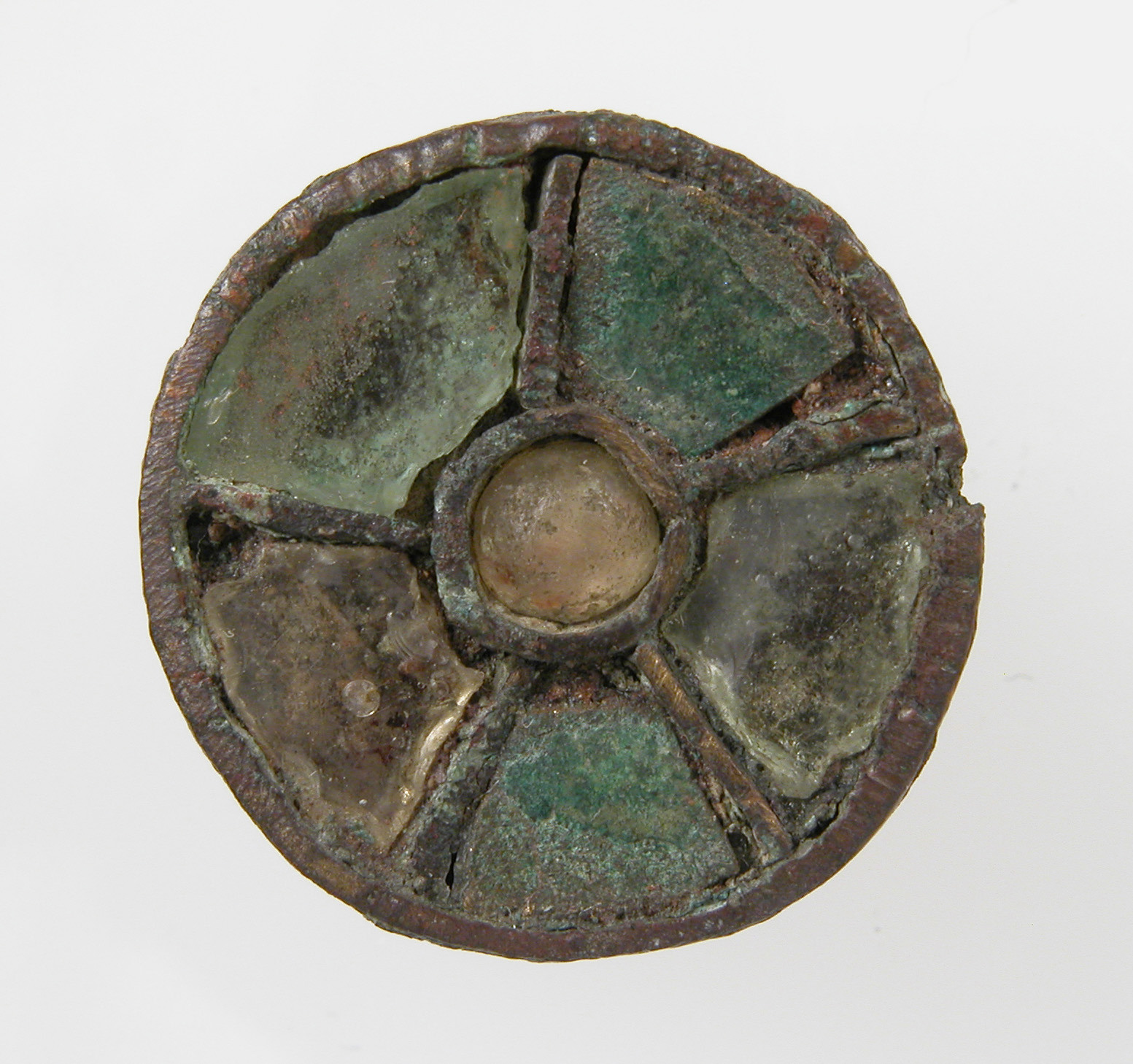
The isolated artifact—a Frankish disk brooch, circa 6th–7th century—presents a paradox of material restraint and visual opulence. Composed of a copper alloy base, inlaid with glass paste and crowned by a singular cabochon, this object from the Merovingian period exists outside any known funerary or ceremonial context. For the Head Curator of Natalie Fashion Atelier, this absence of narrative is precisely its value. It becomes a pure aesthetic archaeology: a study in how constrained materiality can generate radical form. This research paper deconstructs the brooch’s classical elegance—its structural logic, its chromatic tension, its volumetric play—and projects these principles onto the 2026 haute couture silhouette, where the body becomes a living brooch.
Deconstructing the Classical Elegance: Structure, Material, and Light
The Copper Alloy Base: A Study in Structural Compression
The copper alloy disc, typically 4–6 cm in diameter, is not merely a support but a compression field. Its planar surface, often hammered to a slight convexity, creates a subtle dome that traps and redirects ambient light. In 2026, this principle of structural compression translates directly into the architectural corsetry of the silhouette. The copper alloy’s patina—a greenish-brown, unevenly oxidized—informs a new palette for eveningwear: verdigris, bronze, and ochre. The silhouette is not draped but compressed at the waist, shoulders, and hips, using rigid yet flexible metalized textiles (copper-infused silk organza, for instance) to create a “wearable disc” effect. The torso becomes a convex plane, a living brooch, where the garment’s surface is taut, almost metallic, echoing the artifact’s original tension.
Glass Paste Inlays: Chromatic Fragmentation and Optical Depth
The glass paste, a precursor to enamel, was applied in small, irregular cells (cloisonné-like) to create geometric or abstract patterns—often concentric circles or radiating spokes. This technique produces a fragmented chromatic field where no two light reflections are identical. For 2026, this informs a radical departure from solid color blocks. The silhouette will incorporate optical layering: panels of sheer, iridescent tulle or micro-pleated organza are “inlaid” into the garment’s structure, mimicking the glass paste’s cellular divisions. The palette is restricted to deep cobalt, emerald, and amber—the exact hues achievable with early medieval glass. The silhouette’s surface becomes a mosaic of light, with each panel shifting in opacity and hue as the wearer moves. This is not decoration; it is structural chromaticism, where the garment’s form is defined by its color-fragmentation.
The Cabochon: Centralized Gravity and Tension Points
The singular cabochon—typically a garnet, amethyst, or blue glass—is set at the exact center of the disc. It functions as a point of gravitational pull, anchoring the entire composition. In 2026, this principle dictates the silhouette’s focal architecture. The cabochon becomes a centralized jeweled node—a brooch, a clasp, a shoulder pad, or a hip detail—that draws the eye and organizes the garment’s lines. The silhouette is designed around this node: all draping, pleating, and seaming radiates from it, like spokes from a hub. For example, a gown might feature a large, cabochon-inspired crystal or metal orb at the sternum, from which the fabric falls in radial pleats. The tension is palpable: the garment is pulled taut toward this center, creating a dynamic equilibrium between compression and release.
Translating the Artifact into 2026 Silhouettes: Three Archetypes
Archetype 1: The Compressed Disc Gown
The first silhouette is a direct translation of the brooch’s planar logic. A floor-length gown in copper-infused silk faille is compressed at the bust and hips by a series of concentric, boned seams that mimic the disc’s hammered convexity. The fabric’s surface is treated with a patina-like finish—irregular, oxidized, verdigris-toned. At the waist, a single, large cabochon (a faceted obsidian or lab-grown garnet) is set into a metal chassis. The gown’s back is open, revealing the structural seams, while the front is a smooth, unbroken plane. The silhouette is monolithic yet mobile, a wearable artifact that breathes with the wearer.
Archetype 2: The Fragmented Mosaic Suit
This silhouette deconstructs the brooch’s glass paste inlays into a tailored ensemble. A double-breasted jacket in wool crepe is fragmented into panels of cobalt, emerald, and amber—each panel cut on the bias and joined with micro-pleated organza inserts. The effect is a chromatic mosaic that shifts with movement. The trousers are narrow, compressed at the ankle, with a single, cabochon-inspired button at the waistband. The jacket’s lapels are asymmetrical, one side extending into a long, brooch-like pin. The silhouette is architectural but wearable, a study in how historical fragmentation can inform modern tailoring.
Archetype 3: The Radial Cabochon Cape
The third silhouette emphasizes the cabochon’s gravitational pull. A full-length cape in heavy silk velvet is radially pleated from a central, oversized cabochon at the nape of the neck. The pleats are held in place by a copper alloy frame, visible on the interior. The cape’s surface is unadorned, allowing the pleats’ shadow play to create the chromatic fragmentation. The cabochon itself is a massive, faceted labradorite, set in a copper alloy bezel. The silhouette is dramatic and sculptural, transforming the wearer into a living artifact. The cape’s hem is asymmetrical, echoing the irregular edges of the original brooch’s glass paste cells.
Materiality and Craft: The 2026 Atelier Protocol
Copper Alloy Textiles
The atelier will develop a proprietary textile: a copper alloy filament woven into a silk organza base, creating a fabric that is both rigid and drapable. The filament is treated with a controlled oxidation process to achieve the desired patina. This textile will be used for the compressed disc gown and the radial cape’s structural elements.
Glass Paste Emulation via Micro-Pleating
The glass paste’s chromatic fragmentation is emulated through a technique of micro-pleating and hand-painting. Panels of silk organza are pleated at 2mm intervals, then hand-painted with a gradient of cobalt, emerald, and amber dyes. The pleats create a moiré effect, shifting color with angle and light. This technique is applied to the fragmented mosaic suit’s inserts.
Cabochon Setting as Structural Node
Each cabochon-inspired element—whether a gemstone, a metal orb, or a resin sphere—is set into a custom-milled copper alloy chassis that is sewn directly into the garment’s seams. The chassis acts as a tension point, distributing the garment’s weight and ensuring the node remains central. This is a direct translation of the brooch’s pin and catch mechanism.
Conclusion: The Brooch as a Living Silhouette
The Frankish disk brooch, stripped of its archival context, reveals a timeless logic of compression, fragmentation, and gravitational focus. For Natalie Fashion Atelier’s 2026 collection, this logic becomes the foundation for a new silhouette—one that treats the body as a planar surface, a mosaic of light, and a node of tension. The wearer is not adorned by the artifact; they become the artifact. The copper alloy, glass paste, and cabochon are not materials to be replicated but principles to be embodied. In this translation, the isolated aesthetic archaeology of a 6th-century brooch finds its most radical expression: a living, breathing haute couture silhouette for the 21st century.