Deconstructing the Sofa: An Aesthetic Archaeology of Materiality and Silhouette
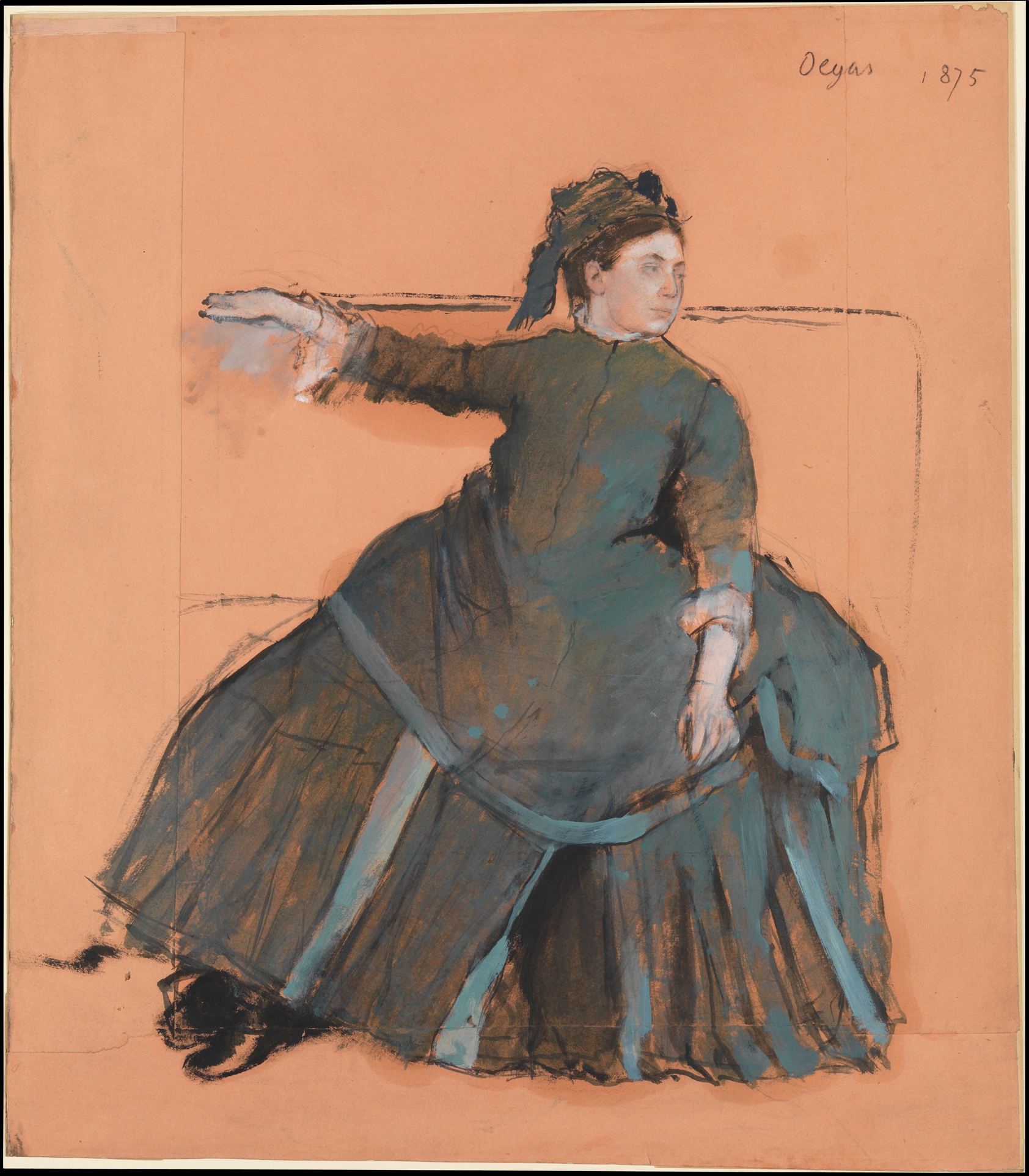
The artifact under examination—a study of a Woman on a Sofa—exists not merely as a figurative sketch but as a profound document of aesthetic archaeology. The chosen medium, a complex layering of oil colors freely mixed with turpentine, accented with pastel over a graphite underdrawing on pink paper, reveals a deliberate tension between permanence and ephemerality. This paper deconstructs the classical elegance of this isolated figure and translates its material language into actionable principles for 2026 haute couture silhouettes. The sofa, a vessel of repose, becomes a structural metaphor for the body; the pink paper, a substrate of intimacy, becomes a chromatic foundation; and the volatile turpentine, a symbol of controlled dissolution.
I. The Graphite Underdrawing: The Skeletal Armature of the Silhouette
The graphite underdrawing provides the structural integrity of the composition. It is the unseen skeleton, the disciplined line that defines the figure’s posture against the soft resistance of the sofa. In the context of 2026 luxury silhouettes, this translates into a renewed emphasis on architectural underpinnings. The current trend toward extreme fluidity must be counterbalanced by a rigid, almost invisible foundation. We propose a new category of “Graphite Silhouettes”—garments where the primary construction is a meticulously engineered inner corset or boned bodice, crafted from a high-tensile, matte-black technical mesh. This inner structure is the graphite line, providing the precise posture of the reclining figure: the slight torsion of the torso, the graceful fall of an arm, the subtle tilt of the head. The outer fabric, whether a liquid silk charmeuse or a sculpted wool crepe, becomes the pink paper—a soft, colored field that drapes over this invisible armature. The silhouette is not a shape; it is a tension between the rigid line and the yielding surface.
II. Turpentine and Oil: The Aesthetic of Controlled Dissolution
The technique of mixing oil colors freely with turpentine is a masterclass in controlled volatility. The turpentine thins the oil, creating washes that bleed, pool, and evaporate, leaving behind a ghost of color. This is not a mistake; it is a deliberate aesthetic of impermanence and fluidity. For 2026, this informs a radical approach to fabric manipulation. We introduce the concept of “Turpentine Draping”—a technique where a garment’s surface is treated with a volatile, alcohol-based fixative that allows for the controlled migration of pigment or dye. The result is a silhouette that appears to be in a state of constant, slow dissolution. A gown’s hem might bleed into a pale wash of color, its edges soft and undefined. A jacket’s lapel might exhibit a gradient of intensity, from a sharp, oil-rich core to a barely-there pastel edge. This is not tie-dye; it is a couture-level simulation of aesthetic erosion, where the garment’s own materiality seems to be exhaling. The silhouette becomes a memory of a shape, a trace of the body’s movement through space.
III. The Pastel Touch: Chromatic Accents as Structural Points
The touches of pastel over the oil wash introduce a discrete, high-frequency energy. Pastel is a dry, powdery medium; it sits on the surface, refusing to integrate fully with the oil below. This creates a visual friction—a moment of clarity against the blurred ground. In the 2026 silhouette, these pastel touches become strategic, non-repeating accents that define key structural points. A single, sharp pastel stroke of dusty rose at the shoulder seam. A precise, powdery lavender dot at the hip. A chalky blue line tracing the collarbone. These are not decorative flourishes; they are visual anchors that mimic the graphite underdrawing’s function, but in a chromatic register. They draw the eye to the points of tension and repose in the silhouette—the places where the body meets the sofa, where the fabric is most taut or most slack. The pastel touch is the signature of the artisan, a deliberate mark that declares the garment is a one-of-a-kind artifact, not a mass-produced object.
IV. The Pink Paper: The Chromatic Substrate of the Silhouette
The pink paper is the foundational tone, the ambient color that permeates every gesture. It is not a background; it is a substrate. In the 2026 collection, this translates to a radical use of colored linings and underlayers. The primary silhouette—a coat, a dress, a jumpsuit—is constructed in a neutral or muted tone (ivory, charcoal, ecru). However, the inner lining, the facing, the hem, and the internal seams are executed in a single, pervasive “Pink Paper” hue—a specific, dusty, slightly desaturated rose, reminiscent of aged paper. This color is never fully visible; it is glimpsed in movement, in the flash of a turned-back cuff, the interior of a deep V-neck, the flutter of a vent. The silhouette is thus defined by what it reveals of its own interior. The wearer becomes the Woman on the Sofa, a figure of intimate exposure, where the garment’s inner life is as important as its outer form. This is a sophisticated play of visibility and concealment, where the pink substrate acts as a constant, subconscious chromatic presence.
V. Synthesis: The 2026 Silhouette as an Archaeological Fragment
The final 2026 silhouette, informed by this artifact, is not a recreation of the woman or the sofa. It is an archaeological reconstruction of the process itself. The garment is a composite of three distinct material states:
1. The Graphite Shell: A structured, architectural core (a sculpted jacket, a fitted waistcoat) that provides the skeletal line. This piece is constructed from a high-density, matte fabric that holds its shape with absolute precision.
2. The Turpentine Veil: An outer layer of diaphanous, fluid fabric (silk organza, fine wool gauze) that is treated with a gradient of controlled dissolution. The edges are soft, the colors bleed, and the fabric appears to be in a state of slow, elegant decay. This layer is the oil wash, the volatile memory of the figure.
3. The Pastel Accent: A single, precise, non-repeating application of a dry, powdery pigment (applied via a heat-set powder technique) at a key structural point—the shoulder, the hip, the wrist. This is the signature touch, the mark of the artist’s hand.
The entire composition is presented against a Pink Paper interior—a silk charmeuse lining in the specific dusty rose. The silhouette is thus a three-dimensional artifact, a fragment of a larger, unseen composition. It invites the viewer to perform an act of aesthetic archaeology—to deconstruct the layers, to read the material history, and to understand the classical elegance of the Woman on a Sofa as a dynamic, volatile, and deeply material proposition for the future of luxury. The 2026 silhouette is not a shape; it is a process made visible.