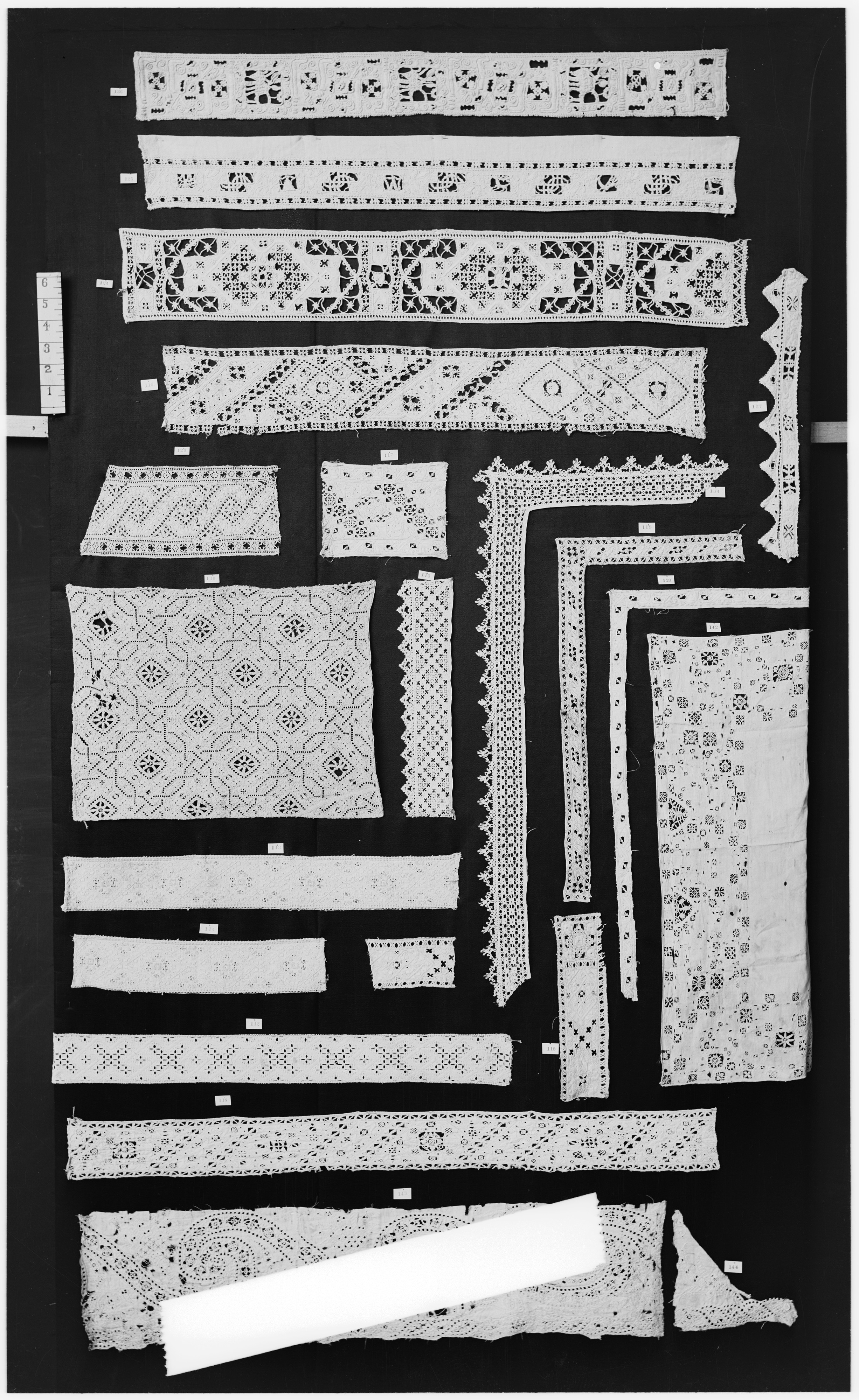
The Aesthetic Archaeology of the Strip: Cutwork as a Structural Lexicon for 2026 Silhouettes
Within the hallowed archives of Natalie Fashion Atelier, the motif of the strip is not a mere decorative line but a fundamental unit of structural inquiry. Our current research, rooted in global heritage and executed through the precise lens of cutwork, isolates the strip as an archaeological artifact of elegance. By deconstructing its classical manifestations—from the geometric rigor of Islamic girih to the ethereal void of European broderie anglaise—we uncover a forgotten principle: the strip is not a boundary, but a generator of space. This paper posits that for the 2026 high-end silhouette, cutwork strips are reimagined as tensile architectural elements, transforming fabric from a passive surface into an active, breathable armature that defines volume through absence.
Heritage as Structural Grammar: The Strip in Global Cutwork Traditions
The global heritage of cutwork reveals the strip as a universal yet culturally specific tool for managing negative space. In the Mughal chikan tradition, the jali strip—a narrow, perforated band—was not merely embroidered; it was a method of filtering light and air, creating a dynamic interplay between opacity and transparency. Similarly, in Venetian punto tagliato of the 16th century, strips of linen were cut away and then reinforced with buttonhole stitches, leaving a grid of void that defined the fabric’s very structure. These traditions share a common principle: the strip is a liminal element, existing between presence and absence, bearing the tension of the garment’s architecture.
Our archive isolates these motifs through aesthetic archaeology, stripping away historical context to examine the strip’s pure formal properties. The classical strip is always a vector of direction: vertical strips elongate, horizontal strips widen, diagonal strips create kinetic torsion. In cutwork, however, the strip acquires a third dimension. It becomes a perforated rib, a structural stay that allows the fabric to breathe, drape, and articulate with a lightness impossible in solid textiles. This is the heritage we reclaim—not as pastiche, but as a generative grammar for 2026.
Materiality of the Void: Cutwork as a Tensile System
For 2026, the materiality of cutwork must be understood as a system of tensile architecture. The strip, when cut away from the ground fabric, is no longer a passive surface; it is a loaded beam in a lattice of voids. Our atelier employs a proprietary technique of laser-etching and hand-finished cutwork on double-faced silk organza and micro-perforated cashmere. The process begins with a digital map of the garment’s stress points—shoulders, hips, waist—where the strip’s density must increase to provide structural integrity.
The cutwork strip, in this context, functions as a negative-space corset. Rather than compressing the body with boning, it creates a second skin of interlocking voids that simultaneously reveal and conceal. The strip’s width is calibrated to the fabric’s weight: a 2mm strip in silk organza offers a featherlight transparency, while a 5mm strip in wool crepe provides a sculptural rigidity. The edge finish—whether a rolled hem, a satin stitch, or a raw, frayed border—determines the strip’s visual and tactile character. For 2026, we favor a burnished edge, achieved through a controlled heat-sealing process that leaves a subtle, organic curve, echoing the hand-finishing of historical broderie anglaise.
Deconstructing Classical Elegance: The Strip as a Silhouette Generator
The classical elegance of the strip lies in its restraint. In the 18th-century robe à la française, the strip was used as a soutache—a narrow braid applied to guide the eye and define the garment’s line. Our deconstruction of this principle for 2026 replaces the applied braid with a cut-out strip, creating a line that is not added but subtracted. This is elegance through absence: the silhouette is defined by what is removed, not what is added.
Consider the 2026 evening gown from our forthcoming collection. The silhouette is a column, but it is not solid. Vertical strips of cutwork, varying in width from 1mm to 8mm, ascend from the hem to the shoulder, creating a gradient of transparency. At the waist, the strips narrow and increase in density, forming a natural, unboned waistline. The strips are not parallel; they are geodesic curves, following the body’s natural lines of tension. This is a direct translation of the Mughal jali principle: the garment breathes with the wearer, the strips opening and closing with each movement, revealing flashes of skin or an underlay of nude silk.
For tailored separates, the strip functions as a structural seam. A double-breasted jacket, for instance, features cutwork strips that replace traditional darts. The strips are cut on the bias, allowing the fabric to mold to the shoulder and bust without the need for internal padding. The result is a silhouette that is simultaneously sharp and fluid—a soft armor that honors the body’s architecture while asserting its own.
2026 Silhouettes: The Cutwork Strip as a New Luxury Lexicon
Looking toward 2026, the cutwork strip evolves into a modular design system. Our atelier has developed a library of strip geometries—linear, serpentine, fractal—that can be combined to create bespoke silhouettes. The linear strip elongates and streamlines, ideal for column gowns and lean trousers. The serpentine strip introduces a sinuous, organic rhythm, perfect for draped bodices and asymmetrical skirts. The fractal strip, inspired by Islamic geometric patterns, creates a self-similar lattice that appears both structured and ethereal, suitable for statement sleeves and capes.
The luxury of the cutwork strip lies in its technical precision. Each strip must be cut with a tolerance of 0.1mm to ensure that the garment’s tension is evenly distributed. Our artisans, trained in both historical hand-cutwork and digital fabrication, oversee every piece. The 2026 silhouette is thus a synthesis of heritage and hyper-modernity: the hand-finishing of a punto tagliato edge meets the algorithmic precision of a laser-cut pattern. This is not a return to the past, but a recontextualization of the strip as a living, breathing element of haute couture.
In conclusion, the strip, when subjected to the rigorous discipline of cutwork, becomes a generator of elegance for 2026. It is a line that defines space through its own removal, a structure that supports through absence. For Natalie Fashion Atelier, this is the ultimate expression of luxury: the invisible hand of the artisan, made visible through the void.