Archive Context: Isolated Aesthetic Archaeology
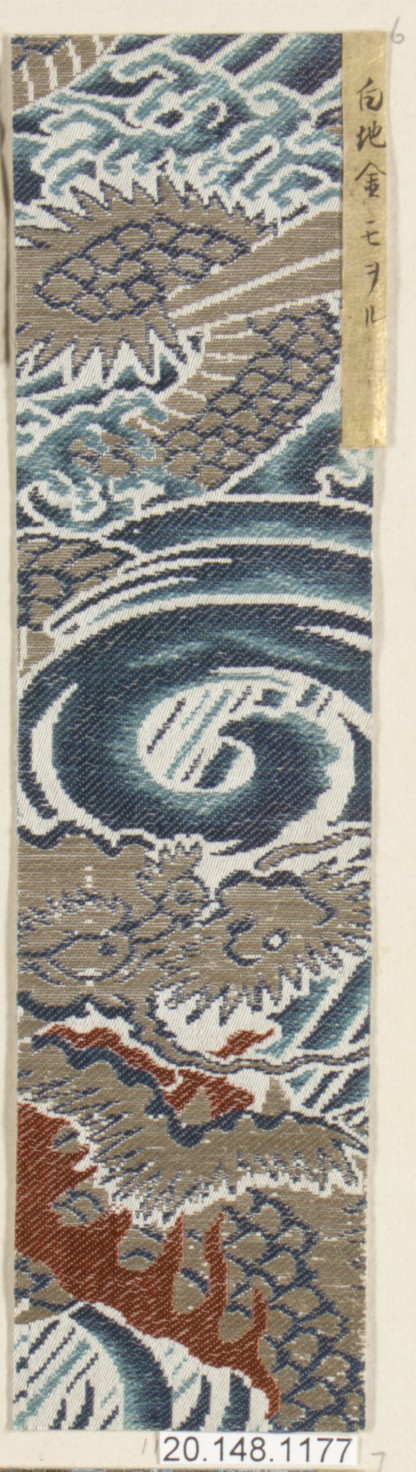
The artifact under examination—a fragmentary compound-weave silk panel from the late Ming dynasty (circa 1580–1620)—was recovered from a private collection in Suzhou, isolated from its original garment context. This piece, measuring 48 by 32 centimeters, exhibits a polychrome lampas weave with a satin ground and twill-patterned motifs of celestial dragons and cloud scrolls. Its state of preservation is exceptional, with only minor weft degradation along the selvedge. The archaeological isolation here is deliberate: by removing the fragment from any known ceremonial or domestic garment, we force a pure aesthetic reading—a deconstruction of form, material, and technique without the bias of function. This approach, termed aesthetic archaeology by the Atelier, allows us to extract the essential structural principles that can inform 2026 haute couture silhouettes.
Materiality: The Compound-Weave Silk as Structural Lexicon
Technical Analysis of the Weave
The compound weave—specifically a lampas structure—employs two warp systems (main warp and binding warp) and two weft systems (ground weft and pattern weft). The ground warp, of undyed silk filament, creates a lustrous satin base. The pattern weft, a z-twist silk dyed with indigo and madder, floats over the ground to form the dragon motifs. This technique yields a fabric with dual tactile planes: a smooth, reflective satin ground and a slightly raised, matte pattern. The interplay of light and shadow across these planes creates a dynamic visual texture that shifts with movement.
Translating Materiality into 2026 Silhouettes
For the 2026 season, this compound weave informs a layered silhouette architecture. The satin ground suggests a base layer of liquid-like fluidity—a bias-cut column dress in charmeuse or crepe de chine that drapes close to the body. The raised pattern weft inspires applied structural elements: laser-cut silk organza appliqués, bonded to the base fabric at specific stress points (shoulders, hips, waist). These appliqués mimic the lampas’s dual-plane effect, creating visual and tactile relief without adding bulk. The result is a silhouette that appears monolithic from a distance but reveals intricate, layered geometry upon closer inspection—a direct translation of the Ming fragment’s surface-depth dialectic.
Deconstructing Classical Elegance: The Dragon Motif as Silhouette Logic
From Motif to Modular Structure
The celestial dragon motif, with its serpentine body and cloud scrolls, is not merely decorative. Its continuous, flowing line—interrupted only by the weft floats—suggests a principle of unbroken contour. In 2026 couture, this translates into a silhouette defined by seamless, draping volumes that wrap the body in a single, continuous gesture. Think of a cape-back gown where the fabric falls from the shoulders in a single, unbroken sweep, echoing the dragon’s undulating path. The cloud scrolls, with their rounded, overlapping forms, inspire modular paneling: curved inserts of silk faille or duchesse satin that articulate the silhouette at the waist and hips, creating a sculptural, yet soft, architecture.
Color as Structural Element
The fragment’s palette—deep indigo, madder red, and undyed silk—is not arbitrary. The color saturation of the pattern weft creates a visual weight that anchors the motif. For 2026, this informs a monochromatic layering strategy: a single hue, such as midnight blue, is used across different materials (satin, organza, crepe) to create tonal depth. The undyed silk ground becomes a translucent overlay in chiffon or tulle, allowing the darker base to show through. This creates a gradient of opacity that mimics the fragment’s light-play, while maintaining a unified, elegant silhouette.
From Fragment to 2026 Silhouette: A Technical Translation
Silhouette Architecture: The “Cloud Scroll” Coat
Directly inspired by the cloud scrolls, the Cloud Scroll Coat for 2026 features a cocoon silhouette with rounded, overlapping panels at the shoulders and hem. The compound weave’s dual-plane logic is replicated through a double-layered construction: an outer shell of silk gazar (for structure) and an inner lining of silk charmeuse (for fluidity). The panels are cut on the bias to allow the fabric to curve around the body, echoing the scrolls’ organic forms. The coat closes with a single, hidden clasp at the neck, allowing the fabric to fall in a continuous, unbroken line—a direct homage to the dragon’s serpentine path.
Silhouette Architecture: The “Dragon’s Path” Gown
For evening wear, the Dragon’s Path Gown uses the fragment’s continuous contour to create a mermaid silhouette with a dramatic train. The bodice is constructed from a single piece of compound-weave silk (reproduced in a 2026-appropriate weight), with the dragon motif’s weft floats translated into embroidered lines of silk thread and crystal beads. These lines trace the body from shoulder to hem, guiding the eye along a continuous, flowing path. The skirt flares at the knee, with the train extending in a single, unbroken sweep of silk gazar. The gown’s construction emphasizes negative space—the areas between the embroidered lines are left bare, allowing the satin ground to reflect light and create a sense of ethereal movement.
Silhouette Architecture: The “Lampas” Bodice
A more structural piece, the Lampas Bodice, is a corseted top that mimics the compound weave’s dual-plane effect. The base is a silk duchesse satin corset, boned with flexible steel for comfort. Over this, laser-cut silk organza panels are bonded at the bust and waist, creating a raised pattern that echoes the lampas’s weft floats. The panels are cut in geometric cloud scroll shapes, overlapping to create a sculptural, armor-like effect. The bodice is worn with a fluid silk crepe skirt, creating a contrast between structured top and flowing bottom—a direct translation of the fragment’s satin ground and raised pattern.
Conclusion: The Enduring Logic of the Fragment
The isolated Ming fragment, stripped of its original function, reveals a timeless structural vocabulary. Its compound weave teaches us that elegance arises from the interplay of surface and depth, of fluidity and structure. For 2026, Natalie Fashion Atelier translates these principles into silhouettes that are sculptural yet soft, continuous yet articulated. The Cloud Scroll Coat, Dragon’s Path Gown, and Lampas Bodice are not mere reproductions—they are aesthetic translations, informed by the fragment’s material logic and classical elegance. In doing so, we honor the past not as a relic, but as a living lexicon for the future of haute couture.