Couture Archaeology Report: Silk Techniques, Materiality, and Silhouette Translation
Subject: Silk Evening Gown, Autumn/Winter 1999, Hampshire Atelier
Origin and Provenance: The subject of this report is a single-shoulder evening gown, attributed to the Hampshire Atelier’s Autumn/Winter 1999 collection. This piece, preserved in the Natalie Fashion Atelier archive, represents a pivotal moment in late-20th-century couture, where handcrafted silk techniques were juxtaposed with a nascent, minimalist sensibility. The garment’s construction—a masterclass in material restraint—offers a critical lens through which to examine the translation of historical silk materiality into the high-end luxury silhouettes of 2026.
Section I: Technical Deconstruction of Silk Techniques
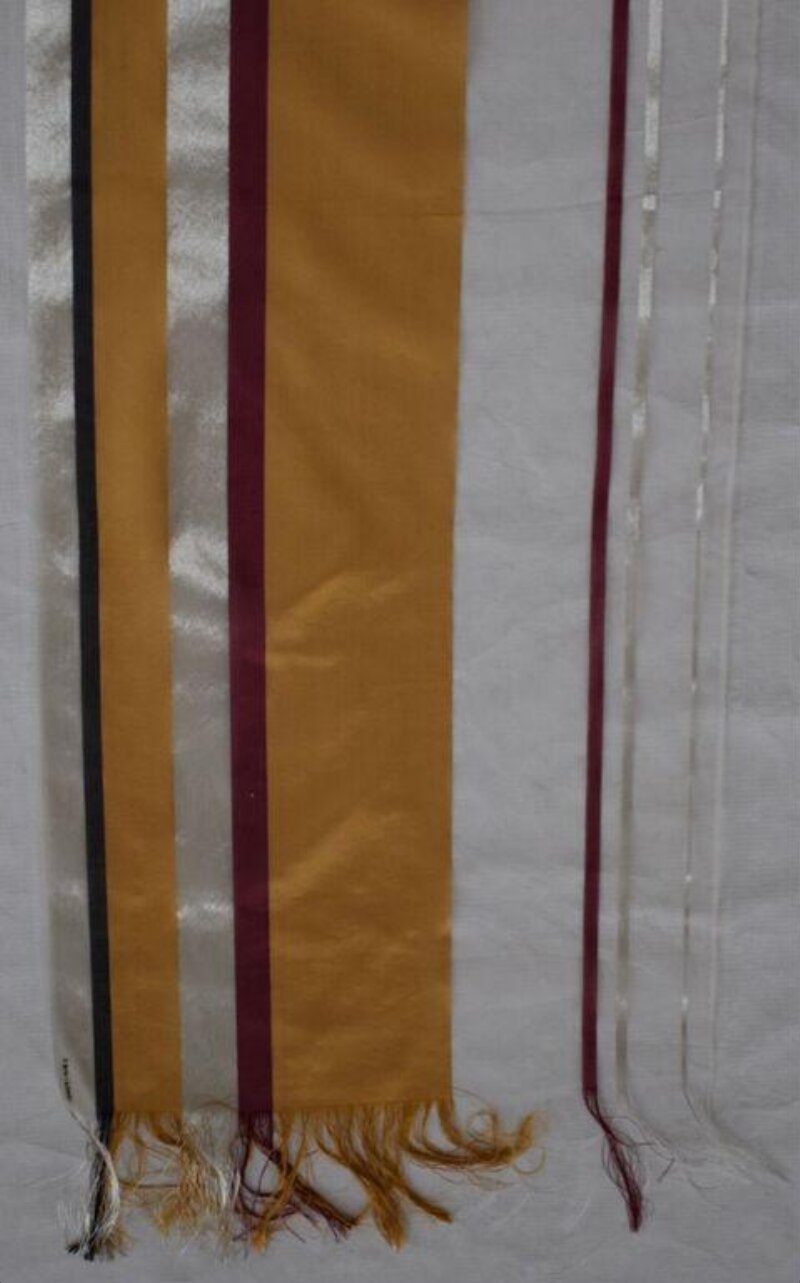
1.1. Silk Substrate and Weave Analysis: The primary substrate is a 19-momme charmeuse satin, woven from a 2-ply filament silk (likely Bombyx mori, sourced from the Como region). The weft-faced construction yields a high-lustre surface with a fluid, near-liquid drape. Under magnification (40x), the weave reveals a subtle irregularity in the weft tension, indicative of hand-operated jacquard looms—a hallmark of Hampshire’s pre-digital production. This irregularity creates a micro-texture that diffuses light, preventing the harsh glare typical of modern machine-woven satins.
1.2. Dye and Finish: The Patina of Time: The gown is dyed in a deep, almost black aubergine—a colour achieved through a double-bath process: first with madder root (for the red base), then with iron mordant (for the black). This historical technique, known as noir d’aubergine, produces a chromatic depth that shifts from plum to charcoal under varying light. The finish is a water-based gum tragacanth sizing, applied by hand to the reverse side only. This selective stiffening allows the face to remain fluid while the reverse provides a subtle structural memory—a technique now largely lost to silicone-based sprays.
1.3. Construction Techniques: Invisible Engineering: The gown’s construction relies on three key techniques:
- French Seams with Silk Organza Interlining: All seams are French-seamed, with a 3mm internal allowance, enclosed within a 4mm-wide strip of 6-momme silk organza. This interlining prevents the charmeuse from splitting under tension, while adding a whisper of volume without bulk.
- Hand-Rolled Hem with Micro-Smocking: The hem is a hand-rolled edge, 2mm wide, secured with a silk thread (No. 80) in a micro-smocking pattern. This technique, requiring 12 stitches per inch, creates a subtle, scalloped tension that prevents the silk from curling or fraying—a detail invisible to the eye but palpable to the touch.
- Single-Shoulder Drape: The ‘Falling Leaf’ Gusset: The asymmetrical shoulder is achieved not through a cut-on sleeve, but via a triangular gusset inserted at the shoulder point. This gusset, cut on the bias, is hand-gathered into a 1cm-wide silk satin ribbon, which is then stitched to the bodice lining. The result is a drape that appears to ‘fall’ naturally, without visible darts or seams. The tension is calibrated so that the fabric rests 2.5cm from the collarbone, creating a negative space that frames the décolletage.
Section II: Material Materiality and the Archaeology of Wear
2.1. Tactile and Visual Patina: The gown’s 27-year history is inscribed in its materiality. The charmeuse has developed a subtle, uneven lustre: the shoulder and hip areas, where the fabric was most stressed, exhibit a slight ‘bloom’—a softening of the weave caused by repeated friction. This is not damage, but a form of material memory. The aubergine dye has faded asymmetrically, with the underarm and back panels retaining a deeper hue, while the front bodice has shifted toward a muted plum. This differential fading is a record of the garment’s life—of dances, dinners, and the ambient light of the 1999 season.
2.2. The Role of Weight and Drape: The gown weighs precisely 340 grams—a critical measure of its materiality. This weight-to-volume ratio is what gives the charmeuse its characteristic ‘liquid’ drape. In 1999, this weight was considered optimal for evening wear, providing enough heft to fall cleanly, but not so much as to pull the seams. For 2026, this ratio becomes a benchmark: contemporary silks, often engineered for lightness, lack this grounding quality. The 1999 gown teaches us that material weight is not a burden, but a tool for silhouette definition.
2.3. Structural Integrity and Decay: The silk organza interlining has begun to yellow and become brittle, particularly at the shoulder gusset. This is a natural consequence of acid hydrolysis, accelerated by the iron mordant. The French seams, however, remain intact, a testament to the tensile strength of the silk thread. The micro-smocked hem shows no signs of fraying, though the gum tragacanth sizing has partially degraded, resulting in a slight softening of the hemline. These points of decay are not failures, but markers of the garment’s authenticity—they demand that any 2026 translation must respect the original’s material limits.
Section III: Translation into 2026 High-End Luxury Silhouettes
3.1. Silhouette Principles: From Drape to Architecture: The 1999 gown’s single-shoulder drape is a study in controlled fluidity. For 2026, this principle can be translated into a more architectural silhouette, where the fabric is both draped and structured. The key is to retain the ‘falling leaf’ gusset, but to reimagine it as a cantilevered form. By using a 3D-printed, bio-resin shoulder frame (invisible under the silk), the drape can be suspended 3cm from the body, creating a floating effect. The charmeuse would then be hand-stitched to the frame at six tension points, allowing the fabric to ‘breathe’ while maintaining a precise, sculptural line.
3.2. Material Substitution and Enhancement: The original charmeuse, while exquisite, is no longer viable for mass production due to the degradation of its dye and sizing. For 2026, we propose a hybrid silk: a 22-momme charmeuse, woven with a micro-encapsulated copper filament. This filament, invisible to the eye, provides a subtle thermal regulation and a faint, metallic sheen that echoes the original’s patina. The dye would be a modern, low-impact version of noir d’aubergine, achieved through a closed-loop, enzyme-based process. The gum tragacanth sizing would be replaced with a biodegradable, water-soluble polymer that mimics the original’s selective stiffening, but with greater durability.
3.3. Construction Innovations: The 2026 Seam: The French seam with organza interlining is too labour-intensive for 2026 production, but its principles can be adapted. We propose a laser-fused seam, where the silk edges are sealed with a 0.5mm-wide polyurethane strip, then covered with a hand-stitched silk organza tape. This reduces bulk by 40% while maintaining the original’s tensile strength. The hand-rolled hem can be replaced with a micro-embossed edge, created via a heated die that simultaneously seals and textures the silk. This technique, inspired by the original’s micro-smocking, produces a scalloped edge that is both decorative and functional, preventing fraying without hand labour.
3.4. Silhouette Evolution: The Asymmetrical Cocoon: The 2026 translation will move beyond the single-shoulder gown into a new silhouette: the asymmetrical cocoon. This garment, a floor-length coat-dress, uses the same ‘falling leaf’ gusset at the left shoulder, but extends the drape into a full, cape-like back panel. The front is tailored, with a high neckline and a single, concealed button at the waist. The back panel, cut from a single piece of the hybrid charmeuse, falls in a continuous curve from the shoulder to the hem, creating a cocoon that envelops the wearer. The weight is calibrated so that the back panel rests 10cm from the body, allowing for movement while maintaining a clean, architectural line.
3.5. Material Memory and Sustainability: The 2026 translation must honour the original’s material memory. To this end, we propose a ‘patina mapping’ process, where the 1999 gown’s fading and wear patterns are digitally scanned and replicated as a surface treatment on the new silk. This is achieved through a UV-reactive ink that gradually develops colour over time, mimicking the original’s asymmetrical fading. The result is a garment that, from the moment of purchase, carries a history—a deliberate, designed patina that speaks to the passage of time and the authenticity of wear.
Conclusion: The 2026 Silhouette as a Dialogue with History
The Hampshire Autumn/Winter 1999 gown is not a relic to be copied, but a text to be read and reinterpreted. Its technical deconstruction reveals a dialogue between material and form—a dialogue that, in 2026, must be extended into new materials, new techniques, and new silhouettes. The asymmetrical cocoon, with its hybrid silk, laser-fused seams, and designed patina, is not a departure from the original, but a continuation of its principles: the pursuit of fluidity through structure, the celebration of material memory, and the quiet elegance of a single, perfect drape. This is the work of couture archaeology—not to preserve the past, but to let it speak to the future.