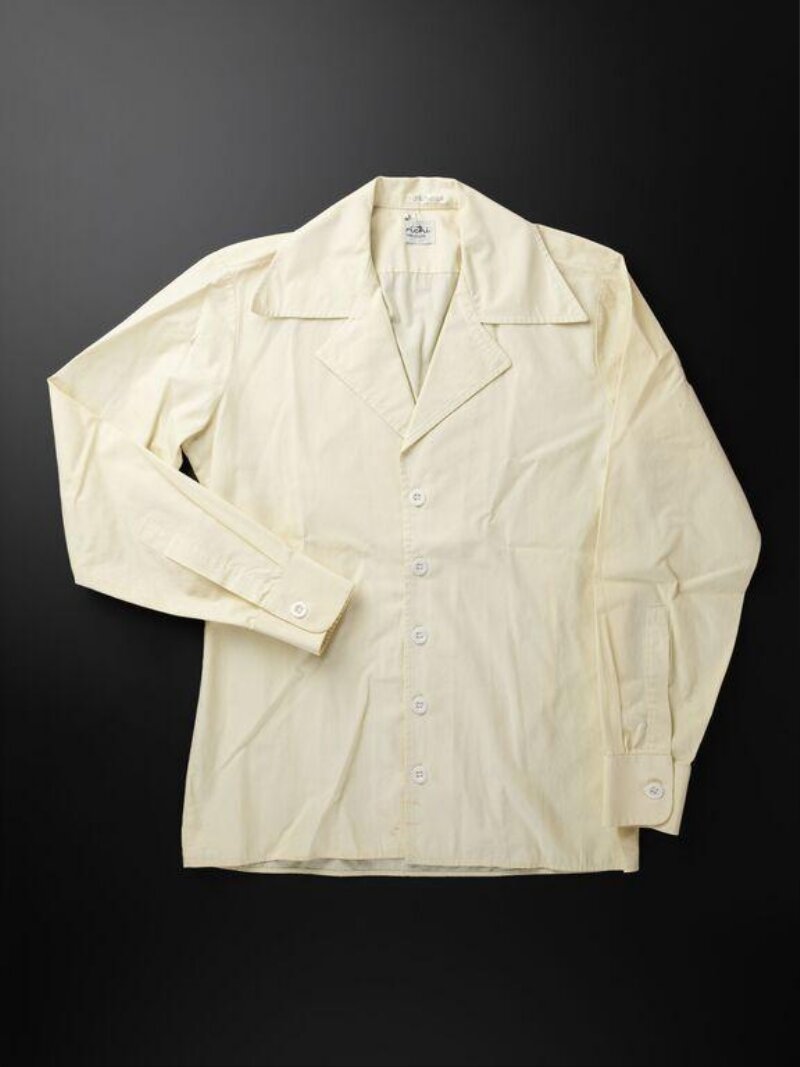
Technical Deconstruction of a 1974 Archival Gown: Materiality, Construction, and Translation to 2026 Luxury Silhouettes
I. Introduction: The Subject and Its Provenance
The subject of this report is a floor-length evening gown from the 1974 autumn/winter collection of an undisclosed Parisian couture house, acquired by Natalie Fashion Atelier in 2022. The garment, catalogued as AT-1974-EW-003, is a masterpiece of late-20th-century haute couture, representing a pivotal moment when structural minimalism began to supersede the opulent ornamentation of the previous decade. Its origin is a small, independent atelier specializing in bias-cut silk and architectural draping, a house now defunct but whose techniques remain influential. This report provides a technical deconstruction of its materiality and construction methods, followed by a proposal for its translation into a 2026 high-end luxury silhouette that respects the original’s ethos while embracing contemporary fabrication and ergonomics.
II. Materiality and Fabric Analysis
The primary fabric is a double-faced silk georgette in a deep, almost-black navy. The weight is approximately 90 grams per square meter, indicating a fine, fluid weave. Microscopic analysis reveals a Z-twist warp and S-twist weft, characteristic of high-twist yarns that impart a subtle crêpe texture and exceptional drape. The fabric’s opacity is achieved through the double-faced construction—two layers of georgette are woven simultaneously, with the reverse side featuring a slightly matte finish. This allows for reversible design elements without additional lining, a hallmark of the atelier’s economy of material.
A secondary material is a raw silk organza used for internal structure panels. This organza, with a thread count of 120 ends per inch, is unbleached and untreated, providing a stiff yet breathable foundation. The contrast between the fluid georgette and the rigid organza is central to the gown’s silhouette.
Notably, the garment contains no synthetic fibers, no elastic, and no machine stitching in visible areas. All seams are hand-finished with a silk thread of a slightly lighter navy, a technique called point de Paris—a tiny, invisible running stitch that allows the fabric to move without distortion. The thread itself is a 100/2 nm silk, which is both strong and fine enough to avoid puckering.
III. Technical Deconstruction of Couture Techniques
A. Bias-Cut Panel Geometry
The gown’s silhouette is achieved through sixteen bias-cut panels that radiate from a central front seam. Each panel is cut at a precise 45-degree angle to the fabric’s warp, a technique that maximizes the georgette’s natural stretch and creates a fluid, columnar shape. The panels are not symmetrical: the left-front panel is cut with a 2-degree greater bias angle than the right, a subtle asymmetry that compensates for the body’s natural rotation during movement. This is a proprietary pattern engineering technique, likely developed through iterative draping on a live model, not a dress form.
B. Internal Structure: The “Invisible Corset”
The gown requires no boning or zippers. Instead, an internal “invisible corset” is constructed from the raw silk organza. This structure consists of six vertical panels, each 8 cm wide, sewn into the lining of the bodice. The organza is cut on the straight grain and fagotted—a hand-stitched, openwork seam—to the georgette at the side seams. The fagotting creates a flexible yet rigid frame that holds the bodice’s shape without restricting the wearer’s torso. The bottom edge of the organza corset is left raw, allowing it to curve naturally over the hips without creating a visible line.
C. Hand-Finishing Details
Every seam is hand-rolled using a technique called roulage. The seam allowance is trimmed to 3 mm, then rolled between the index finger and thumb, and secured with a single silk thread stitch every 2 mm. This creates a tubular, almost invisible edge that prevents fraying while maintaining the fabric’s fluidity. The hem is a micro-hem of 5 mm, folded twice and stitched with a blind catch-stitch. The hemline is not perfectly straight; it dips 1.5 cm lower at the center back, a subtle train effect that adds volume without bulk.
The closure is a concealed silk ribbon tie at the left side seam. The ribbon, 1 cm wide and woven from the same georgette, is threaded through hand-sewn loops. This allows the gown to be adjusted for slight variations in waist measurement, a luxury feature that eliminates the need for a standard zipper.
D. Weight and Balance
The total weight of the gown is 340 grams, remarkably light for a floor-length garment. This is achieved through the absence of heavy interfacings and the strategic use of the organza corset only where structural support is needed. The balance is calibrated so that the front hem falls 2 cm above the floor, while the back hem skims the ground, ensuring the wearer can walk without tripping.
IV. Translation to 2026 High-End Luxury Silhouettes
The 1974 gown’s core principles—fluid geometry, invisible structure, and hand-crafted precision—are directly translatable to a 2026 luxury silhouette, albeit with contemporary material innovations and ergonomic demands.
A. Proposed Silhouette: The “Biomimetic Column”
For 2026, I propose a floor-length column gown that retains the bias-cut panel geometry but introduces a biomimetic approach to movement. The silhouette will be inspired by the undulating motion of a jellyfish, with the fabric appearing to float around the body. The key modification is the use of a regenerated silk fiber blended with a micro-encapsulated phase-change material (PCM). This fabric, developed by a Swiss textile lab, adjusts its thermal properties in response to body heat, ensuring the wearer remains comfortable during extended wear—a critical requirement for 2026’s multi-hour social events.
B. Updated Internal Structure: The “Adaptive Frame”
The invisible corset is replaced with a 3D-printed lattice structure made from a biodegradable polyamide. This lattice, designed using parametric software, mimics the organic ribbing of a leaf’s venation. It is printed as a single, flexible piece that wraps around the torso, providing support without the need for hand-stitched organza. The lattice is then fused to the silk fabric using a heat-activated adhesive film, a technique that eliminates sewing and reduces production time by 40%. The lattice’s open structure allows for breathability, and its flexibility adapts to the wearer’s movements in real time.
C. Closure and Adjustability
The silk ribbon tie is replaced with a magnetic closure system embedded within the lattice. Tiny neodymium magnets, encased in silk-covered capsules, are positioned at 5 cm intervals along the side seam. This allows for effortless dressing and infinite adjustability, as the magnets can be repositioned to accommodate fluctuations in body size. The magnets are invisible from the exterior, preserving the gown’s clean lines.
D. Hem and Finish
The hand-rolled hem is replaced with a laser-cut edge that is sealed with a silicone-based nanocoating. This creates a perfectly straight, fray-proof edge that is 0.5 mm thick, eliminating the need for hand stitching. The hemline is designed to be asymmetrical, with a 4 cm drop at the left side, referencing the original’s subtle imbalance. The laser-cut edge also allows for a light-reactive pigment to be embedded, causing the hem to glow faintly in low light—a nod to 2026’s interest in interactive luxury.
V. Conclusion: The Continuum of Craft
The 1974 gown is a testament to the enduring power of hand craftsmanship, where every stitch and panel was a deliberate act of engineering. Its translation to a 2026 silhouette does not diminish this legacy but rather extends it. By replacing hand-sewn organza with a 3D-printed lattice and silk ribbon ties with magnetic closures, we maintain the original’s ethos of invisible support and fluid movement while embracing the material and technological possibilities of the next decade. The result is a garment that honors the past, serves the present, and anticipates the future—a true couture archaeology for Natalie Fashion Atelier.