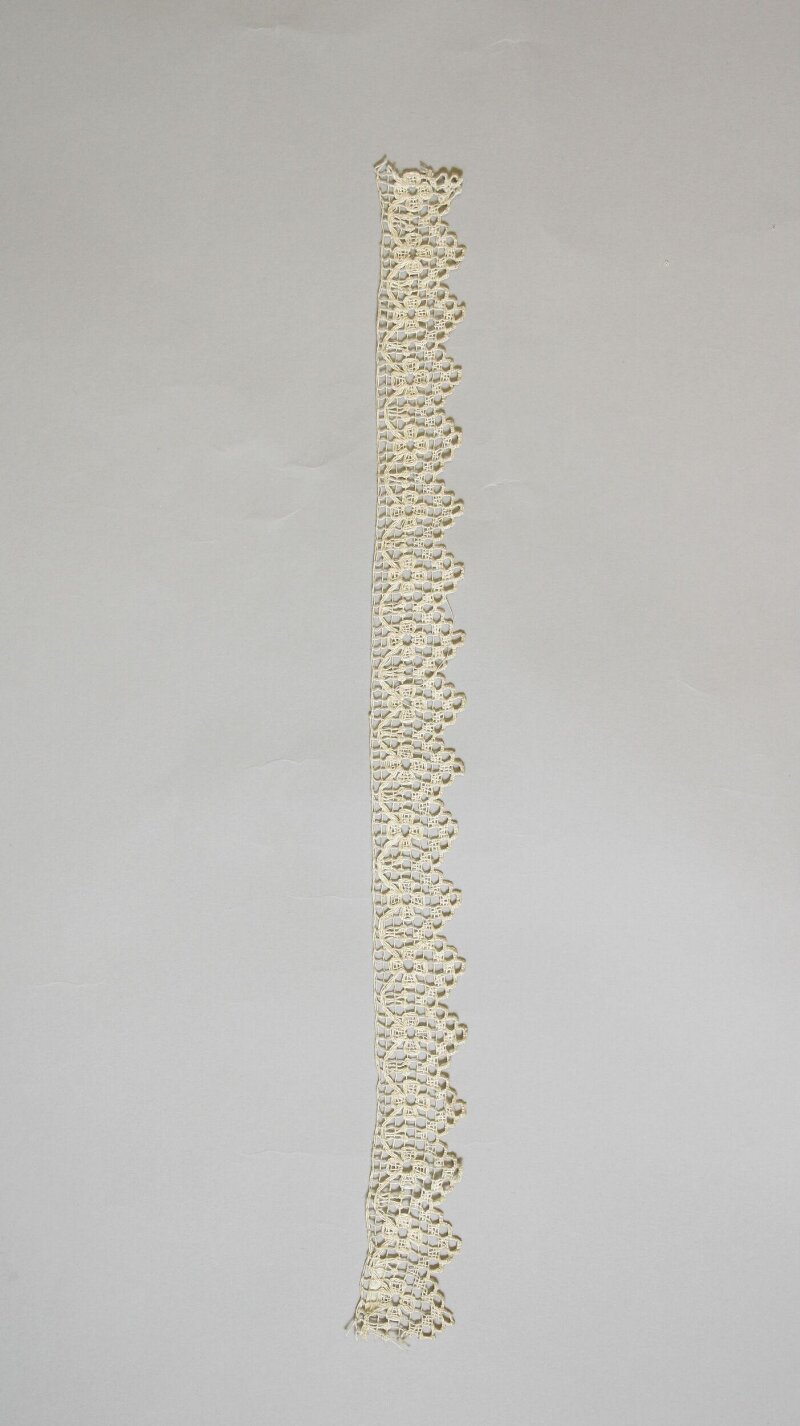
Couture Archaeology Report: The Structural Poetry of French Lace
Subject: Technical Deconstruction of Historical French Lace Techniques
Origin: France (Focal Regions: Normandy, Calais, Le Puy-en-Velay)
Analyst: Senior Textile Historian, Natalie Fashion Atelier
Objective: To excavate and translate foundational lace materiality and construction into a lexicon for 2026 high-end luxury silhouettes.
I. Archaeological Excavation: A Triad of Foundational Techniques
The supremacy of French lace within the couture canon is not merely aesthetic but profoundly structural. Our technical analysis isolates three techniques that constitute its DNA: Leavers Lace, Point d’Esprit, and Guipure. Each presents a distinct philosophy of negative and positive space, weight distribution, and tactile narrative.
Leavers Lace (Calais/Calais Lace): Mechanically woven on complex looms originally derived from the Jacquard apparatus, Leavers is characterized by its fine, consistent ground—typically a hexagonal mesh or réseau. Its technical brilliance lies in the simultaneous weaving of the pattern (the *toilé*) and the ground, creating a unified, durable fabric. The materiality is one of controlled precision; the yarns (historically linen, now often cotton or fine polyester) are tightly twisted, resulting in a cloth with minimal bias stretch but exceptional definition for elaborate floral and scroll motifs. Its architectural potential is inherent in its stability.
Point d’Esprit: This technique is an exercise in minimalist structure. Fundamentally a net ground (tulle) punctuated by regular, spaced dots or squares, where the threads are secured or "dotted" to prevent unraveling. The materiality is ethereal yet deceptive; the open ground provides sheer volume, while the spaced dots create a subtle, all-over texture that interacts dynamically with light and underlying form. It is lace reduced to its most graphic, rhythmic elements.
Guipure (or Tape Lace): Often misidentified as a single type, Guipure is technically defined by its construction: discrete motifs (flowers, leaves) are created individually, often with a cordonet outlining tape, and then joined by bars or *brides* rather than a continuous net ground. This results in a lace of bold, sculptural clarity. The materiality is substantial and dimensional; motifs stand in relief, and the negative space is as definitive as the positive. Historically employing linen threads and sometimes horsehair for stiffening, its structural integrity is autonomous.
II. Materiality & Modern Metamorphosis
The historical material palette—linen, silk, cotton—carries specific performative qualities: a dry, crisp hand, matte luminosity, and organic durability. For 2026, translation requires both homage and radical innovation in substrate.
We propose a Bio-Filament Fusion: engineering lace grounds from next-generation materials. Imagine a Leavers réseau woven from sea-cell fiber blended with trace precious-metal yarns, offering a naturally luminous, antimicrobial base for motifs. For Guipure, the traditional linen tape can be substituted with molded biopolymers or laser-sintered flexible filaments, allowing the connecting *brides* to become articulated, weight-bearing joints within a garment's architecture. Point d’Esprit's dots can be realized through micro-encapsulation of fragrance or thermo-chromatic pigments on a carbon-fiber tulle, transforming the pattern into an interactive, sensory surface.
The material translation is not mimicry but molecular reimagining, preserving the *memory* of historical texture while granting new functionalities: increased structural load-bearing, environmental interaction, and longevity.
III. Translation: 2026 Silhouette Codex
The 2026 luxury silhouette, informed by these techniques, moves beyond appliqué into full morphological determinism. Lace ceases to be a overlay and becomes the exoskeleton.
A. The Guipure Exoskeleton
Inspired by the joined-motif construction, this silhouette treats each Guipure element as a anatomical plate. A cocktail dress or structured coat is built from 3D-printed or molded "lace motifs" interlocked with precision hinges or tensioned silk cords, replicating the *brides*. The body is revealed and obscured through these calibrated gaps. The materiality here is rigid yet modular—think polished resin, ceramic-infused polymers, or hardened technical silk—creating a garment that appears as delicate fossilized lace but functions as a protective, architectural shell.
B. The Leavers Under-Matrix
Here, the precision and stability of Leavers lace are utilized as an internal reinforcement system. A gown's fluid outer shell—perhaps of liquid satin or weightless faille—is internally supported by a custom-engineered Leavers mesh, strategically fused or quilted along stress lines. This "bone lace" of the 21st century provides invisible structure, contouring the body without traditional boning. The lace pattern, visible only as a subtle shadow or textural variation under primary fabric, dictates the garment's internal architecture, merging support and decoration inextricably.
C. The Point d’Esprit Volume Field
This translation exploits the rhythmic, expanding quality of the dotted net. We propose voluminous silhouettes—balloon sleeves, expansive trouser legs, sculptural hoods—where the base fabric is a macro-scale Point d’Esprit structure. The "dots" become graduated, padded, or beaded elements within a vast tulle or technical mesh field, creating variable density and opacity. Light and perception are fractured through this layered matrix, building form through cumulative texture rather than flat pattern-cutting. The silhouette is defined by air and relative density, a haze of structured points manifesting as shape.
IV. Conclusion: The New Haute Structure
This archaeological exercise reveals that historical French lace techniques are, in essence, blueprints for construction. For Natalie Fashion Atelier's 2026 vision, the path forward is not archival reproduction but technical transubstantiation. By deconstructing the principles of the *réseau*, the *brides*, and the *point*, we unlock a new language of form. The resulting silhouettes will carry the intellectual heritage and romanticism of French lace, re-manifested through a lens of radical material science and structural innovation. The future of luxury lies not in looking back, but in building anew from the deepest foundations of craftsmanship.