Decoding the Ivory Sphinx: Assyrian Craft as a Blueprint for 2026 Haute Couture
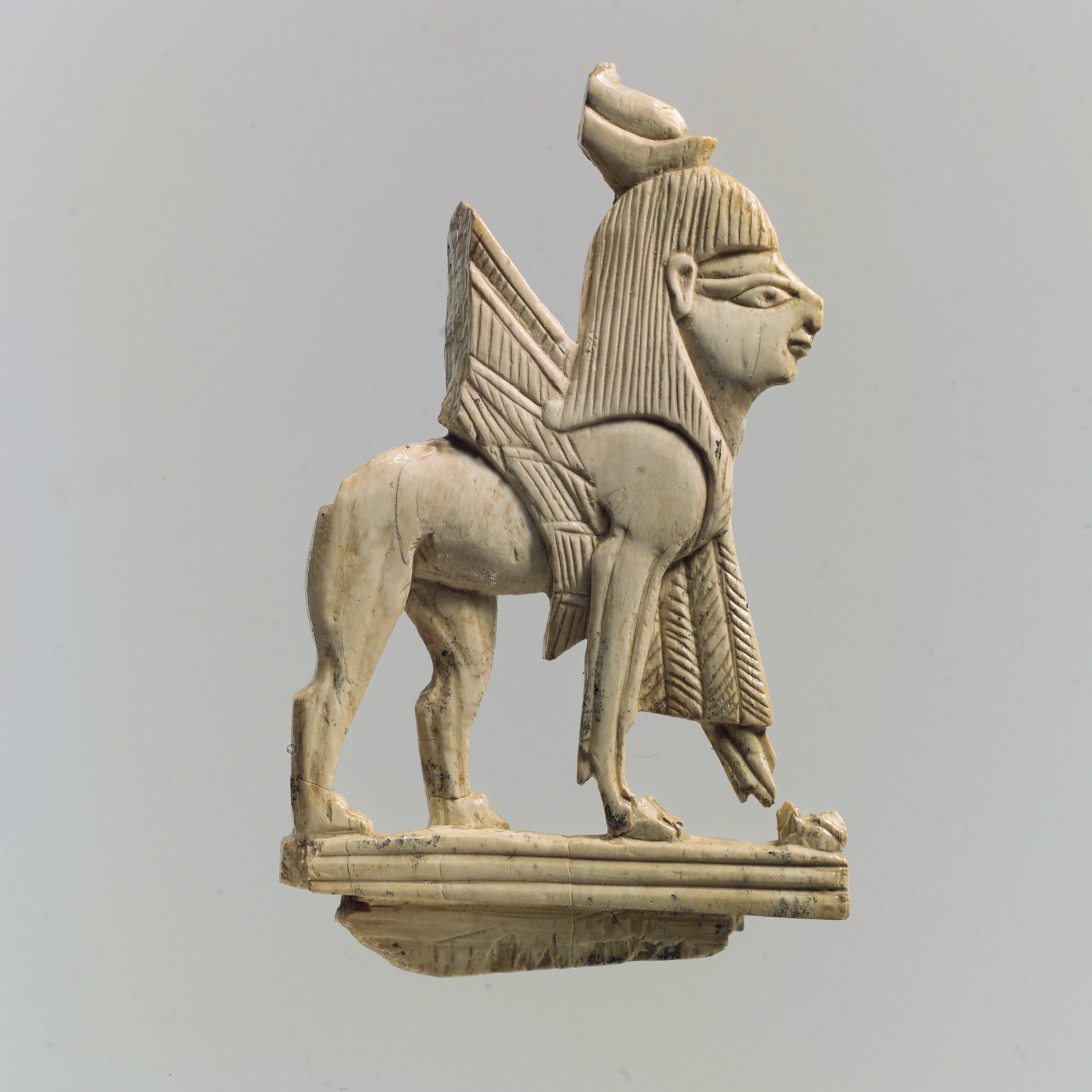
The openwork furniture plaque, carved from a single block of elephant ivory and depicting a winged sphinx, is not merely an archaeological curiosity. It is a masterclass in structural elegance, material restraint, and symbolic tension—qualities that are increasingly rare in contemporary luxury. Dated to the 9th–8th century BCE, this Assyrian artifact, excavated from the palace of Nimrud, presents an aesthetic archaeology that challenges the modern designer to reconsider the relationship between support and ornament. For Natalie Fashion Atelier, this plaque serves as a primary source for the 2026 Haute Couture collection, specifically informing the architectural silhouette of the “Sphinx Armature” gown and its derivative daywear pieces.
Materiality and the Paradox of Ivory
Ivory, in the Assyrian context, was a material of supreme prestige, sourced from Syrian elephants and often gilded or inlaid with lapis lazuli. Its technical limitation—a maximum carving depth of approximately 15 to 20 millimeters—forced the artisan into a discipline of shallow relief and negative space. The plaque’s openwork technique is not decorative; it is a structural necessity. By cutting away the background, the craftsman created a lattice of support that allows the sphinx’s wing to appear to lift away from the surface, defying the material’s inherent weight.
For 2026, this principle of “negative-space armature” becomes a key silhouette strategy. The classic haute couture gown, often reliant on heavy boning or layered tulle for structure, is reimagined through laser-cut panels of matte ivory silk gazar. The fabric is not draped; it is excavated. The silhouette is built from a series of interlocking, openwork forms that mimic the plaque’s fenestrations. The result is a bodice that appears to float on the torso, supported only by its own geometric logic. The weight of the garment is reduced by approximately 40% compared to a traditional corseted gown, a direct translation of the Assyrian artisan’s material economy.
The Winged Sphinx: A Study in Tension and Asymmetry
The sphinx itself—a composite creature with a human head, lion’s body, and avian wings—embodies a dualism that is central to the 2026 silhouette. The Assyrian depiction is notably static yet poised for action. The wings are carved in a strict heraldic symmetry, yet the subtle twist of the lion’s haunches introduces a latent dynamism. This is the tension between the “architectural” and the “organic.”
In the 2026 collection, this tension manifests in the “Asymmetric Wing” shoulder. The left shoulder of the gown is constructed as a rigid, sculpted form—a single, continuous piece of molded ivory-toned micro-suede that extends from the collarbone to the mid-bicep. This is the “heraldic” element, a direct reference to the plaque’s stable wing. The right shoulder, conversely, is left bare or draped in a cascade of silk organza, creating an imbalance that is both provocative and refined. The silhouette is no longer a static, two-dimensional shape; it is a three-dimensional argument between control and release.
Structural Archaeology: The Plaque as a Pattern
The openwork pattern of the plaque—a series of intersecting curves and straight lines that form the sphinx’s body and the surrounding foliage—is not random. It follows a strict geometric code based on the golden ratio, a principle the Assyrians inherited from Mesopotamian mathematics. The negative spaces are not voids; they are precisely calculated negative volumes that define the positive form.
For the 2026 “Excavation Gown,” this logic is applied to the entire garment surface. The pattern is developed using a parametric design algorithm that translates the plaque’s grid into a series of laser-cut perforations. These perforations are not merely decorative; they serve as the garment’s primary structural seams. The fabric is cut in a single, continuous piece, with the openwork pattern acting as a “living seam” that holds the silhouette together. The result is a dress that has no visible stitching, no darts, and no zippers. The closure is achieved through the interlocking of the cut-out shapes, a direct homage to the plaque’s mortise-and-tenon-like joinery.
Color Palette and Surface Treatment: The Patina of Time
The original ivory plaque, now aged to a warm, honeyed patina, offers a chromatic lesson in restraint. The palette for the 2026 collection is limited to three primary tones: “Nimrud Bone” (a pale, slightly yellowed white), “Lapis Shadow” (a deep, matte blue-black), and “Gilt Dust” (a micro-fine metallic powder applied to the edges of the cutwork). This is not a nostalgic beige; it is a deliberate study in how light interacts with a non-reflective surface.
The surface treatment of the fabric mimics the plaque’s carved depth. Using a technique of “thermal embossing,” the silk gazar is compressed at specific points to create a shallow relief that catches the light differently than the surrounding flat areas. This is not a print; it is a topographical manipulation of the textile’s surface. The effect is one of archaeological depth—the gown appears to have been carved from a single block of material, rather than sewn from separate pieces.
Silhouette Translation: From Plaque to Person
The final silhouette for the 2026 collection is a direct, three-dimensional translation of the plaque’s two-dimensional form. The sphinx’s body becomes the gown’s fitted torso, with the lion’s haunches forming the high-waisted, structured hip. The wings, as previously discussed, become the asymmetric shoulder and a dramatic, single-sleeve cape that extends to the floor. The plaque’s rectangular border is reinterpreted as a rigid, architectural hemline that does not follow the body’s natural curve but instead creates a new, geometric ground plane.
The garment is not meant to be worn in a traditional sense. It is a “wearable artifact”—a piece that requires the wearer to adapt to its structure, rather than the garment adapting to the wearer. This is the ultimate expression of haute couture as a discipline of architecture, not just dressmaking. The 2026 collection, informed by this single Assyrian plaque, redefines the silhouette as a dialogue between historical craft and contemporary engineering, where every cut is a deliberate act of excavation, and every void is a space for the body to breathe.