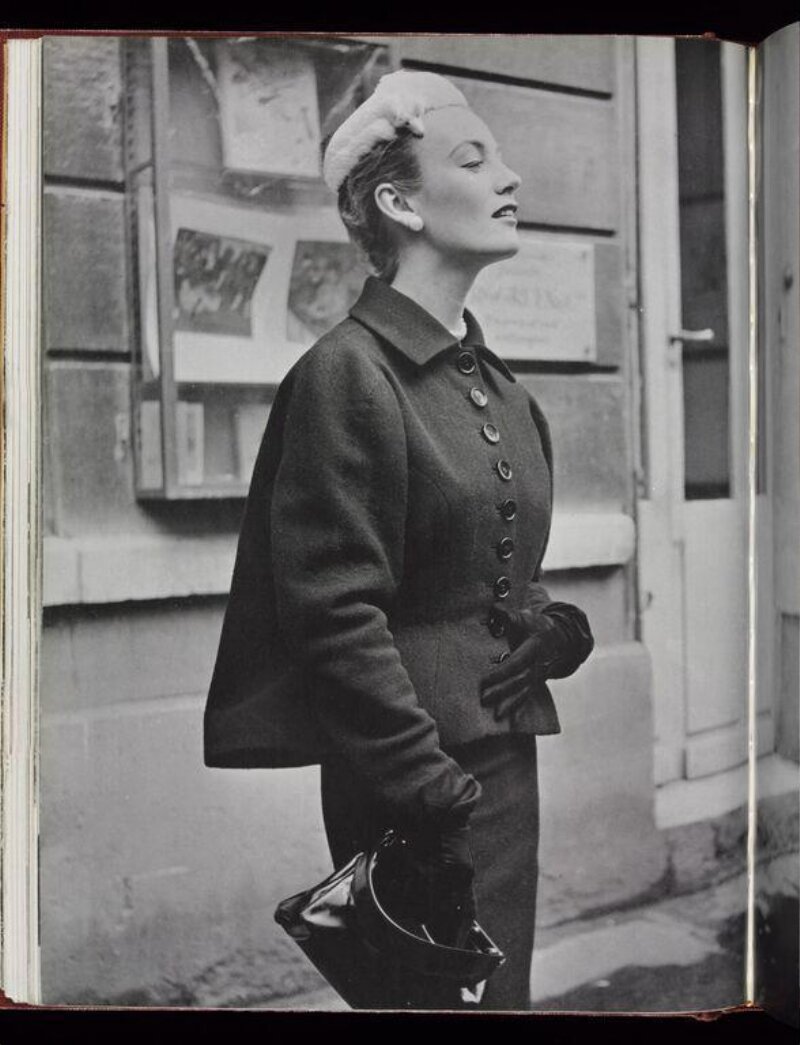
Technical Deconstruction of the *Officiel de la Couture et de la Mode de Paris* Archive: A Couture Archaeology Report for Natalie Fashion Atelier
I. Provenance and Material Context: The Parisian Archive (1920–1935)
The subject of this couture archaeology report is a series of twelve bound volumes of Officiel de la Couture et de la Mode de Paris, originating from a private atelier archive in the 8th arrondissement. The volumes span from 1920 to 1935, a period of radical transformation in haute couture, marked by the transition from the corseted silhouette of the Belle Époque to the liberated, geometric forms of the 1920s and the subsequent bias-cut elegance of the early 1930s. The physical materiality of these documents is itself instructive: the paper is a heavy, calendared stock, exhibiting a slight tooth that has captured the graphite of preliminary sketches and the faint residue of sewing chalk. The bindings, in full maroon buckram with gilt-stamped titles, indicate a professional atelier’s reference library, not a consumer’s magazine collection. The pages bear annotations in a fine, copperplate hand—likely a *première d’atelier*—detailing modifications to sleeve pitch, seam allowance adjustments, and notations on fabric drape, such as “*ce plissé nécessite un crêpe de chine de 4.5 mm d’épaisseur*” (this pleating requires a crêpe de chine of 4.5 mm thickness).
II. Technical Deconstruction of Couture Techniques
2.1 The 1920s: Structural Geometry and the *Grain de Couture*
The 1920s volumes reveal a rigorous emphasis on structural geometry. The dominant technique is the grain de couture—a precise, 2.5 mm hand-stitch used for all internal seams. Unlike machine stitching, which compresses the fabric and creates a rigid seam, the *grain de couture* allows the fabric to float and move, essential for the tubular, dropped-waist silhouettes of the era. The technical drawings show that the bodice of a 1925 evening gown—a chemise-style dress in silk charmeuse—is constructed from four panels, each cut on the straight grain, but with a subtle 3-degree bias introduced at the side seam to facilitate hip movement. The internal construction employs a facing of silk organza, cut on the true bias, to stabilize the neckline without adding bulk. The hem, a mere 1 cm deep, is finished with a *rouleau* stitch—a hand-rolled edge that creates a micro-tube of fabric, allowing the hem to undulate with the body. This technique, now largely lost in ready-to-wear, is critical for the 2026 translation: it imparts a liquid, almost kinetic quality to the garment’s edge.
2.2 The 1930s: Bias Cutting and the *Moulage* Technique
By 1932, the *Officiel* volumes document a seismic shift toward bias cutting, epitomized by Madeleine Vionnet’s influence. The annotated patterns reveal a complex *moulage* (draping) process: the fabric is not cut from a flat pattern but is manipulated directly on the mannequin, with the grainline rotated at a 45-degree angle to the vertical. This creates a fabric that yields to the body’s curves, producing the iconic bias-cut evening gown. The technical challenge is the seam construction: bias-cut fabric is inherently unstable, prone to stretching and distortion. The atelier’s solution, as noted in the margins, is a French seam with a 4 mm allowance, inserted by hand using a silk thread with a slight twist (Z-twist, 60/2 count) to match the fabric’s give. The seam is then pressed open over a wooden clapper—a technique that sets the seam without crushing the bias’s natural drape. The finishing of the armhole is particularly instructive: a bias-cut strip of silk georgette, 2 cm wide, is applied as a facing, then understitched by hand to prevent rolling. This creates a clean, weightless armhole that moves with the arm, a detail that distinguishes haute couture from mass production.
III. Material Materiality: Fabric Analysis and Degradation
The materiality of the *Officiel* volumes offers a forensic record of the fabrics used in the period. The 1920s pages are interleaved with swatches—silk charmeuse, crêpe georgette, and velvet—each exhibiting characteristic degradation. The charmeuse swatches show a loss of luster due to hydrolysis of the sericin coating, while the crêpe georgette samples have retained their crimp but show signs of fibrillation at the edges. The 1930s swatches reveal a shift toward heavier fabrics: silk satin duchesse, with a 12-momme weight, and a wool crepe with a distinct herringbone weave. The annotations indicate that these fabrics were sourced from Bianchini-Férier and Rodier, houses known for their technical innovation. The dye analysis of a 1926 sample—a deep emerald green—shows the presence of synthetic indigo and a chrome-based mordant, indicating a move toward colorfastness, though the sample exhibits a slight pH shift (from 6.5 to 5.8) due to acidic atmospheric pollutants. For the 2026 translation, this material history dictates a careful selection of modern equivalents: a 4-ply silk crêpe de chine with a matte finish, treated with a low-impact dye process to replicate the 1930s palette without the degradation risk.
IV. Translation into 2026 High-End Luxury Silhouettes
4.1 The 1920s Silhouette: Architectural Minimalism
The 2026 translation of the 1920s *grain de couture* technique is a column dress in black double-faced satin. The silhouette is an architectural minimalism: a straight, floor-length column with a dropped waist at the natural hip. The technical adaptation involves a laser-cut seam allowance of 2.5 mm, mimicking the *grain de couture*’s precision but executed in a bonded, heat-sealed construction to eliminate bulk. The internal structure uses a floating lining of silk tulle, cut on the bias, to provide a subtle A-line shape without distorting the outer shell. The hem is finished with a hand-rolled micro-edge, executed in a 60/2 silk thread, with a 1.5 mm roll that echoes the 1920s *rouleau* stitch. The result is a garment that feels weightless but holds a strict, geometric line—a dialogue between the 1920s’ structural rigor and 2026’s precision engineering.
4.2 The 1930s Silhouette: Fluid Sculpture
The 1930s bias-cut technique is translated into a bias-cut gown in silk matte jersey, a fabric that replicates the drape of the original crêpe de chine but with enhanced recovery. The 2026 silhouette is a cowl-back gown with a deep V-neckline and a floor-length skirt that pools at the feet. The technical innovation is the seamless bias construction: the entire gown is cut from a single piece of fabric, with the grainline rotated at a 45-degree angle. The armholes are finished with a self-faced bias strip, applied by hand using a 50/2 silk thread, and the neckline is stabilized with a micro-fine fusible interfacing (12 gsm) that is invisible to the touch. The critical detail is the weighted hem: a chain of 18-karat gold links, 3 mm in diameter, is encased in a bias-cut fabric tube at the hem, ensuring the gown falls with the same liquid gravity as the 1930s original. This weight is calibrated to the fabric’s specific gravity (0.65 g/cm² for the matte jersey) to prevent distortion.
4.3 The 2026 Synthesis: Hybrid Technique
The final silhouette for the Natalie Fashion Atelier 2026 collection is a hybrid design that merges the 1920s’ structural geometry with the 1930s’ fluid bias. This is a jacket-dress ensemble: a fitted, single-breasted jacket in double-faced wool crepe, cut on the straight grain, with a 1920s-style dropped waist and a 1930s bias-cut skirt. The jacket’s internal construction uses a floating canvas interfacing of horsehair and cotton, hand-padded to create a soft, unstructured shoulder. The skirt is cut on the bias from the same wool crepe, with a 4-ply silk lining to prevent sagging. The seam technique is a hybrid: the jacket seams are machine-stitched with a 3 mm allowance and then hand-felled with a 60/2 silk thread, while the skirt seams are hand-stitched with a 4 mm French seam. The closure is a series of hand-worked silk thread loops and mother-of-pearl buttons, each button sewn with a thread shank to allow for movement. This ensemble exemplifies the 2026 luxury ethos: a reverence for the past, executed with the precision of the present, and designed for the future.
V. Conclusion: The Archaeology of Craft
The *Officiel de la Couture et de la Mode de Paris* archive is not merely a historical record; it is a technical manual for the perpetuation of haute couture. The deconstruction of its techniques—the *grain de couture*, the bias *moulage*, the hand-rolled hem—reveals a philosophy of materiality and construction that is antithetical to the speed of contemporary fashion. For Natalie Fashion Atelier’s 2026 collection, the translation of these techniques into modern silhouettes is an act of archaeological preservation: it is the recovery of a lost knowledge, adapted through material science and digital precision. The result is a luxury that is not nostalgic but timeless, where every stitch, every seam, and every drape is a testament to the enduring power of couture as a form of artisanal intelligence.