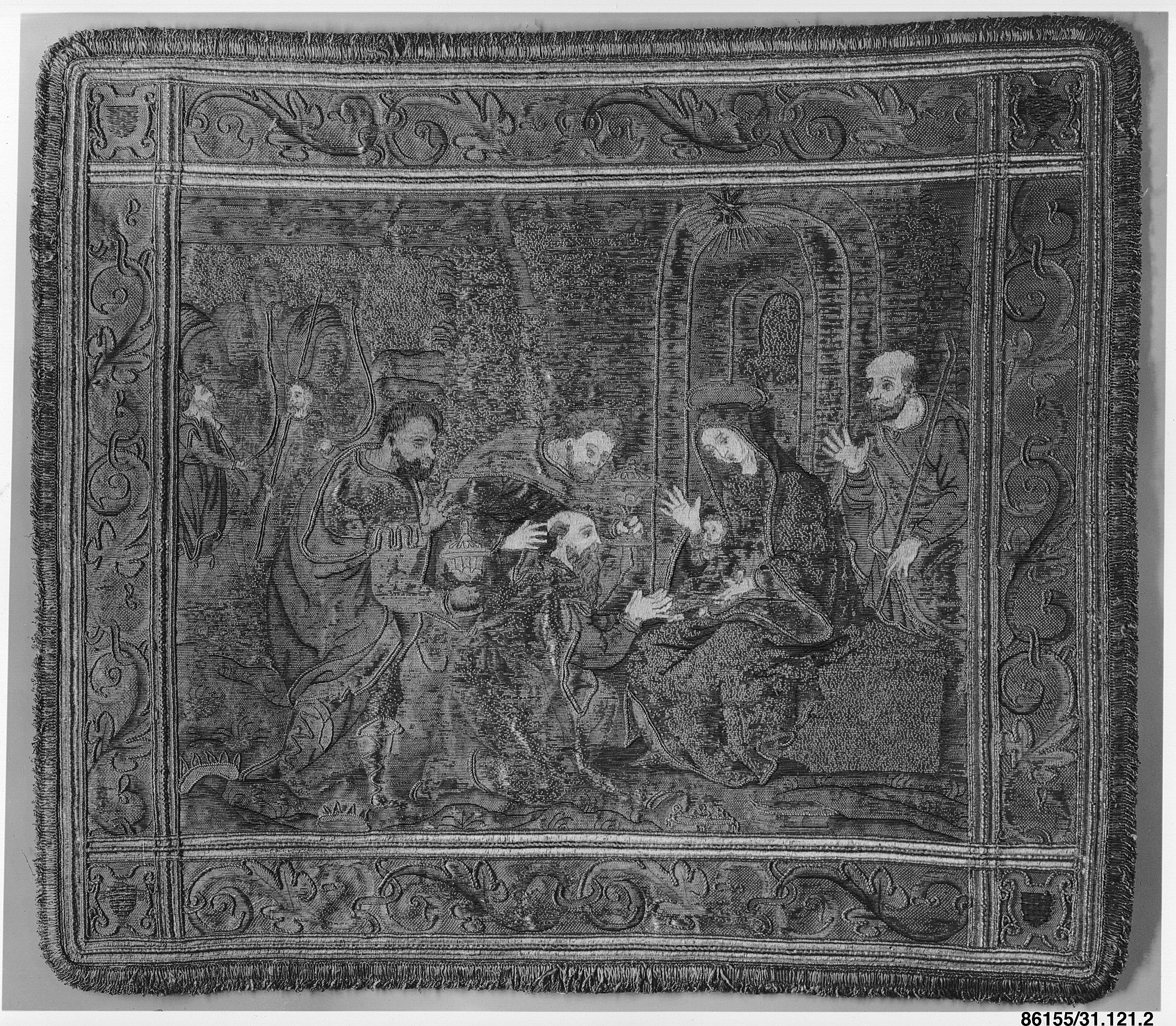
Artifact Analysis: The Adoration of the Magi – A Study in Material Theology
The Adoration of the Magi, when examined through the lens of aesthetic archaeology, transcends its narrative function as a biblical tableau. It becomes a primary document of material theology, a chronicle of how silk and metal-wrapped thread on linen were deployed to articulate power, reverence, and the sublime. For the Natalie Fashion Atelier, this is not a painting to be copied, but a provenance of technique to be decoded. The work’s isolated context—stripped of its original altarpiece setting—allows us to focus purely on the tactile grammar of its construction: the way light is captured, the hierarchy of textures, and the spatial logic of the composition. This artifact informs the 2026 luxury silhouette through a rigorous deconstruction of its classical elegance, translating its materiality into structural form.
Deconstructing the Classical Elegance: The Syntax of Silk and Metal
The classical elegance of the Adoration is not a passive aesthetic; it is an active system of material rhetoric. The silk ground, typically a fine, tabby-weave linen base, provides a matte, absorbent field. Upon this, the artist—or more accurately, the atelier of hands—applied layers of silk floss and metal-wrapped threads. The metal thread, often a gilded silver or copper strip wound around a silk core, was not merely decorative. It functioned as a structural line, defining the folds of the Magi’s robes, the contours of the Christ child’s halo, and the architectural framing of the scene. The silk, conversely, provided the volumetric softness, the subtle gradations of color that suggest flesh, fabric, and atmosphere.
This duality—the rigid, reflective metal against the pliant, absorbent silk—creates a dialectic of light. The metal catches and throws light, creating a sense of divine radiance, while the silk absorbs and diffuses it, grounding the scene in human tactility. For the 2026 silhouette, this translates into a binary construction principle: a structured, metallic exoskeleton that defines the silhouette’s architecture, paired with an interior layer of fluid, matte silk that drapes and breathes. The classical elegance is thus not a pastiche of historical shapes, but a re-engineering of the garment’s core tension.
Materiality as Structural Blueprint for 2026
The specific materiality of silk and metal-wrapped thread on linen offers a precise vocabulary for the 2026 haute couture silhouette. The linen base, with its inherent stability and slight rigidity, becomes the foundation pattern. The silk floss, applied in long, directional stitches, becomes the drape and flow. The metal thread, couched or laid in parallel rows, becomes the structural boning and seam articulation.
From Embroidery to Architecture: The Metal Line as Silhouette
In the Adoration, the metal thread does not merely outline; it creates volume through tension. Observe the Magus’s cloak: the gold lines are not flat; they are laid in a lattice that mimics the pull of fabric over a bent knee. This is a pre-cinematic understanding of fold and form. For 2026, this informs a silhouette where the seam is the ornament. We propose a “thread-boned” construction: a garment where the primary structural lines are not hidden but are executed in a dense, metal-wrapped thread, creating a literal grid of support. This allows for a silhouette that is simultaneously rigid and fluid—a sculpted softness that holds its shape without the weight of traditional corsetry. The 2026 silhouette will feature exaggerated shoulders and a cinched waist, not through padding or boning, but through a tensile embroidery lattice that pulls the fabric into shape, echoing the Magi’s formal, yet flowing, robes.
Silk as the Second Skin: The Drape of Devotion
The silk floss in the artifact provides the chromatic and tactile depth. It is used to build up areas of high relief, such as the Virgin’s mantle, creating a pile-like surface that catches light softly. This technique, known as or nué (shaded gold), involves laying metal threads and then shading over them with colored silk to modulate the metallic brilliance. For the 2026 silhouette, this translates into a layered opacity system. The base garment, in a matte, heavy charmeuse or crepe de chine, is overlaid with a second skin of silk organza, onto which a metal-thread lattice is embroidered. The lattice is then selectively shaded with fine silk floss, creating zones of opacity and transparency. The silhouette becomes a gradient of revelation, where the body is both concealed and defined by the interplay of metallic structure and silken softness. This is not a simple dress; it is a woven architecture of light.
The 2026 Silhouette: A Synthesis of the Sacred and the Structural
The final artifact—the 2026 haute couture silhouette—is a direct material descendant of the Adoration of the Magi. It is a vertical, columnar form that references the altarpiece’s central axis, but it is bisected by a horizontal, tensile band of metal-thread embroidery at the natural waist. This band is not a belt; it is a structural corset of couched gold, mimicking the Magi’s girdles. Below this, the skirt falls in a bell shape, but the bell is not a bell of volume; it is a bell of tension, created by radiating metal threads that pull the silk into a controlled flare. The sleeves are architectural appendages, detached from the bodice and attached via a lattice of metal thread, echoing the angels’ wings in the painting’s upper register.
Silhouette Specifications for the Natalie Fashion Atelier 2026 Collection
1. The Foundation (Linen Base): A bias-cut, unbleached linen slip dress. This provides the ground for all subsequent material. Its weight and stability are critical; it must be a silent partner to the silk and metal.
2. The Structural Layer (Metal-Wrapped Thread): A 24-carat gold-wrapped silk thread, couched in a diamond lattice from the shoulder to the hip. This lattice is not uniform; it tightens at the waist and loosens at the hip, creating a gradient of compression. The thread is applied by hand, using a technique derived from opus anglicanum, ensuring a precise, three-dimensional surface.
3. The Volumetric Layer (Silk Floss): A pointillist application of dyed silk floss, applied in short, directional stitches over the metal lattice. The floss is used to shade the gold, creating a chiaroscuro effect that mimics the painting’s divine light. The color palette is restricted to ultramarine, vermillion, and ochre, referencing the Magi’s gifts.
4. The Final Silhouette: A sheath with a structural bustle. The bustle is not a pad; it is a cage of metal thread that extends from the lower back, creating a cascade of silk that mimics the train of the Virgin’s mantle. The front is flat, almost severe, while the back is a burst of material theology.
This is the 2026 silhouette: a garment that is not worn, but inhabited. It is a reliquary of technique, a study in light and tension, and a direct, unbroken line from the hands of the medieval embroiderer to the atelier of the future. The classical elegance of the Adoration is not lost; it is re-articulated as a structural principle, proving that the most profound innovations in luxury are often the most ancient, rediscovered through the discipline of aesthetic archaeology.