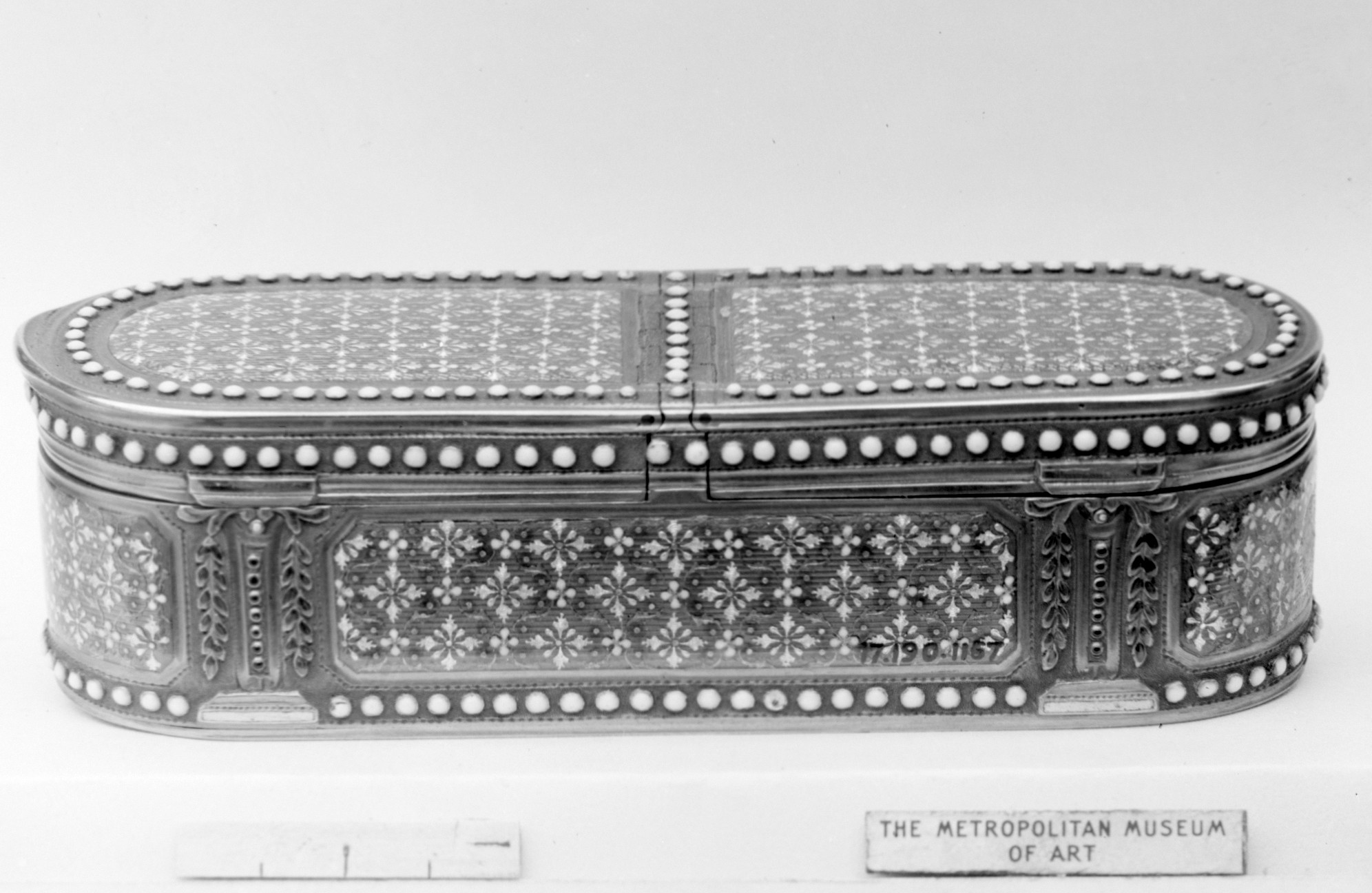
Deconstructing the Miniature Monument: The Snuffbox as a Blueprint for 2026 Silhouettes
The snuffbox, a relic of 18th-century aristocratic ritual, is often dismissed as a mere vanity object. Yet, within the vaults of Natalie Fashion Atelier’s aesthetic archaeology, it emerges as a profound architectural study. This artifact—a compact, gilded vessel of gold and enamel—is not a simple container but a microcosm of classical elegance. Its isolated study reveals a lexicon of restraint, precision, and surface tension that directly informs the luxury silhouettes of 2026. We are not replicating its form; we are decrypting its structural DNA to engineer garments that embody the same controlled opulence and tactile gravitas.
Materiality as Structural Command: Gold and Enamel in 2026
The primary material dialogue of the snuffbox—the interplay between gold’s unyielding solidity and enamel’s luminous fragility—provides a critical framework for 2026 haute couture. Gold, in its historical context, is not a decorative afterthought; it is a structural spine. It defines the box’s sharp, precise edges and its rigid, protective shell. In our 2026 silhouettes, this translates to the use of metallic-threaded structural weaves and liquid-metal laminates that are not merely applied but integrated into the garment’s architecture.
Consider the “Gilded Armature” gown. Here, a base of black, matte micro-faille is corseted by a lattice of gold-lamé piping. This piping does not embellish; it bears weight, creating a rigid, sculpted torso that mimics the box’s lid. The enamel, conversely, is a surface of pure, unbroken color. It is the lacquer-like finish that seals the form. In 2026, this manifests as high-gloss, resin-encrusted panels—perhaps a single, sweeping sleeve or a structural peplum—that are polished to a mirror sheen. The contrast is deliberate: the gold provides the skeletal tension, the enamel provides the chromatic closure. The silhouette becomes a study in hard versus soft, opaque versus reflective, where the garment’s surface is as consequential as its volume.
Proportion and the Contained Form: The Box as Silhouette
The snuffbox’s most radical lesson for 2026 is its contained volume. Unlike the billowing, expansive forms of recent seasons, the box is a study in compressed luxury. Its proportions are intimate, its scale human. This informs a new silhouette: the “Pocketed Silhouette.” We are moving away from the exaggerated shoulder or the train; instead, we are exploring architectural convexity.
Imagine a jacket where the front panels are engineered to create a subtle, rounded dome over the torso, reminiscent of the box’s lid. This is achieved through draped, bias-cut wool that is then internally boned to hold its shape. The waist is not cinched but encased by a rigid, enamel-like belt of polished resin. The volume is not released but held. The sleeves, too, become “boxed”—cut with a sharp, squared-off shoulder and a narrow, straight forearm, creating a geometric line that echoes the artifact’s precise corners.
Further, the “Bombé” skirt—a direct reference to the snuffbox’s domed lid—emerges as a key piece. It is a skirt that swells gently from the waist, reaching its maximum circumference at the hip, then falls straight to the hem. It is not a bell; it is a controlled, convex arc. The fabric—a heavy, double-faced satin or a structured jacquard—must be stiff enough to hold its own geometry. The result is a silhouette that is monumental yet intimate, a garment that occupies space with the same deliberate, quiet authority as a Fabergé box on a velvet cushion.
Surface as Narrative: The Enamel’s Chromatic Discipline
The enamel of the snuffbox is not a mere color; it is a surface discipline. It demands a flawless, uninterrupted plane. In 2026, this translates to a reductionist palette applied with surgical precision. We are not layering textures; we are isolating them. A single gown might be executed entirely in “grisaille”—a monochromatic scheme of black, white, and silver, where the “enamel” is a panel of hand-painted silk organza that has been heat-set to a rigid, glossy finish.
This surface treatment extends to “cloisonné” techniques in fabric. Just as the enamel is divided by thin gold wires, our 2026 silhouettes feature fine, metallic piping that segments the garment’s surface into distinct color fields. A coat, for example, might be divided into a deep burgundy front panel and a midnight blue back panel, separated by a single, continuous line of gold thread. This is not a print; it is a structural division of color, a direct translation of the snuffbox’s decorative logic into a wearable, three-dimensional form.
The “enamel finish” itself is achieved through a proprietary process of liquid crystal-embedded microfibers that are bonded to the fabric’s surface. The result is a garment that shifts in color under different light, mimicking the depth and luminosity of hand-fired enamel. The surface is not soft; it is hard, polished, and impermeable. It is a surface that demands respect, just as the snuffbox demanded a careful, deliberate touch.
The Handle and the Hinge: Functional Ornament in 2026
Finally, the snuffbox’s hardware—its tiny, ornate handle and its precise hinge—offers a lesson in functional ornament. These are not decorative appendages; they are mechanisms of access. In 2026, this translates to architectural closures that are both structural and sculptural. A “hinged” collar—a rigid, gold-lamé band that opens and closes with a magnetic clasp—becomes a signature piece. The “handle” of the box is reimagined as a sculptural, detachable sleeve that can be worn as a separate accessory, a literal translation of the artifact’s portable nature.
These elements are not afterthoughts; they are integral to the garment’s silhouette. The hinge dictates the line of the neck; the handle dictates the fall of the arm. The garment’s function—its ability to be opened, closed, adjusted—becomes part of its formal language. This is the ultimate lesson of the snuffbox: that the most exquisite luxury is found in the perfect marriage of form and function, where every line, every surface, every closure is a deliberate, masterful choice.
In conclusion, the isolated aesthetic archaeology of the gold and enamel snuffbox does not yield a costume. It yields a design manifesto for 2026: one of compressed volume, rigid surfaces, and chromatic discipline. The silhouette is not free; it is contained. The surface is not soft; it is impermeable. This is the new luxury—a luxury of controlled power, of miniature monumentality, of the exquisite, silent authority of a box that holds more than its contents. It holds the future of form.