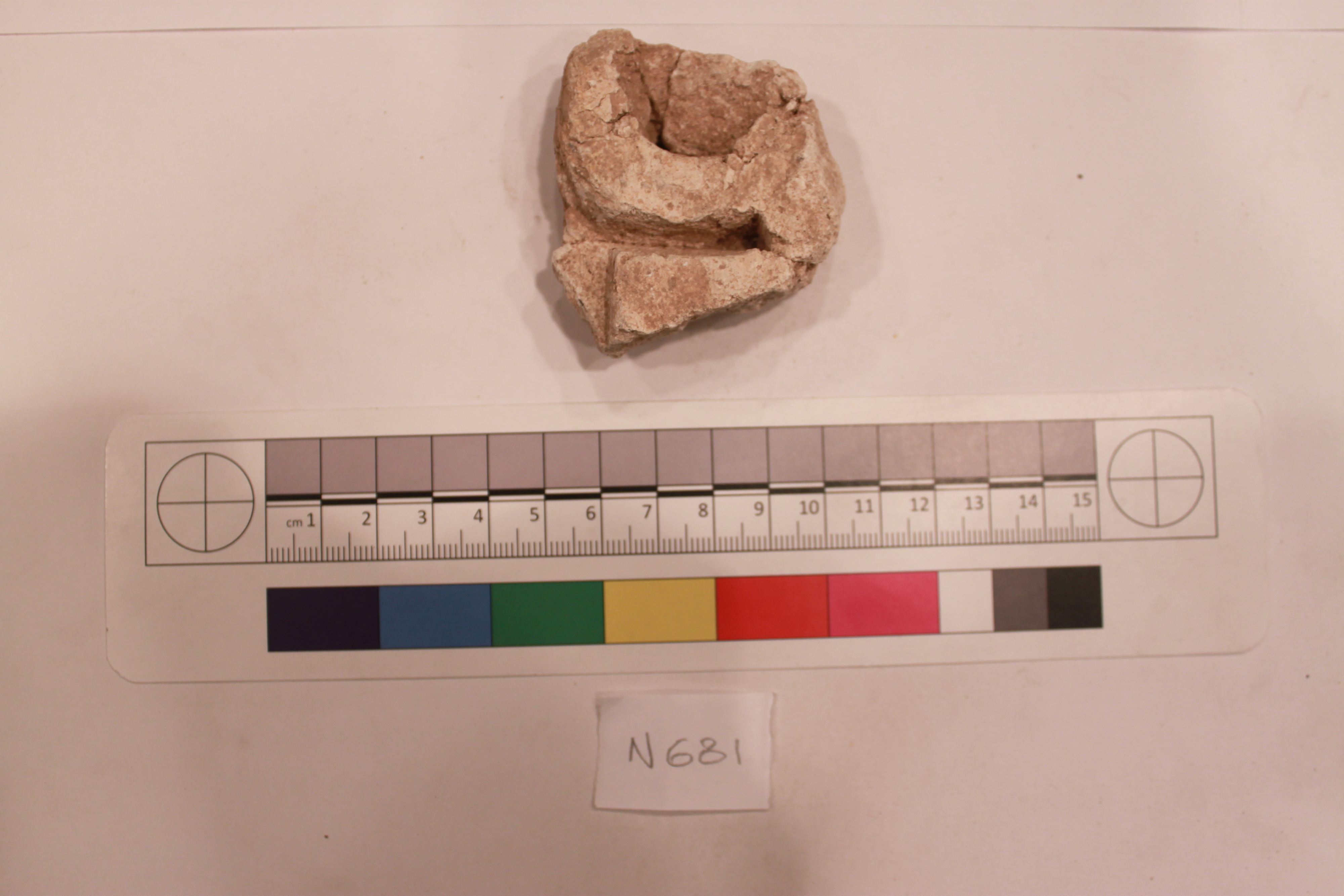
Deconstructing the Classical Elegance: The Stucco Fragment as a Silent Master
Within the curated silence of the atelier's archive, the stucco fragment exists as an isolated artifact of aesthetic archaeology. Devoid of its original architectural context—be it a Roman villa, a Baroque chapel, or a Mughal pavilion—it speaks a purer language of form. This carved, plasterous relic is not merely a decorative object; it is a treatise on classical elegance, defined by the rigorous interplay of positive and negative space, controlled depth, and rhythmic repetition. Its elegance is not one of opulent surface but of profound structural intelligence. The carving does not assault the plane; it engages with it, creating a dialogue between light and shadow that is both deliberate and serene. The fragment’s power lies in its restraint, its ability to suggest immense scale and narrative through a localized, disciplined manipulation of material. This is the essence we extract: elegance as architectural discipline, where ornament is not applied but excavated, revealing the poetry inherent in structure itself.
Technical Deconstruction: The Grammar of Carved Form
A technical analysis reveals the precise grammar that informs this elegance. Firstly, the hierarchy of incision: primary lines define major geometric or foliate motifs with a decisive, deep cut, while secondary and tertiary lines offer texture and nuance with progressively shallower gestures. This creates a visual rhythm and focal point. Secondly, the treatment of the ground: the untouched, smooth field from which the pattern emerges is as critical as the pattern itself. It provides a calm, breathing space, establishing a figure-ground relationship that is foundational to clarity. Thirdly, the modulation of depth: the carving employs a spectrum from the deepest undercut to the most subtle bas-relief. This graduated depth sculpts light, allowing it to cascade across the form, creating a dynamic, time-sensitive appearance that changes with the angle of incidence. Finally, the integrity of the material: stucco, a composite of lime, sand, and marble dust, accepts the tool with a certain granular resistance. The final form honors this quality, presenting neither the cold perfection of marble nor the softness of wood, but a uniquely matte, mineral austerity.
Informing 2026 Luxury Silhouettes: From Architectural Fragment to Anatomical Architecture
For the 2026 haute couture collection, this stucco fragment does not inspire literal replication but rather a philosophical and technical translation onto the fluid canvas of the human form. The core proposition is a shift from garment-as-drape to garment-as-excavated-architecture. The silhouette becomes a terrain to be carved, with the body as the foundational ground. This informs a luxury paradigm where value is expressed not through excessive embellishment, but through the intellectual and technical mastery of structure, space, and light.
Silhouette as Excavated Form: Controlled Volume and Negative Space
The 2026 silhouette will see a redefinition of volume, moving away from inflated shapes toward architecturally precise constructions. Inspired by the stucco fragment's interplay of solid and void, volumes will be strategically subtracted rather than solely added. Imagine a woolen jacket whose bodice appears to have been carved away at the ribs, revealing a structured, inner shell of contrasting technical silk—a direct translation of the fragment's deep undercut. Ball gown skirts may feature panels of sheer georgette framed by rigid, sculpted waistbands and hemlines, creating "windows" of negative space that rhythmically alternate with opaque, textured sections. The silhouette is no longer a single, monolithic shape but a composite of intelligently defined positive and negative forms, creating rhythm and lightness within substantial construction.
Materiality and Surface: The New *Matière*
The materiality of 2026 will seek to emulate the stucco's matte, mineral dignity and its response to the tool. This drives innovation in textural fabrication. Double-faced wools and technical felts will be precision-milled by laser to create shallow, bas-relief patterns, their edges crisp and their surfaces deliberately unfinished. Heavy silks will be molded over custom forms and treated with proprietary coatings to hold architectural pleats and flutes that cast precise shadows. The most avant-garde expressions will involve composite material layering: a base of rigid, linen-backed organza might be overlaid with a lace whose motifs are then carefully dissolved via enzyme wash, leaving behind a ghostly, excavated pattern—a direct homage to the fragment's layered depth. The hand, upon touching these surfaces, will encounter a narrative of making, a topography of technique.
Construction as Carving: The Inner Architecture
The most profound translation occurs in the hidden architecture of the garment. The principles of the fragment's hierarchical structure and modulated depth will be applied internally. Boning will not merely follow the curve of the torso but will be laid in radiating, geometric patterns that echo architectural ribbing, creating support that is both functional and aesthetically conceptual from within. Seams will be strategically placed not just for fit, but to create shadow lines that visually "carve" the body into elegant, abstract panels. A coat's collar might be constructed from multiple, thin layers of calfskin, each progressively smaller, laminated to create a monolithic form with a beveled, carved edge—a direct technical parallel to the stucco artisan's graduated cuts.
In conclusion, this isolated stucco fragment, through the lens of aesthetic archaeology, provides a radical blueprint for the future of luxury. It redirects the trajectory of elegance from ostentation to intellectual clarity, from surface to structure. For Natalie Fashion Atelier's 2026 vision, it mandates a collection where each silhouette is a studied fragment of a larger architectural philosophy, where material is not merely adorned but intelligently excavated, and where the final, profound elegance lies in the serene, authoritative mastery of space, light, and form. The wearer becomes not just a body adorned, but a moving monument to this refined, classical discipline.