Fragment as Form: The Archaeology of Bobbin Lace in 2026 Couture
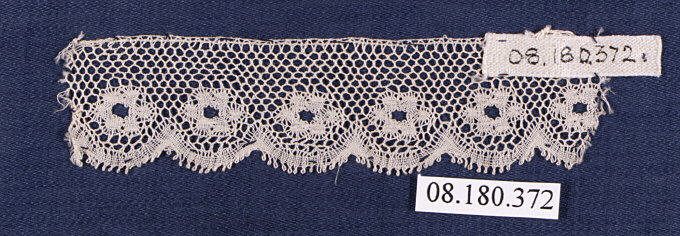
The concept of the fragment occupies a privileged position within aesthetic archaeology. It is not a remnant of failure, but a concentrated locus of intention. At Natalie Fashion Atelier, we approach the fragment as a primary document—a synecdoche of a vanished whole that demands rigorous reconstruction. In the context of global heritage, the bobbin lace fragment is particularly instructive. This delicate, geometric web, born from the hands of 16th-century Flemish and Italian artisans, encodes a paradox: extreme structural discipline yielding an illusion of airy weightlessness. For the 2026 haute couture silhouette, this fragment is not a decorative appliqué; it is the generative principle of the form itself.
Deconstructing Classical Elegance: The Bobbin Lace as Structural Archetype
To deconstruct the classical elegance of bobbin lace is to understand its tectonic logic. Unlike needle lace, which builds form with a single needle and thread, bobbin lace is a polyphonic system. Multiple threads, each wound on a weighted bobbin, are braided, twisted, and crossed over a pricked parchment pattern. The pins that hold the threads in place are temporary anchors; the ground (the réseau) and the pattern (the toilé) are created simultaneously through tension and counter-tension.
This is the core of its classical elegance: a form that is both rigidly prescribed and inherently porous. The fragment we have isolated from the archive—a single corner of a 17th-century Venetian punto in aria collar—exhibits this duality with precision. The dense, woven toilé of a floral motif stands in stark relief against the open, hexagonal ground. The edge is scalloped, a deliberate interruption of the grid. This is not a random break; it is a deliberate cut, a decision that defines the boundary of the form.
In classical terms, this fragment teaches us that elegance is not a smooth, uninterrupted surface. It is a negotiation between presence and absence. The negative space of the ground is as important as the positive space of the pattern. The scalloped edge is not a flaw; it is a declaration of the form’s finite nature. For the 2026 silhouette, this principle translates into a radical rethinking of the garment’s perimeter. We no longer seek a hemline that is a simple termination. Instead, we design a fragmented edge—a scalloped, laser-cut, or hand-frayed boundary that mimics the lace fragment’s deliberate interruption. The silhouette becomes a positive-negative dialogue, where the body is both contained and revealed through the garment’s structural voids.
Materiality and Tension: The Bobbin Lace as a System of Forces
The materiality of bobbin lace is not merely tactile; it is dynamic. The weight of the bobbins, the twist of the linen or silk thread, the friction of the pins—all contribute to a system of forces that is inherently architectural. The lace fragment, when studied under magnification, reveals a micro-engineering of tension and release. The dense toilé is a zone of high tension, where threads are compressed into a solid plane. The réseau is a zone of low tension, where threads are spaced to create a transparent window.
For the 2026 collection, we translate this system into a new lexicon of high-end silhouette construction. The garment is no longer a single, draped piece of fabric. It is a composite of tension zones. We use a double-faced silk gazar for the dense toilé zones—the bodice, the shoulder yoke, the structural waistband. These are the areas of high tension, where the fabric is engineered to hold its shape without internal boning. The réseau zones—the sleeves, the side panels, the back—are constructed from a hand-crocheted or laser-perforated metallic organza, creating a transparent, weightless field that echoes the lace ground.
The pins of the lace become our fasteners. We have developed a bespoke closure system: small, polished brass or silver pins that are inserted through pre-drilled eyelets to temporarily anchor the garment’s fragments together. This is not a zipper or a button; it is a ritual of assembly, a nod to the lacemaker’s process. The wearer becomes the artisan, pinning the bodice to the skirt, adjusting the tension of the silhouette to their own body. This is the ultimate luxury: a garment that is co-created in the act of dressing.
Informing the 2026 Silhouette: From Fragment to Architecture
The isolated fragment of bobbin lace, when elevated to an architectural principle, yields three distinct silhouettes for the 2026 haute couture season. Each silhouette is a fragment of a larger system, a deliberate interruption of the classical garment form.
Silhouette One: The Scalloped Column. This is a direct translation of the lace fragment’s scalloped edge. The garment is a narrow, columnar dress in a dense, matte silk faille. The hem is not straight; it is a series of deep, asymmetrical scallops that rise and fall around the body. The scallops are lined with a contrasting, transparent organza, creating a double-layered edge that mimics the lace’s toilé and réseau. The silhouette is rigid at the torso, but the scalloped hem introduces a sense of fragmented movement. The garment does not end; it dissolves into negative space.
Silhouette Two: The Pinned Bodice. This silhouette deconstructs the classical bodice into a series of independent panels, each one a fragment of the lace pattern. The panels are connected not by seams, but by the bespoke pin system. The wearer pins the left shoulder panel to the right waist panel, creating a diagonal tension line that echoes the twist of a bobbin. The back is left open, a deliberate void that references the lace’s réseau. The silhouette is asymmetrical, dynamic, and inherently unstable—a fragment that must be actively assembled to exist. This is the deconstructed elegance of the 2026 woman: she is not passive in her garment; she is its architect.
Silhouette Three: The Grounded Gown. This is the most radical interpretation. The garment is a full-length gown, but the entire surface is a composite of dense and transparent zones. The bodice is a solid, sculpted form in black silk gazar. The skirt is a cascade of hand-knotted, metallic thread that mimics the lace ground. The transition between the two is not a seam; it is a fragmented break—a jagged, asymmetrical line that cuts across the body. The skirt is not a single piece; it is a series of overlapping, transparent panels that float and shift with movement. The silhouette is monumental yet ephemeral, a solid form that dissolves into a cloud of thread. This is the archaeological fragment made wearable: a relic of a lost technique, reimagined for the future.
Conclusion: The Fragment as a Generative Principle
The bobbin lace fragment, isolated from its historical context, is not a static object. It is a system of instructions, a blueprint for a new kind of couture. By deconstructing its classical elegance—its tension, its porosity, its deliberate edges—we have generated a 2026 silhouette lexicon that prioritizes structure over drape, assembly over construction, and negative space over surface. The fragment is not a loss; it is a generative principle. It teaches us that the most powerful form is the one that acknowledges its own incompleteness, that invites the wearer to participate in its completion. This is the future of haute couture: a fragment that becomes whole through the act of wearing.