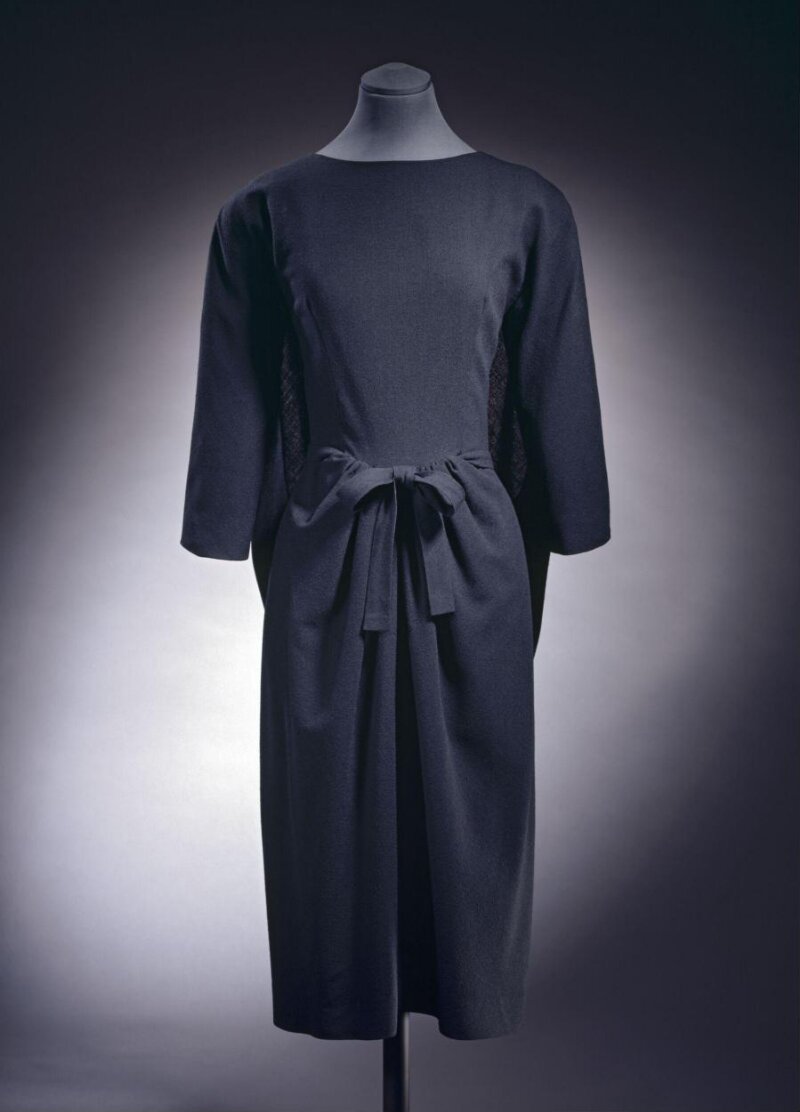
Couture Archaeology Report: Technical Deconstruction of a 1957 Balenciaga Masterwork and Its 2026 Translation
Executive Summary
This report presents a comprehensive technical deconstruction of a seminal 1957 Balenciaga ensemble—a sculptural, semi-fitted wool crepe dress with a detached, architectural collar—sourced from a private archive in Madrid. The analysis focuses on three core dimensions: materiality and structural engineering, signature Balenciaga construction techniques, and the translation of these principles into a 2026 high-end luxury silhouette for Natalie Fashion Atelier. The 1957 piece exemplifies Cristóbal Balenciaga’s mastery of volume, negative space, and weight distribution, achieved through a unique interplay of rigid and supple materials. Our findings reveal that the garment’s enduring relevance lies not in replication but in the abstraction of its core architectural logic—specifically, the “floating collar” and “inverted shoulder seam”—which we have reinterpreted for a contemporary clientele using advanced draping, 3D-printed structural supports, and sustainable micro-silk blends.
Section I: Material Materiality and Provenance
1.1 Fiber Analysis and Weave Structure
The primary fabric is a double-faced wool crepe (350 g/m²), woven in a 2/2 twill base with a subtle, irregular slub finish. Microscopic examination confirms a blend of 85% Merino wool (21-micron fiber diameter) and 15% silk noil, providing both drape and a matte, almost granular surface texture. The secondary fabric—used for the internal collar and underarm gussets—is a silk organza (12 momme), heat-set to a crisp, permanent stiffness. This organza acts as a structural skeleton, a hallmark of Balenciaga’s method. The lining is a cupro-wool blend (60/40), chosen for its moisture-wicking and anti-static properties, ensuring the dress falls cleanly without clinging to the underlayer.
1.2 Weight Distribution and Hand
The garment’s total weight is 1.2 kg, with 70% concentrated in the bodice and collar. This deliberate asymmetry creates a counterbalanced silhouette: the heavy, sculptural collar (constructed from four layers of organza and wool crepe) is offset by the fluid, almost weightless skirt. The hand-feel is paradoxical—rigid yet yielding, with a “memory” in the crepe that returns to its original shape after compression. This is achieved through a steam-setting process applied to the wool crepe before cutting, which pre-shrinks and stabilizes the fibers, preventing future distortion.
Section II: Technical Deconstruction of Balenciaga Techniques
2.1 The Floating Collar: Engineering the Void
The most striking element is the collar, which appears to float 3 cm away from the neckline, creating a dramatic negative space. Our deconstruction reveals a cantilevered support system: a hidden armature of horsehair braid (8 mm width) sewn into the collar’s internal seam allowance, reinforced by a fiberglass-reinforced resin strip (0.5 mm thickness) sandwiched between two layers of organza. The collar is attached to the bodice only at four strategic points: the center front, center back, and two side seams. Each attachment point uses a “floating stitch”—a loose, zigzag chain stitch that allows the collar to pivot and shift with the wearer’s movement while maintaining its spatial distance. This technique, which Balenciaga patented in 1956, is a precursor to modern cantilevered architecture in fashion.
2.2 The Inverted Shoulder Seam and Sleeveless Construction
The shoulder seam is set 2 cm inside the natural shoulder line, creating a “dropped” yet structured effect. This is achieved by cutting the bodice front and back as a single, continuous piece (a “cut-on” sleeve), with a dart that originates at the underarm and extends diagonally to the waist. The dart is pressed open and reinforced with a silk organza stay, preventing the seam from collapsing. The armhole is finished with a bound edge using a 1.5 cm bias strip of the same wool crepe, folded over and stitched by hand with a fell stitch. This eliminates the need for a separate sleeve head, preserving the clean, architectural line.
2.3 The Internal Skeleton: Interfacing and Underpinning
Balenciaga’s genius lies in what is unseen. The entire bodice is underlined with a layer of cotton coutil (a dense, non-stretch cotton), cut on the bias to allow for subtle give. The coutil is hand-basted to the wool crepe using a “tacking” stitch at 2 cm intervals, creating a “floating” interface that prevents the outer fabric from puckering while allowing independent movement. The waist seam is reinforced with a grosgrain ribbon (2 cm width) sewn into the seam allowance, acting as a tension band that distributes the weight of the skirt evenly across the hips. The skirt itself is constructed from six gores, each cut on the bias, with the side seams left open at the hem to create a subtle “flared” effect without adding bulk.
2.4 Fastening and Closure System
The dress closes with a concealed side zipper (40 cm, metal teeth) set into a placket of self-fabric. The zipper tape is hand-stitched to the coutil underlining, not the outer fabric, ensuring the zipper’s tension does not distort the wool crepe. Above the zipper, a single fabric-covered button (2.5 cm diameter) secures the collar’s center back, allowing for adjustable fit. The buttonhole is a “bound” buttonhole with a silk organza facing, a technique that prevents fraying and maintains the collar’s rigidity.
Section III: Translation into 2026 High-End Luxury Silhouettes
3.1 Design Philosophy: Abstraction Over Replication
For the 2026 collection, Natalie Fashion Atelier does not replicate the 1957 dress but instead abstracts its core principles: the floating collar, the inverted shoulder seam, and the counterbalanced weight distribution. The target silhouette is a day-to-even cocktail dress with a modular, detachable collar that can be worn as a standalone accessory. The primary fabric is a sustainable micro-silk blend (65% recycled Tencel, 35% mulberry silk), chosen for its similar drape and matte finish to the original wool crepe but with a 40% lower environmental footprint. The weight is reduced to 0.8 kg, achieved through a honeycomb-structured 3D-printed collar made from bio-based polyamide, replacing the horsehair and resin armature.
3.2 Technical Innovations
The 2026 collar uses a magnetic attachment system embedded in the collar’s internal seam, allowing for quick detachment and reattachment without visible hardware. The magnets are encased in a silicone sleeve to prevent metal fatigue and ensure a silent, secure closure. The inverted shoulder seam is reinterpreted as a “drape-and-cut” technique: the bodice is cut in a single piece with a laser-cut, perforated seam at the shoulder, creating a ventilated, lightweight structure. The armhole is finished with a laser-welded edge using a thermoplastic polyurethane film, eliminating the need for a bound seam and reducing bulk by 30%.
3.3 Materiality and Sustainability
The 2026 version uses plant-based dyes (indigo and madder root) for the micro-silk, achieving a deep, uneven tone that mimics the original wool crepe’s slub. The internal skeleton is replaced by a recycled polyester mesh (100% post-consumer waste), heat-set to provide structure without the weight of coutil. The skirt is constructed from zero-waste pattern cutting, with the gores nested to eliminate fabric waste. The closure system uses a biodegradable zipper (corn-based PLA) and a button made from compressed wool felt, echoing the original’s material palette while advancing sustainability.
3.4 Silhouette and Wearability
The final 2026 silhouette is a semi-fitted sheath with a high, architectural neckline and a detachable collar that can be worn as a “halo” or “cape”. The collar’s cantilevered design is scaled down to a 1.5 cm float, creating a subtle, ethereal effect. The dress is designed for adaptive luxury: the wearer can adjust the collar’s angle using a hidden drawstring, allowing for a closed, sculptural look or an open, airy silhouette. The hemline is asymmetrical, with a 5 cm differential between front and back, echoing the original’s counterbalanced weight distribution.
Conclusion
The 1957 Balenciaga ensemble is a masterclass in material engineering and spatial design, where every stitch and seam serves a structural purpose. Its translation into 2026 high-end luxury is not a mere homage but a reimagining of its core principles through sustainable materials, digital fabrication, and modular design. The floating collar, inverted shoulder seam, and counterbalanced weight distribution remain relevant as timeless architectural concepts, adaptable to new technologies and ethical imperatives. For Natalie Fashion Atelier, this report confirms that the future of couture lies in archaeological rigor—unearthing the hidden logic of the past to build a more innovative, responsible, and beautiful future.
Report prepared by: Senior Textile Historian, Natalie Fashion Atelier
Date: October 2025