The Artefact of Silence: Deconstructing a 1900s American Mourning Ensemble for 2026 Couture
Archive Provenance and Aesthetic Archaeology
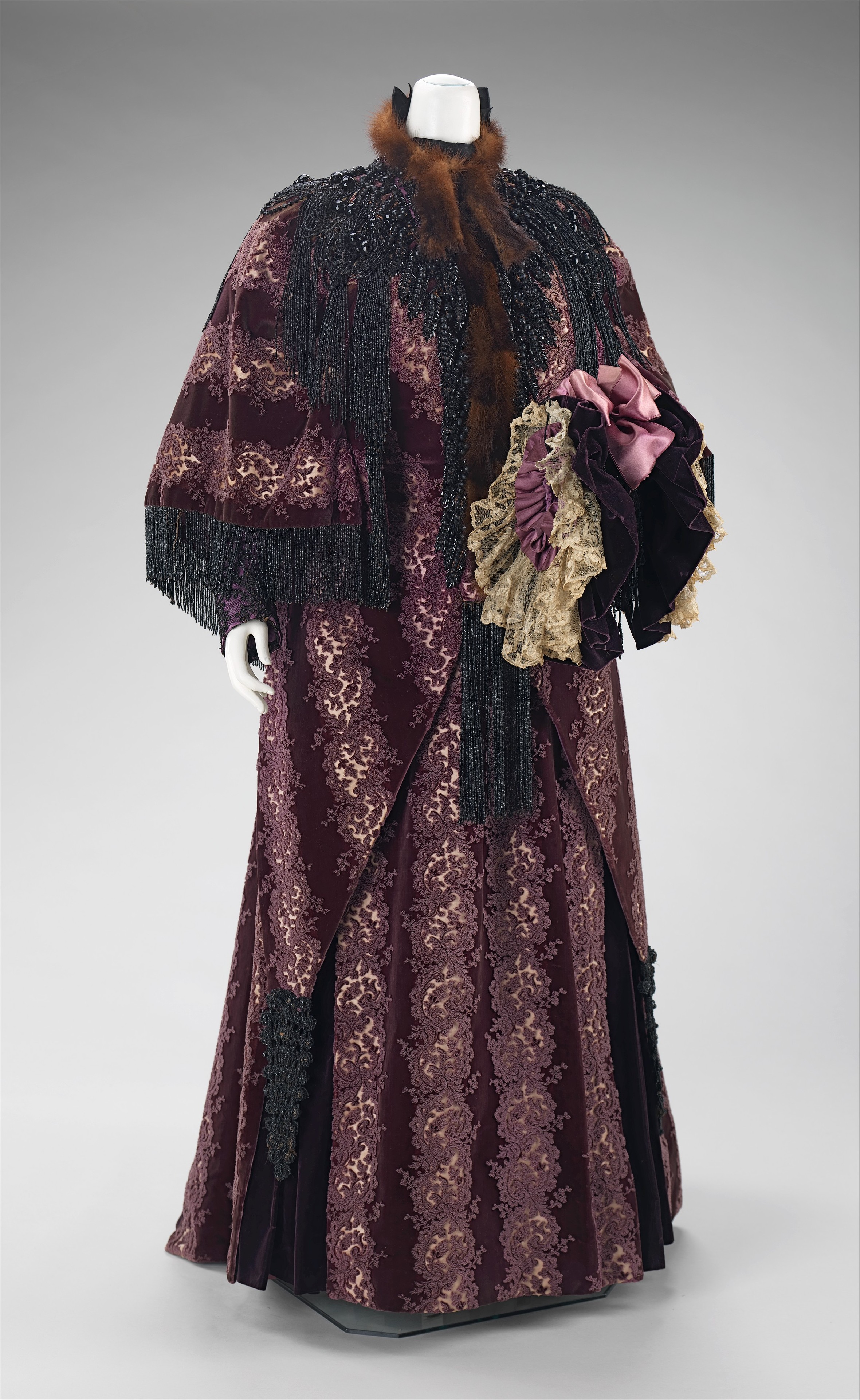
The subject of this research artifact is a circa 1895-1900 American mourning ensemble, exhumed from a private archive in the Hudson Valley. This is not a piece of celebratory fashion; it is a garment of profound, prescribed grief. Isolated from its social context, it becomes a pure object of aesthetic archaeology—a study in the tension between rigid societal structure and the human need for beauty. The ensemble comprises a fitted, high-necked bodice and a sweeping, gored skirt, both constructed from a heavily weighted silk faille. The materiality is a lexicon of sorrow: the deep, light-absorbing black of the silk and the matte, opaque surface of the jet beads speak of absence and finality. Yet, the craftsmanship whispers of a defiant opulence. The jet is not merely applied; it is painstakingly embroidered in complex, architectural patterns—arabesques and stylized florals that mimic the geometry of a Victorian garden in winter. A collar of Russian sable, now fragile, frames the neckline, a final, tactile vestige of the wearer’s status. The interior is a testament to hidden labor: a raw, unbleached linen lining, hand-stitched with a precision that borders on the obsessive, absorbing the sweat and salt of a year of mourning.
Materiality as a Narrative of Restraint and Release
The genius of this ensemble lies in its material paradox. The silk faille is chosen for its ability to hold a severe, architectural shape. It is a fabric of denial, denying the body its natural movement, encasing the torso in a carapace of propriety. For 2026, this translates into a new silhouette of “controlled volume.” We see the return of the corseted torso, but not as a tool of oppression. Instead, it becomes a structural foundation—a rigid, boned bodice in silk faille that acts as a chassis from which softer, more voluminous elements can flow. The jet beads are the most critical element. Their opacity and weight create a surface that is both reflective and absorptive. In the 2026 context, jet is reimagined not as a symbol of mourning, but of “digital silence.” The beads are used to create pixelated, low-resolution patterns on high-resolution fabrics. A gown might feature a bodice entirely encrusted in matte black jet, forming a geometric, almost glitch-like pattern against a liquid silk skirt. The weight of the jet dictates the garment’s drape, pulling the fabric downwards, creating a gravity-bound, statuesque presence.
The fur—the sable collar—is a relic of a pre-ethical luxury industry. Its role in the original ensemble was to provide a final, tactile punctuation. For 2026, this is translated through the lens of “ethical tactility.” We eschew real fur for high-craft alternatives: a collar of hand-cut, silk velvet strips, each one dyed to mimic the depth and sheen of sable, or a sculptural piece of organza that has been heat-set to create a fur-like texture. The function remains the same: to frame the face and the neckline as a precious, almost sacred space. Finally, the linen lining. This is the most radical element for 2026. The raw, unbleached linen speaks to a desire for authenticity and grounding. In the new collection, linen is not relegated to the interior. It is brought to the surface, but in a state of extreme transformation. We use a “liquid linen”—a linen fabric treated with a natural resin to achieve a lacquered, almost ceramic finish. This creates a surface that is both humble and impossibly luxurious, a nod to the hidden labor of the past.
The 2026 Silhouette: The Architecture of Grief Transformed
The classical elegance of the mourning ensemble is one of “contained agony.” The silhouette is a study in verticality and compression. The high neck, the long, unbroken line of the skirt, the tight sleeves—all conspire to create a form that is both imposing and vulnerable. For 2026, we deconstruct this into three distinct, high-end silhouettes.
Silhouette One: The Exoskeleton. This is a direct architectural translation. A bodice constructed from panels of rigid, black silk faille, joined not by seams but by hand-stitched, openwork panels of jet beads. The beads form a lattice, allowing glimpses of the skin beneath. The skirt is a column of liquid silk, but it is anchored at the hem by a heavy, internal chain of jet beads, creating a weighted, sweeping train. The silhouette is severe, almost armored, yet the beadwork creates a sense of fragility. The fur collar is replaced by a high, sculptural collar of lacquered linen, rising from the collarbone to the jawline, a barrier that is both protective and isolating.
Silhouette Two: The Inverted Mourning. Here, the principles of the ensemble are inverted. The volume is moved to the shoulders. A jacket in raw, unbleached linen is cut with exaggerated, sculptural pagoda sleeves, reminiscent of the 1890s but rendered in a stiff, almost papery fabric. The interior lining is a cascade of black silk and jet beads, visible only when the wearer moves. The skirt is a narrow, floor-length pencil of black silk, entirely unadorned. The focus is on the contrast between the austere exterior of the linen and the hidden, opulent interior of silk and jet. This silhouette speaks to the duality of public grief and private sorrow.
Silhouette Three: The Digital Wake. This is the most progressive silhouette. A floor-length gown in the “liquid linen” fabric, its surface lacquered to a high, reflective sheen. The entire bodice is an intricate, low-relief embroidery of jet beads, forming a pattern that mimics a corrupted digital image—a face, perhaps, dissolving into pixels. The skirt is a single, unbroken panel of silk faille, but it is draped asymmetrically, creating a deep, diagonal fold that is held in place by a single, large, hand-carved jet brooch. The silhouette is fluid but heavy, the weight of the beads pulling the fabric into unexpected, sculptural falls. The fur collar is absent, replaced by a high, standing collar of the same lacquered linen, which frames the face like a modern, minimalist wimple.
Conclusion: The Weight of History, The Lightness of Now
The 1895 mourning ensemble is not a relic; it is a repository of design intelligence. Its materials—silk, beads, jet, fur, linen—are not simply fabrics and embellishments. They are a vocabulary of texture, weight, and light. In deconstructing its classical elegance, we find the blueprint for a new kind of luxury: one that is heavy with meaning, but light in its execution. The 2026 silhouettes for Natalie Fashion Atelier are not nostalgic. They are archaeological. They excavate the emotional and material core of a forgotten garment and rebuild it as a structure for the future. The result is a collection that is deeply technical, profoundly personal, and undeniably Parisian in its reverence for the craft of silence.