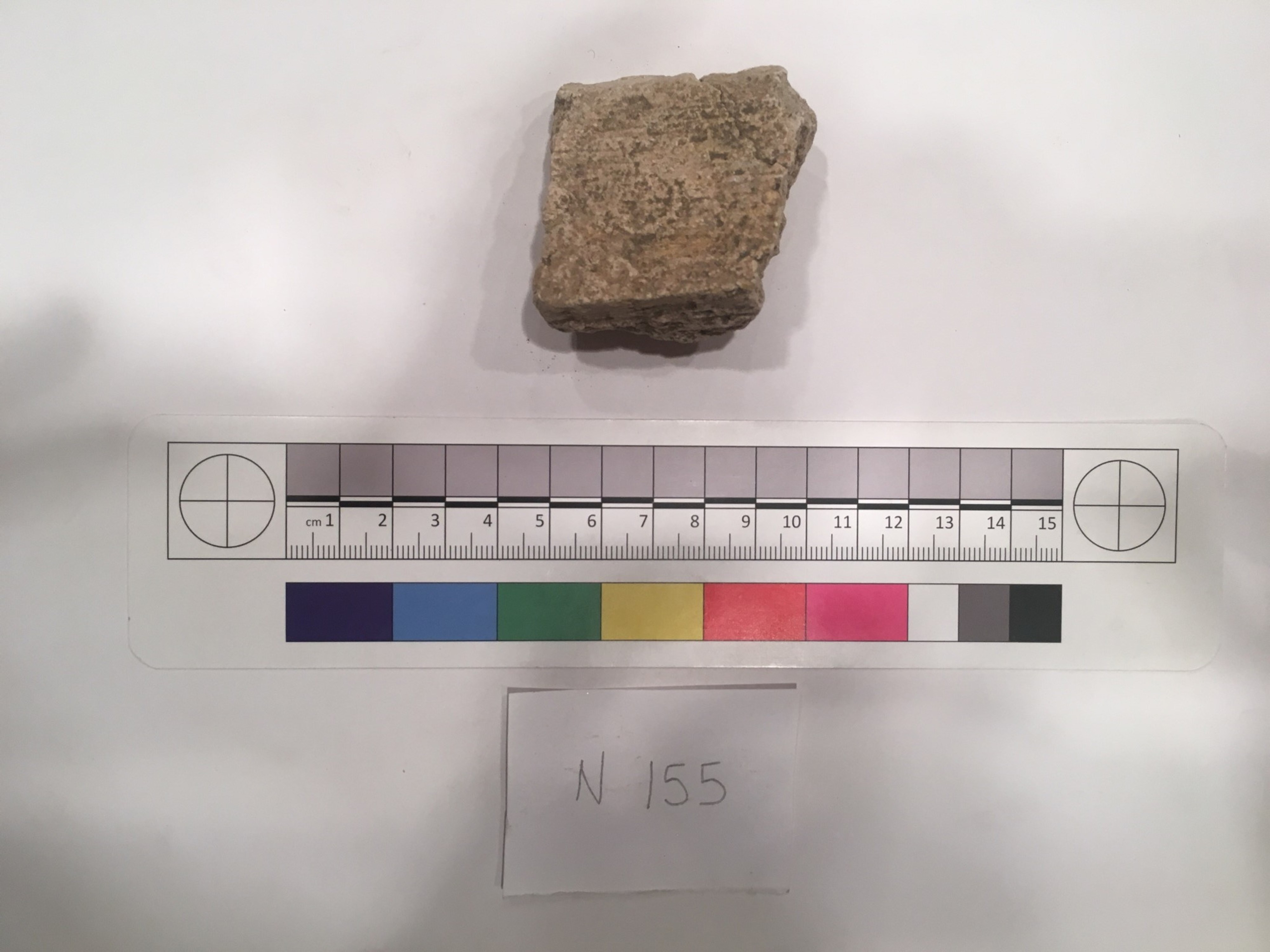
Deconstructing the Stucco Fragment: An Aesthetic Archaeology for 2026 Silhouettes
Within the silent archives of aesthetic archaeology, the stucco fragment exists as a paradox: a medium of structural permanence articulated through an illusion of malleable softness. For the Natalie Fashion Atelier, this isolated artifact—a carved and painted remnant of a once-grand architectural narrative—is not merely a historical curiosity. It is a generative blueprint for the 2026 luxury silhouette, a dialogue between the rigid geometry of antiquity and the fluid drapery of contemporary Haute Couture. This research paper deconstructs the classical elegance of the stucco fragment, extracting its core principles of materiality, negative space, and chromatic restraint to inform a new lexicon of high-end form.
The Paradox of Carved Softness: Materiality as Silhouette
The stucco fragment’s primary technical lesson lies in its material paradox. Stucco, when carved, mimics the organic folds of textile—the pleat of a chiton, the drape of a toga—yet is rendered in a mineral substrate. This tension between apparent softness and actual rigidity is the foundational concept for the 2026 silhouette. The Atelier’s design methodology will translate this through structural boning and architectural seams that echo the carved lines of the fragment. Instead of flowing fabric, we propose a silhouette that is carved from within—a jacket or bodice that appears to be a single, monolithic piece of material, its curves and hollows defined by internal armatures rather than external draping.
The tactile quality of the fragment—its eroded edges, the slight undulation of the paint layer—informs a new surface treatment. For 2026, we will employ lacquered silk gazar and resin-infused organza, materials that can be heat-set and molded to hold sharp, architectural folds. These fabrics will be treated with a matte, mineral finish, mimicking the subtle luminosity of aged stucco. The silhouette will not be draped; it will be sculpted. The shoulder line, for instance, will be a continuous, unbroken arc—a direct reference to the fragment’s cornice edge—achieved through a hidden corset of laser-cut, flexible steel boning. The waist will be defined not by a belt, but by a negative-space cutaway, a void carved into the garment’s volume, mirroring the missing sections of the original artifact.
Chromatic Archaeology: The Palette of Erosion
The painted surface of the stucco fragment, often a faded polychromy of Pompeian red, ochre, and verdigris, offers a rigorous color theory for the 2026 collection. This is not a palette of vibrancy, but of memory and erosion. The Atelier will interpret these hues as pigment-infused gradients, where color is not applied but seems to emanate from the fabric itself. A gown will transition from a deep, earthy umber at the hem to a pale, chalky white at the shoulder, mimicking the way paint degrades from the top of a wall downwards.
This chromatic approach dictates the silhouette’s optical weight. A column dress in a single, faded terracotta tone will be interrupted by a panel of raw, unbleached linen—a visual “break” that echoes the fragment’s fractured edge. The 2026 silhouette will therefore be a study in chromatic tectonics: the color does not merely decorate the form; it defines its structural logic. A deep, concentrated pigment will be used to create visual density at the hip, while a faded, almost translucent wash will be reserved for the sleeve, creating an illusion of air and lightness. This is color as architectural weight.
Negative Space and the Art of the Void
The most profound lesson from the stucco fragment is the eloquence of the void. The missing sections, the cracks, the chips—these are not flaws but design features. They reveal the underlying structure, the armature beneath the plaster. For 2026, the silhouette will embrace strategic deconstruction. A tailored jacket will feature a single, large cut-out at the shoulder blade, revealing a secondary layer of sheer, metallic mesh—a nod to the metal lath that once supported the stucco. A floor-length cape will be split asymmetrically, with the missing portion replaced by a cascade of fine, silver chains, creating a kinetic void that moves with the wearer.
This principle extends to the silhouette’s perimeter. Instead of a clean hemline, the 2026 garment will feature raw, frayed edges that are meticulously hand-finished to resemble the jagged edge of the broken fragment. The hem is no longer a boundary; it is a transition zone between the garment and the space around it. The silhouette becomes a three-dimensional drawing, where the absent parts are as important as the present ones. A skirt will be composed of overlapping, irregular panels, each one slightly offset, creating a series of small, deliberate gaps that reveal the lining—a layered archaeology of the garment’s construction.
Architectural Silhouette: The 2026 Manifesto
Synthesizing these principles, the 2026 Haute Couture silhouette for Natalie Fashion Atelier is defined by three distinct archetypes, each derived from the stucco fragment’s tectonics:
1. The Carved Column: A monolithic, floor-length gown that mimics the fragment’s verticality. It is constructed from a single, continuous piece of molded silk, with internal boning creating the illusion of carved folds. The color is a single, deep ochre, with a single, horizontal “fracture” line at the waist, created by a strip of matte black patent leather. This line is the architectural joint, the point of tension and release.
2. The Negative-Space Jacket: A tailored, double-breasted jacket with a severe, sculptural shoulder. The left side is solid, while the right side is a lattice of cut-outs, revealing a sheer, metallic underlay. The sleeves are detached at the bicep, connected only by a single, gold chain. This silhouette is a study in balance—the solid mass of the left side is negated by the transparent void of the right.
3. The Eroded Cape: A full-length cape that is asymmetrically cut, with the lower half replaced by a series of hand-painted, organza “shards” that flutter independently. The base fabric is a heavy, matte wool, while the shards are in faded verdigris and Pompeian red. This silhouette embodies kinetic archaeology, where the garment is in a state of constant, graceful decomposition.
Conclusion: The Fragment as Future
The stucco fragment, isolated and silent, speaks a language of structural integrity, material honesty, and the beauty of decay. For Natalie Fashion Atelier, it is not a relic to be copied, but a technical and philosophical framework for the 2026 silhouette. By embracing the paradox of carved softness, the palette of erosion, and the art of the void, we move beyond mere fashion into wearable architecture. The 2026 collection will not clothe the body; it will frame it within a space of historical memory and sculptural precision, a testament to the enduring dialogue between the fragment and the form.