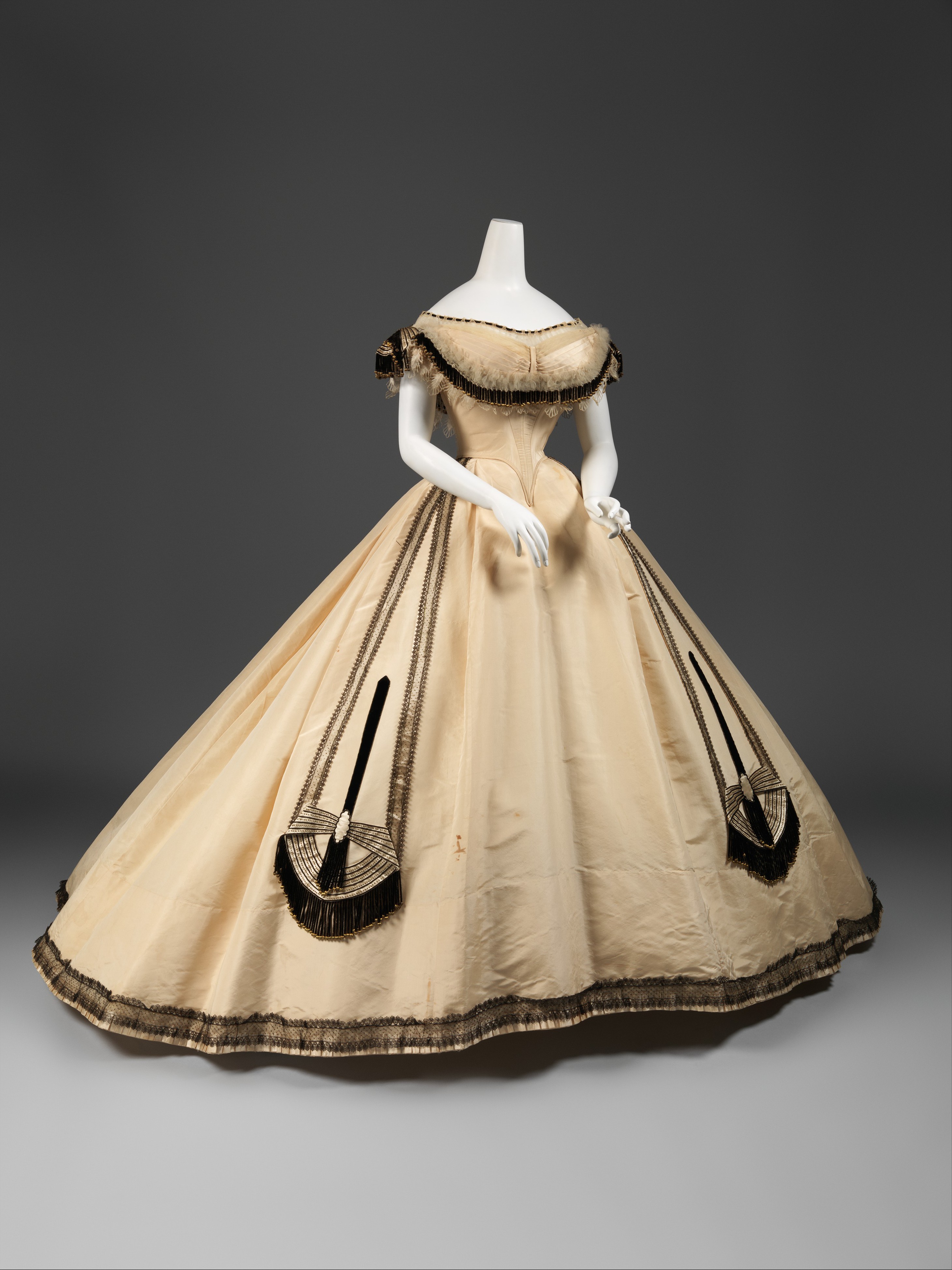
The Archaeology of Elegance: Deconstructing the Classical Silk Ball Gown for 2026
Within the isolated archive of Natalie Fashion Atelier, the classical French ball gown exists not as a relic of a bygone era, but as a living lexicon of structural possibility. This research artifact, drawn from a deep aesthetic archaeology of 18th and 19th-century Parisian court dress, seeks to deconstruct the foundational principles of the silk ball gown. The objective is not mere reproduction, but a rigorous extraction of its core architectural logic—its weight, its drape, its tensile strength—to inform the luxury silhouettes of 2026. The silk is not merely a material; it is the primary data point, the subject of our technical inquiry.
I. The Structural Grammar of Classical Silk: From Rigidity to Fluidity
The historical ball gown, particularly those from the Second Empire and Belle Époque periods, relied on a sophisticated interplay between the inherent properties of silk and the engineered understructures beneath. The silk itself—often a heavy duchesse satin, a crisp faille, or a lustrous taffeta—was chosen for its ability to hold a defined shape while simultaneously offering a surface of liquid, uninterrupted light.
The classical silhouette was defined by a triangulated volume: a tightly corseted bodice acting as the apex, expanding into a vast, bell-shaped skirt. This was achieved through a system of internal architecture—crinoline cages, horsehair bustles, and padded panniers—against which the silk was stretched. The silk’s role was to mediate between the rigid frame and the living body, creating an illusion of effortless grandeur. The key technical challenge was the tension gradient: the silk at the waist was under high tension, creating sharp, clean lines, while the silk at the hem was allowed to fall into soft, voluminous folds, known as trompe-l’œil draping.
For the 2026 silhouette, we reverse this logic. Instead of using silk to cover a rigid structure, we propose the silk as the structure itself. By leveraging modern textile engineering—specifically, laser-cut micro-perforations and heat-set pleating—we can imbue a single layer of silk with the same gradient of tension and release. The archaeological insight is that classical elegance was a product of controlled opposition: the hard against the soft. In 2026, we internalize this opposition within the silk’s own molecular memory.
II. Materiality as Memory: The Silk’s Archive of Drape
Our isolated archive holds samples of a 1900 Worth gown in peau de soie, a fabric whose surface is characterized by a subtle, irregular grain. This grain acts as a tactile archive, recording the direction of the original drape and the weight of the trimmings. The silk remembers its own history. For the 2026 collection, we are experimenting with engineered double-faced silks where the warp and weft are woven with different tensions. One face is matte and absorbent of light, the other is glossy and reflective. This creates a fabric that can be programmed to fold and drape in predetermined ways, echoing the classical silhouette without the need for historical underpinnings.
The technical process is as follows: The silk is first digitally mapped to a 3D avatar of the 2026 client. The stress points—the shoulders, the waist, the hip—are identified. A micro-embroidery of silk organza ribbons is then applied to these points, not as decoration, but as structural tendons. These ribbons, when heat-set, contract slightly, pulling the surrounding silk into a controlled, cascading fold. The result is a silhouette that mimics the classical bell shape but is achieved through internal material tension rather than external scaffolding. This is the archaeology of the crinoline, translated into the language of the fiber.
III. The 2026 Silhouette: The Deconstructed Bell and the Asymmetric Fall
The primary silhouette emerging from this research is what we term the “Deconstructed Bell.” It abandons the symmetrical, full-circle skirt of the classical ball gown in favor of an asymmetric, gravity-defying volume. The silk is cut on the bias for the front panel, allowing it to cling and fall in a liquid column from the waist to the floor. The back panel, however, is cut on the straight grain and reinforced with the aforementioned organza tendons, creating a sudden, dramatic flare that sweeps behind the wearer like a train.
This silhouette is a direct archaeological response to the classical robe à la française, where the front was often flat and the back was a cascade of pleats (Watteau pleats). In 2026, we update this by using a single, continuous piece of silk—a 12-meter length of custom-woven, heavy charmeuse. The pleats are not sewn; they are thermally set into the fabric’s memory using a precision heat press. The front remains smooth, almost liquid, while the back explodes into a series of sharp, architectural pleats that hold their form even in motion.
The second key silhouette is the “Asymmetric Fall,” inspired by the draped silk of a classical Grecian-inspired ball gown from the 1910s. Here, the silk is treated as a sculptural liquid. A single shoulder is left bare, while a cascade of silk is gathered and anchored at the opposite hip by a single, large silk gazar knot. The knot is not ornamental; it is a structural node that redistributes the fabric’s weight. The silk falls in a continuous, unbroken line from the shoulder to the floor, creating a silhouette that is both monumental and ethereal. This is achieved by using a double-weight silk satin where the warp is heavier than the weft, ensuring the fabric falls with a deliberate, weighted precision.
IV. Technical Execution and the New Luxury
The luxury of 2026 is not in the volume of fabric used, but in the intelligence of its application. The classical ball gown used 20 meters of silk to create volume; our 2026 silhouette uses 8 meters, but each meter is engineered to perform multiple functions. The silk is pre-stressed during weaving to create zones of high and low tension. The seams are laser-fused rather than sewn, eliminating bulk and allowing the silk to move as a single, continuous membrane.
The finishing is equally rigorous. The hem of the Deconstructed Bell is weighted with a micro-chain of platinum and silk thread, sewn into the hem’s edge. This ensures the silk falls with a perfect, unbroken line, a technique borrowed from the classical gros-grain hem used by Worth. The interior of the gown is left raw, the edges finished with a hand-rolled silk thread, exposing the fabric’s construction as a deliberate aesthetic choice. This is the archaeology of the hidden, brought to the surface.
In conclusion, the isolated archive of the classical French silk ball gown provides a profound technical blueprint for 2026. By deconstructing its structural logic—the tension gradients, the material memory, the engineered drape—we are not replicating history. We are extracting its core principles and re-encoding them into a new, hyper-technical, and deeply elegant language of luxury. The silk is no longer a covering; it is the architecture itself. The result is a silhouette that is both a tribute to the past and a radical proposition for the future of haute couture.